
Stephanie Cadieux: Chief Accessibility Officer, Government of Canada
The organizations that make progress, engage people with disabilities, set goals, assign accountability and resources, and measure the results. They recognize perfection is elusive and so just getting started is the key.
◦ 8 min readLeadership, Accountability & Change
You became Canada’s first Chief Accessibility Officer in 2022. What did that moment represent personally and professionally?
It was a profound honour. I felt like my entire career had led me to this point. To be the one to do this. Professionally, it represented an opportunity and responsibility to help ensure that accessibility moves from aspiration to action, and to connect lived experience with true systems change.
Accessibility is often discussed as policy – but you speak about urgency and accountability. Why are those two words so important?
Because people are experiencing barriers today. Real people facing real barriers that are affecting whether they get a job, can access services, travel, or even just get in and out of their home. Urgency recognizes that these barriers aren’t abstract, and accountability recognizes that change happens only when we assign responsibility for action.
What does meaningful accessibility leadership look like in practice?
It begins with curiosity, listening, and engaging people with disabilities in the processes and embedding accessibility into decisions from the start.
From your perspective, where are governments still falling short on accessibility and inclusion?
I believe it is because of two things. First, that accessibility is treated as a specialized topic rather than a leadership responsibility. Second, because accessibility often competes with other priorities, instead of being recognized as a foundational consideration.
How do we shift accessibility from compliance to culture?
By making it a value not a checklist, demonstrating that accessibility (good design) benefits everyone.
You’ve spoken about execution being the difference between intention and outcomes. What separates organizations that truly move the dial from those that simply talk about inclusion?
The difference is always action. The organizations that make progress, engage people with disabilities, set goals, assign accountability and resources, and measure the results. They recognize perfection is elusive and so just getting started is the key.
What role does courage play in accessibility leadership?
Ah, this is a significant piece. Accessibility often requires challenging long-standing assumptions and systems. It can require difficult conversations, hearing criticism, acknowledging gaps, and pushing for change even when it is uncomfortable.
How important is lived experience in shaping policy and systems change?
Lived experience provides insights and innovations that no spreadsheet or checklist can fully capture. So, it is essential to getting accessibility right. The best policies and practice tend to emerge when you can combine lived experience with professional expertise.
What have your years in politics taught you about resilience and public trust?
Change takes time. Progress depends on persistence, relationships, and trust. Resilience comes from staying focused your purpose, and authenticity and consistency help to build trust.
How do you balance empathy with decisiveness in leadership?
They go hand in hand. Empathy helps to understand the impacts of decisions, and decisiveness ensures the understanding leads to meaningful action.
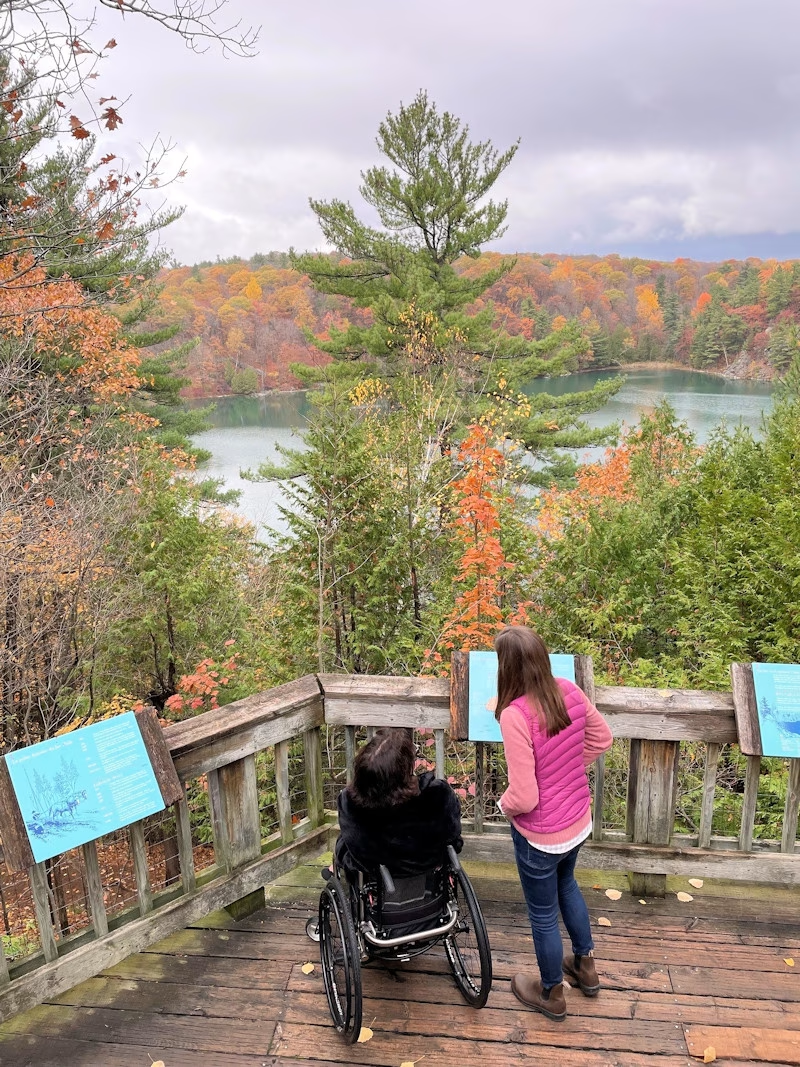
Disability, Representation & Systems Change
You became the first woman with a disability to serve in the BC legislature and cabinet. What responsibility came with that visibility?
I think I understood that people were watching not only what I did, but what my presence represented. Representation expands possibility, and my experience helped open doors for others and ensured that a perspective shaped by disability was brought into conversations where it had been missing.
How has your lived experience as a wheelchair user shaped the way you navigate leadership spaces?
My lived experience of disability has given me firsthand insight into how policies and environments affect peoples’ lives. It has reinforced the importance of persistence and creativity in removing barriers of all types.
Do you think society still underestimates the ambition, leadership and economic contribution of people with disabilities?
Far too often yes.
Why is representation in leadership positions so important?
Because diverse leadership results in better decisions. And because people need to see themselves reflected in positions of influence.
What barriers continue to prevent people with disabilities from accessing meaningful employment opportunities?
Persistent misconceptions, inaccessible recruitment processes, workplace barriers, and unconscious bias continue to limit opportunities for people with disabilities.
What conversations around accessibility are still not happening enough?
Accessibility is too often framed as a cost, when it should be viewed as an investment or opportunity. We need to have more conversations about disability as it relates to economic participation, innovation and leadership, not simply as a social policy issue.
How can organizations better include disabled voices at decision-making tables?
Bring people into decision making processes early and ensure influence, not merely consultation. This means including people with disabilities in advisory groups, governance structures, and leadership roles.
What misconceptions about accessibility frustrate you most?
That accessibility only benefits a small number of people.
How can younger leaders with disabilities be better supported and mentored?
We need to create more opportunities, sponsorship, mentorship, and visible pathways to leadership, and we need to start that work much earlier.
What progress around accessibility genuinely gives you hope right now?
The growing recognition that accessibility is everyone’s responsibility. I’m encouraged by the increasing number of organizations that are embedding accessibility into their planning and leadership level conversations.
Accessibility Beyond Policy
Accessibility impacts everything from employment to travel, hospitality and digital experiences. Why must accessibility be viewed holistically?
Because life doesn’t happen in silos. All of our experiences are interconnected.
What industries do you believe have the greatest opportunity to lead on accessibility?
Technology, transportation, and tourism certainly have tremendous opportunities to drive innovation and inclusion.
You’ve travelled extensively internationally. How has travel shaped your understanding of accessibility globally?
Travel has shown me the progress that is possible and the challenges that remain. I’ve seen innovative approaches around the world, but I also know how quickly barriers can limit independence and participation.
What does an accessible society actually feel like for the individual experiencing it?
It feels like belonging. It is easy. It’s moving through daily life without having to plan three steps ahead to anticipate all the potential barriers and advocate constantly for access.
How important is universal design in building inclusive futures?
Its fundamental. It is about making inclusion the staring point rather than a retrofit.
What role does business play in accelerating accessibility?
Business has enormous influence. They can drive innovation, create inclusive workplaces, improve customer experiences, and demonstrate that accessibility and economic success are connected, not mutually exclusive.
What would you like Canada’s accessibility legacy to be over the next decade?
My hope is that Canada will be a country where accessibility is embedded into how decisions are made.
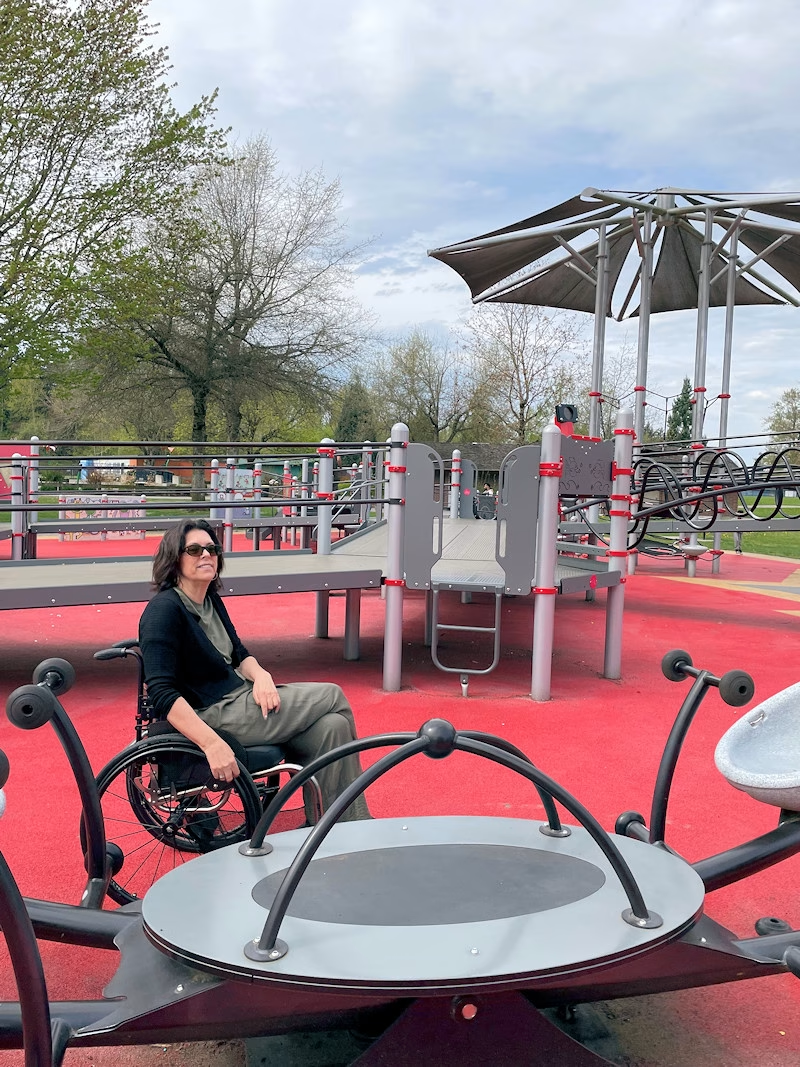
Personal Reflection & Legacy
What motivates you to continue this work after so many years in advocacy and leadership?
The belief that meaningful change is possible. I’ve seen the impacts of positive policy change on individual lives, and it is gratifying.
Was there a defining moment where you realized accessibility advocacy would become your life’s work?
It wasn’t a single moment. It was a gradual realization that barriers exist because of choices made. And we can make better choices.
What have people with disabilities taught the world about adaptability and innovation?
That creativity and innovation are often the products of necessity. People with disabilities must innovate every day to solve problems and overcome barriers. So many of the things we all use everyday were originally invented to overcome a barrier for a person with a disability, and often, they were invented by people with disabilities themselves. Things like texting, captions, and electric toothbrushes just to name a few.
What does inclusion personally mean to you?
Creating environments where everyone can participate and belong.
What legacy would you ultimately like to leave behind?
….. still to be decided!.
Quickfire
- Accessibility is impossible without… Intent and Action
- Policy or people — what creates faster change? People
- One word that defines leadership? Responsibility
- Inclusion should feel like…Belonging.
- A misconception about disability you’d love to erase. That disability limits potential.
- Most underrated accessibility issue globally? Transportation.
- Your strongest leadership quality? Authenticity
- Coffee meeting or parliamentary debate? Coffee meeting
- A country doing accessibility well? There are lessons everywhere, but no one country has it all figured out.
- One thing every CEO should understand about accessibility? There is no sustainability without accessibility.
- Representation matters because…People need to see possibility.
- Most powerful lesson politics taught you? Progress requires persistence.
- What frustrates you most about performative inclusion? It doesn’t change culture.
- Leadership without empathy is… Incomplete.
- A moment in your career you’ll never forget? Being appointed Canada’s first Chief Accessibility Officer
- Accessibility should never be treated as… Optional.
- One quality all inclusive leaders need? Curiosity
- Window seat or aisle seat? Window
- The future of accessibility looks like… Opportunity.
- Your definition of impact? Making change that improves peoples lives; even if you never know who they are.