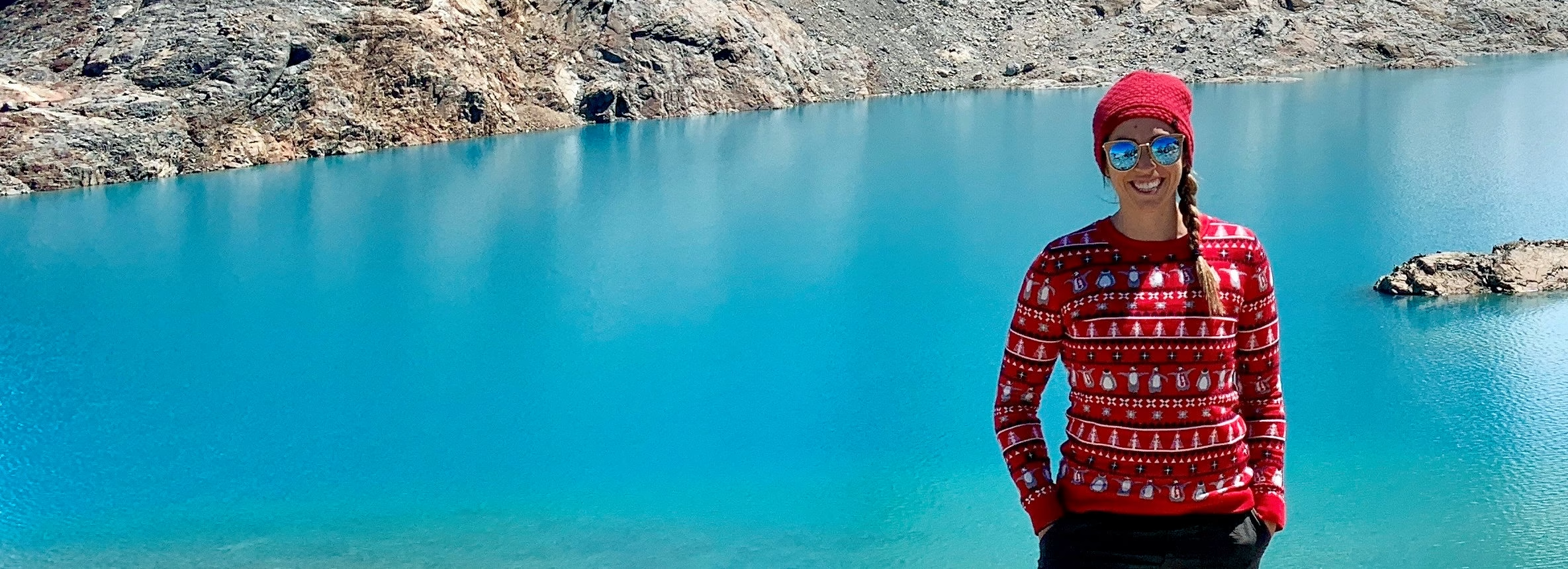
Jaimie Voss: Career, Confidence & Definition of Success After Stroke
I've had to overcome mountains. Surgery after surgery, setback after setback, each one demanding a deeper well of strength than the last. If the woman on the floor could see me now, I think she'd be proudest of this: her entrepreneurial flame has been relit, and she's building something with real meaning, a business she feels genuinely passionate about.
◦ 18 min readBefore The Stroke, A Life Built on Momentum
Before March 2021, you were someone who thrived on movement, building businesses, scaling global brands, competing as an athlete, and embracing a high-performance lifestyle. How would you describe the woman you were before the stroke?
Before my stroke, I was someone who lived for momentum. I loved pushing my body to its absolute limit and building resilience through that process: competing, training, chasing the next physical challenge. My personality matched that energy: bold, confident, always ready to speak up. I genuinely don’t remember a version of myself that felt shy or nervous walking into a room.
Looking back at your journey from ClassPass, UN1T, lululemon, FRAME, and leading commercial growth across the wellness and technology industries, what do you think drove you so relentlessly?
I’ve always been driven by connection, by the need to build community, and every role I’ve held has let me do that in some form. But underneath that is something my parents gave me: an entrepreneurial father and a professional musician mother, both of whom worked relentlessly to build a beautiful life for our family. It wasn’t just their work ethic I absorbed, it was watching what that work ethic was for. That’s what I’ve carried forward: building things that connect people, in service of building the same kind of life for my own family.
You achieved so much at a young age, but do you think your definition of success then was different to what it is today?
Completely. At twenty, career was everything; it was the metric I measured myself against. Now, as a mother and a stroke survivor, success looks different. It’s about balance: being present for my family while still doing meaningful work for the people around me. It’s less about the climb and more about whether the life I’m building actually feels good to live.
The Morning That Changed Everything
You were just 32 years old and the mother of an eight-month-old baby when your life changed in an instant. Can you take us back to that morning and what you remember of those first moments?
I remember getting out of bed to pick up my son, and then the next thing I remember is my husband standing over me, telling me the paramedics were on their way. I was lying on the floor looking up at him, confused; in my mind I felt completely fine, and all I wanted was to get up. The hours that followed are mostly an unconscious blur, but a moment sticks out in my memory. A nurse at the hospital asks me to repeat my name, and nothing but gibberish comes out. It’s one of the most confusing, terrifying experiences of my life.
Your husband found you on the floor with the classic signs of stroke: facial droop, inability to speak, and loss of movement down your right side. What was the emotional journey of coming to terms with what had happened?
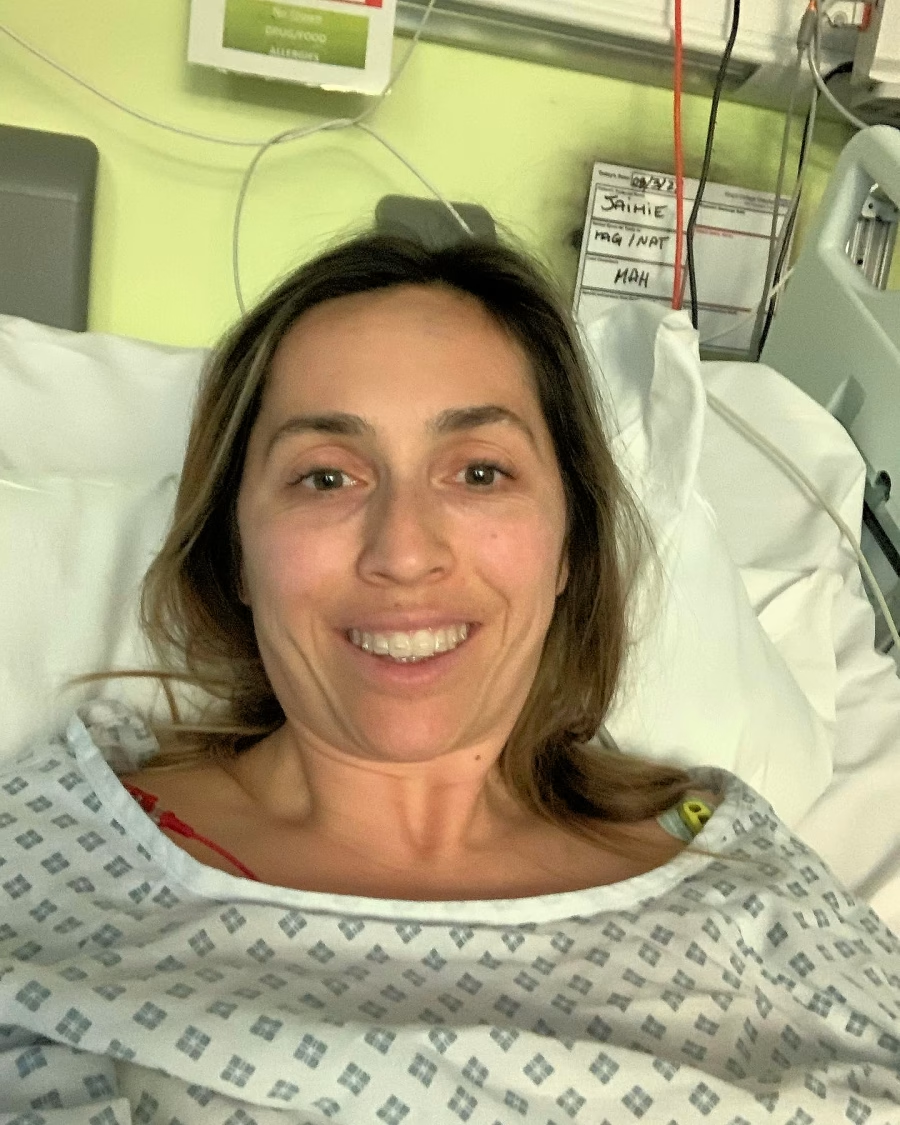
Waking up from surgery in the stroke ward, I remember seeing those words, “stroke ward,” and not really grasping what they meant for me. I didn’t think a stroke could happen to someone my age, someone who was fit and healthy. My speech was so slow, and I felt this deep frustration that my mouth couldn’t keep pace with what my brain wanted to say. I remember being confused, too, by the trembling down my right side; it didn’t feel like it belonged to me.
Many people assume recovery is about getting physically stronger, but there is also grief involved, grief for the person you were before. How did you navigate losing parts of your former identity, including your ability to run, which had been such a huge part of your life?
It’s been a tumultuous road to any kind of peace. Between the heart surgery and two separate operations on my right foot, it’s been year after year of processing new layers of grief, just as I’d come to terms with one loss, another would surface. My therapist has been essential in helping me work through those layers. I don’t think the grief ever fully disappears. You learn to coexist with it. But there’s a version of peace in knowing that it’s a chapter of the story, rather than your whole story, and there’s a lot of space for optimism in that.
As an athlete, how difficult was it to accept that your body had changed and that the things you once took for granted might look different forever?
Honestly, this has been one of the hardest things to accept. Being an athlete was such a core part of my identity, and I still laugh about how hard it’s been, because otherwise I’d cry. Stroke fatigue hits me the moment I try to exercise with any regularity, and there’s a long list of movements my body simply won’t do anymore. But it’s pushed me to find new ways of moving and staying well. I don’t fight it anymore; I cherish it, a walk, a bike ride, a bit of Pilates. And in the moments I struggle, I remind myself how much I’ve endured, and I try to meet myself with as much grace as I can.
Rebuilding A Career When The World Keeps Moving
You didn’t return to work for around eighteen months. What was it like watching the world move forward while you were focused simply on surviving and recovering?
There was a real, sharp imposter syndrome when I finally went back. I knew my focus and my ability to perform the way I once had were permanently altered, and going from nine hours a week to full-time felt like scaling a mountain. It felt like I’d lost my competitive edge, and honestly, some days I still feel that way. Most workplaces simply aren’t built to support someone returning after disability. I watched colleagues collect promotions and new titles while I was fighting just to get through the day.
You have spoken honestly about feeling like colleagues were racing up the career ladder while you were “just holding on for dear life.” How did you protect your confidence during that period?
I’m not sure I protected it well, if I’m honest. I had to step back from social media almost entirely, Instagram, LinkedIn, all of it, because the comparison was too much. I got really lucky to work with an incredible therapist and an incredible OT, who helped me find new perspective and reframe the conversations I was having with myself about work. I started measuring success differently: if I could get through a week with some mindful time for myself, complete a 12- to 14-hour work week, and still be present for my kids, that was a real win. More than anything, though, my confidence was so rattled after the stroke, and honestly, there are still moments it feels shaky. In those moments, I try to come back to what I’m working for: my values, and what my own pillars of success actually look like.
Returning to work required you to completely redesign how you operate: from brain breaks between calls, to adaptive technology, dictation tools, and managing ongoing stroke fatigue. What have those changes taught you about resilience and asking for what you need?
Advocacy is one of the hardest parts of returning to work with a disability. Once I let go of the idea that asking for help made me weaker or “less than,” I felt genuinely empowered to be direct about what I needed, and that shift is what allowed me to actually flourish in the roles I’ve held since. Using my dictation software has been one of the best tools I’ve adopted, but it means I need to work in a quiet environment so I can use it properly. That’s its own kind of adjustment. Needing that space and learning to ask for it without apologising is exactly what’s taught me to be a more empathetic leader. Seeing the world through the lens of a disability acts as a constant reminder that everyone is carrying something, visible or not, and that’s shaped how I show up for the people I work with.
One of the most powerful things you have spoken about is the fear of telling employers about your stroke because you worry it might make you appear like a weaker candidate. Why do you think there is still such a misunderstanding around invisible disabilities in the workplace?
At the end of the day, a lot of workplaces see disability as a risk to their bottom line. In a sales role especially, if there’s any chance I might not hit the same output as someone without a disability, that creates bias immediately, because supporting me might mean accommodations, adjustments, extra effort. Many employers decide it’s simply not worth the trade-off. And invisible disabilities compound the problem: they’re invisible. Most people I’ve encountered have no idea how to start that conversation. When I’ve encountered bias in an interview or a workplace, I’ve learned to remove myself from it. That’s not an environment that’s going to support what I need, and I no longer see the value in trying to force it.
Have there been moments when you felt you had to choose between proving yourself professionally and protecting your health?
Yes, absolutely. Some time after returning to work, I left an employer who wasn’t supporting me and took about eight months off work. During that time, I went through a string of brutal interviews with different tech companies. The moment I mentioned my stroke, I could see the shutdown happen in real time, the person on the other side of the Zoom not knowing how to respond, and the conversation simply wouldn’t move forward from there. But I felt a real need to address it early, so I’d know whether that was even the right environment for me.
What would you like employers and leaders to understand about hiring talented people who may need to work differently?
Working differently doesn’t mean working worse. When you make space for people to work in a way that actually suits them, you don’t get less, you get more, across the board. I’d say to anyone navigating a disability: it’s not something to manage, hide, fight, or apologise for. It’s something that teaches you creativity, adaptability, real problem-solving, and clear communication. It teaches you how to set boundaries and ask for the support you actually need, and it sharpens your ability to notice what others miss and move through the world with more intention. For leaders, that means leaning into accessibility and inclusivity, building environments where everyone feels genuinely welcome to bring their best work.
Motherhood, Confidence & The Invisible Battle
Perhaps one of the most heartbreaking things you shared was wondering what kind of mother you would have been had the stroke never happened. How do you navigate those thoughts and the pressure you put on yourself?
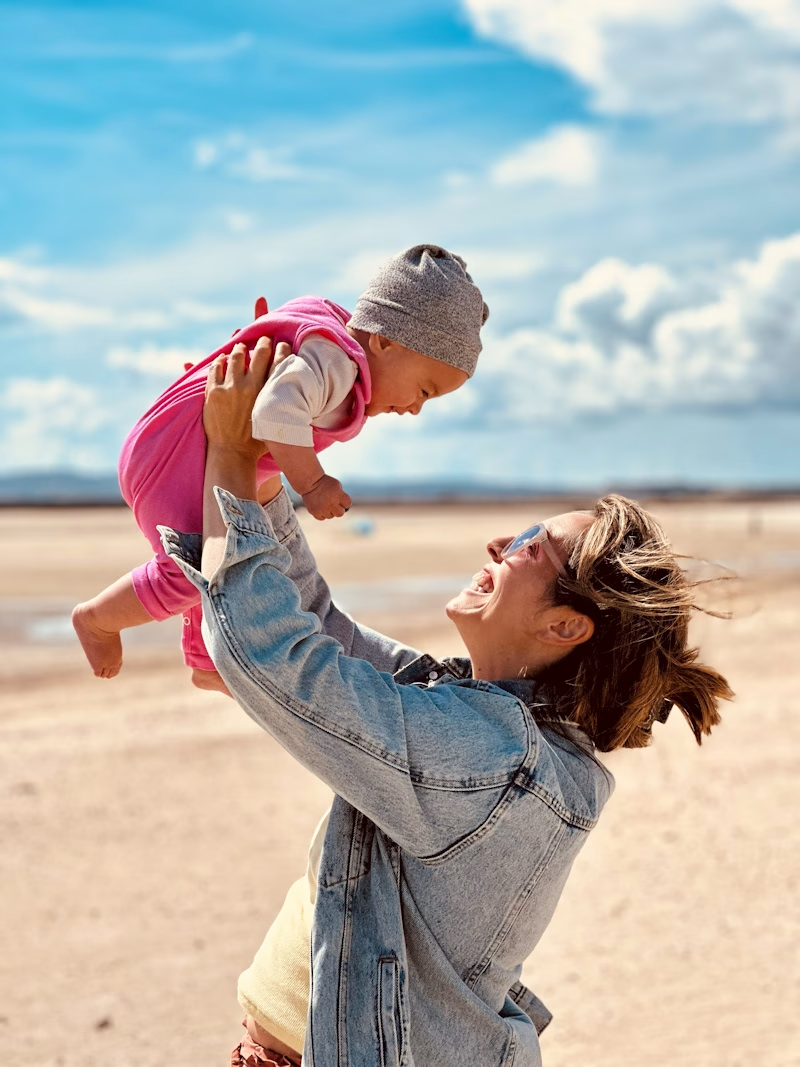
I’ve always been someone who puts enormous pressure on herself. I’m a perfectionist at my core, and motherhood has only sharpened that. The stroke intensified those feelings and, for a long time, made me feel like I wasn’t measuring up as a mother. What’s helped is being deliberate about how I speak to myself, and being honest about the environments I put myself in. If a loud, chaotic soft-play centre is going to wreck my stroke fatigue and leave me a worse version of myself for the rest of the day, my kids simply don’t go there. Protecting my capacity is part of protecting my mothering.
Within the same year of having my stroke, I was pregnant with my second child and navigating a heart surgery connected to the stroke, and that pregnancy carried an enormous amount of stress for both our health. Giving birth left me with four DVTs, blood clots, and those first weeks with my newborn looked nothing like what I’d experienced with my first, or what I’d imagined for my second. Her entire first year was punctuated by constant hospital visits, her strapped into the carrier for appointment after appointment. Some days, a trip to the hospital was our version of a day out, instead of a mum-and-baby class or the park, the way it had been with her brother. I struggled with the fear that I might be shaping her early life in some outsized way. But watching the bubbly, happy child she is now, I know it’s simply a version of her childhood she won’t remember. I will, though.
You’ve also been open about PTSD, anxiety, and moments of feeling “less than.” What has therapy taught you about self-compassion?
Self-compassion is a muscle: it has to be worked and developed and given attention constantly, not just called on when things fall apart. I think as a society we really miss the mark on allowing people to rest without earning it, to grieve without a timeline, and to be imperfect without treating it as failure. Therapy has taught me that being kind to myself isn’t a reward for getting everything right; it’s what actually makes it possible to keep going when I don’t.
Do you think surviving something so traumatic changes your relationship with perfection and achievement?
Absolutely, it had to change, completely. I’ve had to redefine what perfection even looks like: now it’s simply a day without crushing fatigue, a day where my body lets me show up the way I want to. Achievement is no longer measured in titles or output the way it once was. It’s measured in the small, quiet wins: getting through the week, being present for my children, giving myself grace instead of judgment. That’s a harder metric in some ways, but it’s a far more honest one.
Leaving London To Find Yourself Again
London was the city where your career flourished, where you built businesses and communities. How difficult was the decision to leave that life behind and move to Devon?
Leaving London meant leaving the career and the friendships we built there, and that wasn’t easy, but I knew I couldn’t sustain London life anymore. The constant stimulation was taking a real toll. Moving to Devon felt like a milestone, a moment where I could finally see the next chapter starting to take shape. It brought a real sense of excitement about what I could build next.
You’ve said that Devon accelerated your recovery. What has the quiet, space and connection with nature given you that city life couldn’t?
Devon has given me new life, quite literally. Looking out at the ocean and the fields around our house every day has given my brain the space to rebuild, to recover and, I believe, to form new neural pathways. It’s also reconnected my family to the things we love most: being outdoors, being adventurous, and staying close to nature.
You have also had to accept the professional sacrifices that came with that decision, including opportunities you lost because of your location. How did you make peace with choosing your health over traditional career expectations?
I trusted that choosing my health over convention would open new doors eventually. Most of my career has been fairly unconventional, so throwing out the rule book wasn’t something I feared. Moving to Devon didn’t change that perspective; it just meant those opportunities would look different from what I’d once imagined.
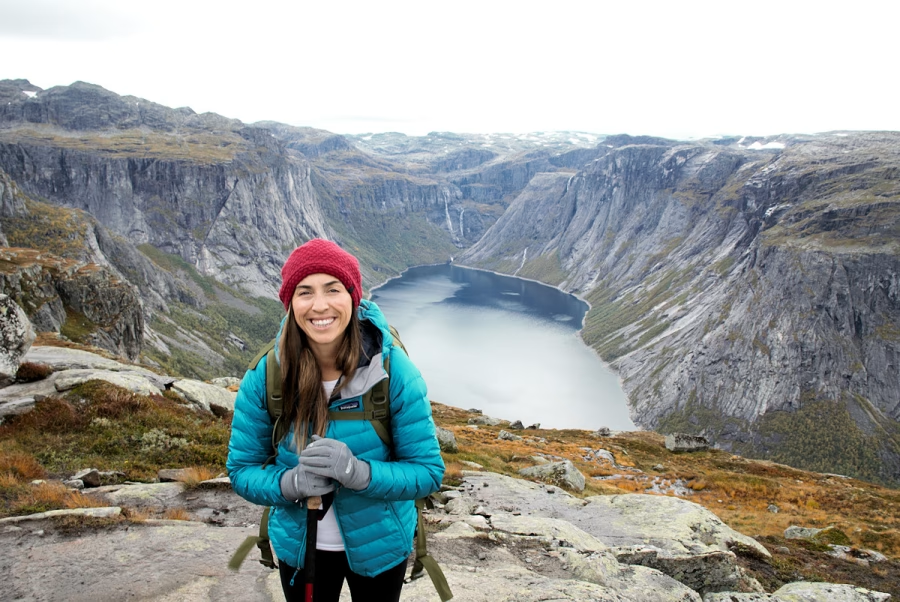
A New Chapter, Travel, Wellness & Purpose
One of the beautiful outcomes of this new chapter is that you discovered a passion for the travel industry. How did the slower rhythm of Devon open the door to that new professional identity?
Around the time we moved to Devon, I’d also left my former employer, which gave me real space to think about what came next. Wellness had been such a huge part of my identity for so long that I wanted to explore something new. For a few years after the stroke, travel wasn’t accessible to me, and that absence made clear just how much it had always meant to me. I started working as an independent travel advisor at Fora Travel over the summer months, and that’s how Radiant Routes was born. I loved that Fora had accessibility at the forefront of their business, and after completing their accreditation programme, I knew what my purpose was: to help remove barriers so that everyone could experience the world on their own terms.
Through your work as an independent travel advisor, you are now creating experiences rooted in connection, wellness and meaningful exploration. Do you think the stroke changed the way you understand what people are truly searching for when they travel?
Wholeheartedly, yes. I’ve had to learn to build environments that protect me, cognitively and physically, everywhere I travel, and that experience changed how I see the industry entirely. Being part of communities like Different Strokes has shown me how universal that need is.
I think about a few clients in particular: stroke survivors whose partners came to me before the trip, explaining the fatigue, the fluctuating energy levels, and how worried they were about that first trip after the stroke. They talked about wanting space to reconnect with each other in this new chapter, but also knowing that everything was going to feel foreign now, inside these new parameters they hadn’t had to plan around before. And I understood exactly what they meant. I know that feeling of stroke fatigue that can put you straight to sleep without warning, the sudden need for a nap, the moment where an entire day’s plan has to pivot because your body simply won’t cooperate anymore. I can meet that from a place of real understanding, not just professional sympathy; I plan it because I’ve experienced it.
Trauma changes you, but it doesn’t change your dreams or your desire to see the world, and there shouldn’t be so many barriers standing between people of every ability and the experiences an able-bodied traveller takes for granted. That belief is really the foundation of Radiant Routes: life changes, but your dreams don’t have to. In practice, that often means building in slower pacing between activities, extra rest days, or accessible transfers arranged well in advance, so the trip works with someone’s body instead of against it. Helping clients turn those dreams into reality has become one of the most fulfilling parts of my life.
You have gone from building communities in fitness studios to creating transformational experiences through travel. What thread connects every chapter of your career?
Intentionality. That’s the thread running through every chapter. It’s never just been about gathering people with shared interests; it’s about building real connection: to each other, to the work itself, and to the intention behind every interaction, whether that’s in a gym, a group setting, or the way I design a client’s itinerary.
Quickfire
The place in Devon where you feel most at peace? Dartington.
A sound that instantly calms your nervous system? The ocean waves.
The first thing you did after your stroke that made you think, “I’m still me”? Going to a local market with my family.
A former version of yourself you had to let go of? The marathon runner.
A new part of yourself that you discovered because of your stroke? Founder of Radiant Routes.
The hardest word for a high achiever to learn: “No” or “Rest”? Rest.
Running gave you freedom. What gives you that feeling today? A walk along the Southwest Coast Path.
A moment with your son that made every difficult day worth it? Being able to walk alongside him while he rides his bike.
A place in the world that healed a part of you? Alaska.
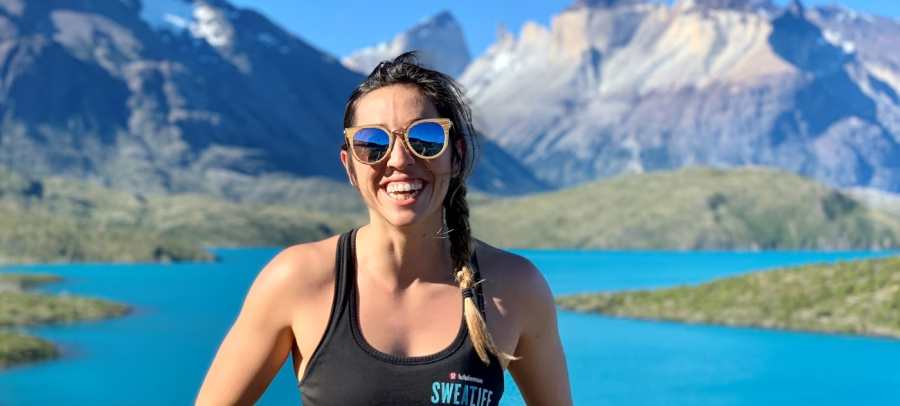
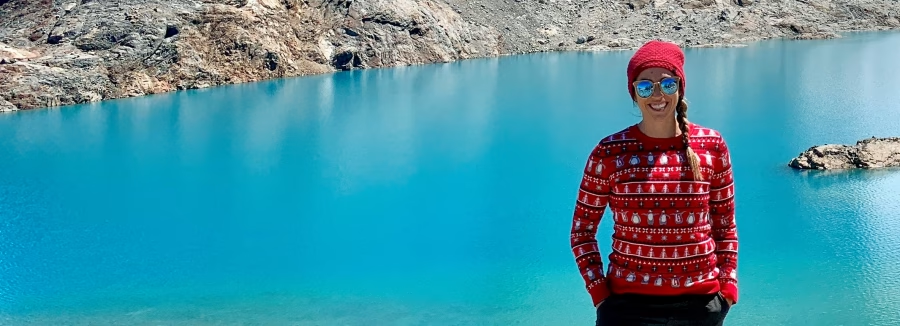
A destination everyone should experience before they die? Patagonia.
A luxury you value more now than anything money can buy? Time with my family.
Three words your son might use to describe his mum? Strong, silly, and loving.
TILT Signature Closing Question
“Jaimie, four years ago you woke up expecting an ordinary morning. Instead, your life split into before and after. Today, you are still a mother, an entrepreneur, a commercial leader and a creator of communities, but perhaps with a different understanding of strength. If the woman lying on that floor in March 2021 could see you now, what do you think she would be most proud of?”
I’ve had to overcome mountains. Surgery after surgery, setback after setback, each one demanding a deeper well of strength than the last. If the woman on the floor could see me now, I think she’d be proudest of this: her entrepreneurial flame has been relit, and she’s building something with real meaning, a business she feels genuinely passionate about.