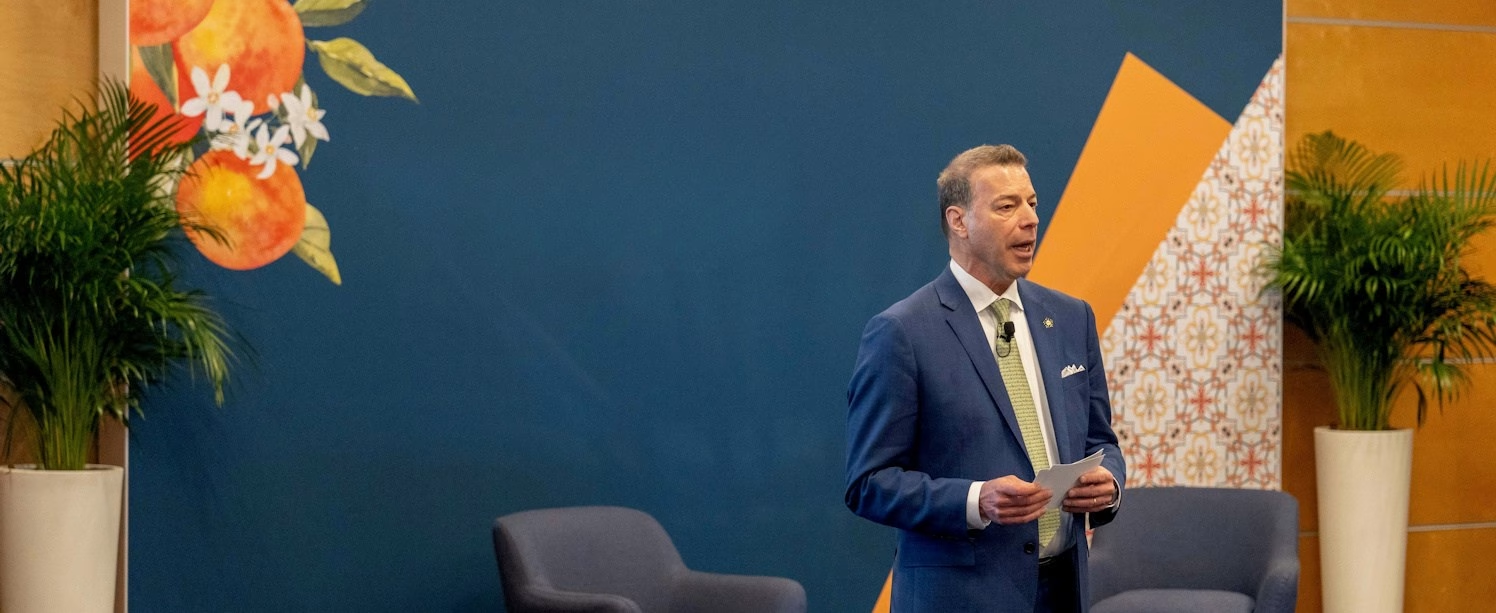
Richard Lebowitz: Senior Vice President, Travel Industry Outreach, Forbes Travel Guide
One of the industry's greatest challenges is closing the gap between having an extraordinary physical product and delivering an extraordinary guest experience. A hotel may invest hundreds of millions of dollars creating a magnificent property. But ultimately, the guest experience is delivered one human interaction at a time.
◦ 14 min readTo begin, how would you describe your role at Forbes Travel Guide, and where do you personally sit within the organisation’s work with the wider luxury travel industry?
My role at Forbes Travel Guide (FTG) is focused on creating measurable value for guests, hospitality partners, and travel professionals across the global luxury travel ecosystem.
As a member of FTG’s senior leadership team, I collaborate across the organization to advance strategic initiatives, strengthen industry relationships, and reinforce FTG’s position as the independent, trusted global authority on luxury hospitality and service excellence.
I oversee the travel team that developed and launched Forbes Travel Guide’s travel industry outreach to educate the global luxury travel industry on the integrity, rigor, objectivity and independence of FTG standards and ratings for evaluating luxury hotels, restaurants, spas and cruise ships.
Our outreach initiatives strengthen trust, improve alignment, and play an important role in shaping the guest experience.
Before Forbes Travel Guide, what was your own route into hospitality, and what first made you realise this was an industry you wanted to build a career in?
My appreciation for service and the importance of helping people began long before I entered the hospitality industry.
My father was an elected official in New York State, and growing up, I watched people in our community turn to him for guidance, assistance, and support. What stayed with me wasn’t simply the position he held, but the trust people placed in him and the responsibility he felt to make a positive difference in their lives. That experience shaped my understanding of what service really means. It’s about listening, understanding people’s needs, building trust, and finding ways to create better outcomes.
When I entered hospitality, I discovered an industry built around those same principles. Hospitality is fundamentally about people. It’s about relationships, anticipating needs, solving problems, and creating experiences that make others feel genuinely valued.
I came to appreciate that successful relationships are built not simply on business transactions, but on trust, consistency, and mutual respect. What has kept me engaged all these years is that hospitality is never static. The industry continues to evolve, but the opportunity to connect with people and make a meaningful difference in their experiences remains just as compelling today as it was when I began.
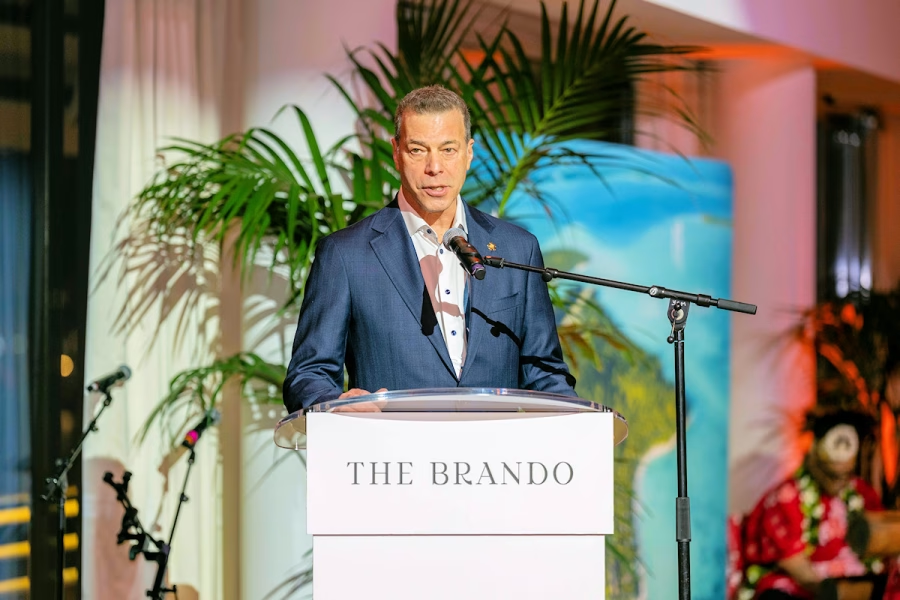
For someone who knows the Forbes name but may not fully understand Forbes Travel Guide, how would you describe the organisation and its role within luxury travel and hospitality?
Forbes Travel Guide is the global authority on luxury hospitality and service excellence.
Our history dates to 1958, when Mobil Travel Guide introduced the world’s first Five-Star hospitality rating system.
In 2009, Mobil Travel Guide became Forbes Travel Guide, continuing that legacy with a dedicated focus on luxury hospitality.
Today, we independently evaluate luxury hotels, restaurants, spas, and cruise ships through a rigorous professional inspection process, with a presence in more than 100 countries. While we inspect and evaluate both service and facility, our Star Rating system emphasizes service because how the experience makes you feel is what you will remember most.
I think it’s important to understand that Forbes Travel Guide is about much more than awarding stars. We’re helping define what exceptional hospitality looks and feels like. Our standards provide a consistent framework for understanding service excellence across different cultures, destinations, and hospitality experiences.
Beyond our Star Ratings, we support the industry through professional training, education, insights, and engagement designed to help hospitality organizations elevate the experiences they deliver. I often describe Forbes Travel Guide as an organization that connects the different parts of the luxury travel ecosystem through a shared pursuit of exceptional service and exceptional experiences.
And importantly, our ability to work across the industry, regardless of brand, ownership, or affiliation, is one of our greatest strengths.
The Star Ratings are probably the best-known part of Forbes Travel Guide. How are they determined, what makes them different from other ratings and awards, and why should travellers and travel professionals trust them?
What makes Forbes Travel Guide’s Star Ratings so meaningful comes down to one word: trust. And that trust has been earned over decades through independence, objectivity, integrity, and a rigorous evaluation methodology.
Our Star Ratings are based on professional assessments conducted by highly trained inspectors who visit properties anonymously, at our own expense, experiencing hotels, restaurants, spas, and cruise ships as the guest(s).
Our methodology incorporates up to 900 objective standards, and importantly, approximately 70% of our evaluation focuses on service, with 30% focused on the physical product. The significant weighting on service is intentional. We observe how the experience makes the guest feel.
Was the service intuitive? Was it personalized? Did someone anticipate guest’s needs? Was there genuine warmth and empathy? Did the experience create an emotional connection?
We’re not looking for scripted service or a cookie-cutter approach. Hospitality should reflect the culture and character of the destination. But the fundamental principles of making someone feel welcome, recognized, and genuinely cared for are universal.
Equally important is the independence of our Star Ratings. We are not “pay-for-play”. No one can buy a Forbes Travel Guide Star Rating. A property cannot purchase a rating or influence the outcome of an inspection through a commercial relationship with us.
That independence is fundamental to our credibility. For travelers and travel professionals, our Star Ratings provide confidence that a property’s recognition reflects an independently assessed level of hospitality excellence. And for the properties themselves, achieving a Forbes Travel Guide Star Rating is widely regarded as one of the hospitality industry’s most prestigious distinctions.
There is tremendous discipline and rigor behind how Forbes Travel Guide evaluates.
For travel advisors, I believe this distinction is particularly important. Every time an advisor recommends a hotel, they’re putting their own reputation and their client’s trust on the line.
Having an independent, credible, and consistent benchmark for excellence helps them make those recommendations with greater confidence. And ultimately, trust is the currency of that relationship.
Forbes Travel Guide today is broader than Star Ratings alone. How would you define its wider role within the luxury travel ecosystem?
Forbes Travel Guide has evolved from being primarily an evaluator of luxury hospitality into a much broader contributor to the advancement of service excellence across the industry. FTG Star Ratings remain the foundation of our credibility.
But the knowledge, insights, and understanding we gain through our standards, methodology, and engagement with hospitality professionals have value well beyond the ratings themselves.
Through professional training, education, industry engagement, and collaboration, we help organizations better understand what exceptional service requires and how to deliver it consistently.
We’re also bringing different parts of the luxury travel ecosystem closer together. For example, travel advisors play an enormously important role in understanding their clients and shaping expectations before a journey begins. Hospitality professionals are then responsible for delivering on those expectations. When both sides have a shared understanding of excellence, communication improves, expectations become better aligned, and ultimately the guest benefits.
Our Travel Industry Outreach initiatives are designed to encourage precisely that kind of collaboration. I increasingly see Forbes Travel Guide serving as a trusted intermediary across the luxury travel ecosystem, connecting independent standards with industry relationships, knowledge, insights and meaningful business value. It’s an important evolution.
We’re moving beyond simply recognizing excellence to helping the industry achieve it.
Technology, and particularly AI, is changing how travellers research, evaluate and book travel. Where do you believe technology adds genuine value, and where does human judgement remain essential?
I believe technology, particularly AI, presents positive opportunities for the travel and hospitality industry.
It can make information more accessible, simplify complex planning, identify preferences, and help travelers, travel professionals and partners make better-informed decisions. But I think we need to distinguish between having access to information and having the judgment to use that information well.
AI can recommend a hotel based on a traveler’s stated preferences. But an experienced travel advisor may recognize that the traveler would actually be happier somewhere entirely different, based on a deeper understanding of their personality, expectations, and circumstances.
Similarly, technology can tell a hotel that a guest prefers a particular room or dining experience. But it takes a thoughtful hospitality professional to recognize when something isn’t quite right and respond with genuine empathy.
I think about it this way: Technology can help us understand preferences. Human judgment helps us understand people.
And that distinction is particularly important in luxury hospitality and travel. I don’t believe the future is a choice between technology and human interaction. The most successful organizations will be those that use technology to remove friction, improve efficiency, and give their people more time to focus on what matters most, meaningful human connections.
Technology should make hospitality more personal, not less personal. Ultimately, technology should enhance the human experience, never replace it.
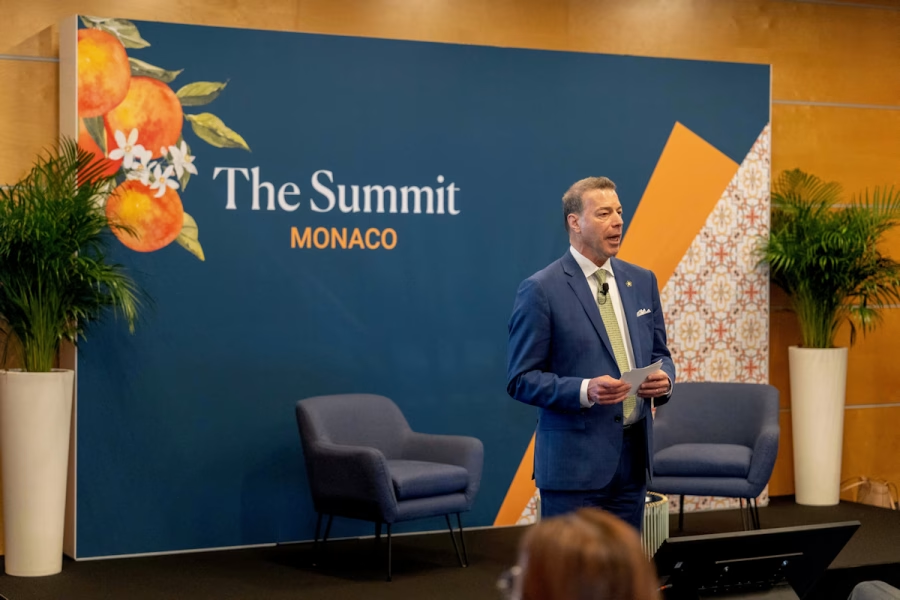
Beyond ratings, how does Forbes Travel Guide support hotels, travel advisors and the wider luxury hospitality industry in raising standards and improving the guest experience?
One of the most valuable contributions Forbes Travel Guide makes to the industry is creating a shared understanding of what exceptional service looks like.
Our professional training and educational programs help translate service standards into practical behaviors that hospitality professionals can understand, embrace, and deliver consistently.
Through our Travel Industry Outreach initiatives, we’re extending that understanding to the global luxury travel advisor community. We want advisors to understand not only what our Star Ratings represent, but also the methodology, service principles, and expectations behind them. That knowledge helps advisors make more informed recommendations and better align their clients’ expectations with the experiences hospitality professionals are prepared to deliver.
We’ve also introduced initiatives such as MeridianV, our exclusive travel advisor engagement platform, which connects travel professionals and participating hotels around registered client stays.
The objective is to strengthen communication, improve visibility, and elevate recognition with hotel general managers for more personalized guest experiences and awareness of the business booked by the advisor.
When a hotel general manager and operational leadership has greater awareness of an arriving guest, it is better positioned to prepare for that guest’s arrival.
We’ve recently began ways to incorporate advisor insights and feedback to identify opportunities for improving the guest experience, while maintaining client confidentiality and preserving the independence of our Star Ratings. What I find particularly meaningful is that these initiatives are not simply about creating more transactions or collecting more information. They’re about making the relationships across the luxury travel ecosystem more effective.
You have watched luxury travel evolve over many years. Which changes in traveller expectations do you believe are genuinely significant, rather than simply fashionable or short-lived?
There are two shifts that I believe are particularly meaningful and will have a lasting influence on luxury travel.
The first is the growing importance of wellness travel. Research estimates wellness travel will become a $900 billion industry by 2030 (source: Business Wire Dec 2025).
The global wellness tourism market is experiencing robust growth, driven by rising health consciousness and a growing interest among younger professionals in travel experiences that enhance physical, mental, and emotional well-being.
Programs incorporating fitness, mindfulness, and nutrition are gaining traction. Across the globe, hotels are offering experiences that immerse guests in restoration and renewal.
Disposable income enables travelers to drive wellness travel growth.
The second change is from luxury as possession to luxury as personalization. Travelers increasingly expect something beyond the physical product. They want experiences that feel relevant and meaningful to them. They want to connect with a destination, its culture, its people, and its sense of place. They want to feel that an experience has been thoughtfully designed and with purpose.
And that’s a demanding expectation for hospitality organizations.
The challenge is delivering personalization consistently, without making the experience feel scripted, artificial, or intrusive. I don’t see either of these shifts as temporary trends. I believe they reflect a lasting evolution in how people define luxury and what they expect from travel.
From your perspective, what does the luxury hospitality industry still need to do better?
One of the industry’s greatest challenges is closing the gap between having an extraordinary physical product and delivering an extraordinary guest experience.
A hotel may invest hundreds of millions of dollars creating a magnificent property. But ultimately, the guest experience is delivered one human interaction at a time.
And I often question the amount of dollars our industry invests in the people responsible for delivering that experience.
We devote enormous resources to architecture, design, technology, and amenities. All those things matter. But they cannot compensate for inconsistent service or a lack of genuine hospitality.
I believe we need to place greater emphasis on individual training, professional development, employee recognition, and empowering people to make decisions in the best interests of the guest.
Another challenge is consistency across the entire guest journey. The arrival experience may be exceptional, but something breaks down at breakfast. Housekeeping may be extraordinary, but a simple request requires three phone calls. The guest doesn’t see departments or organizational charts. The guest sees one hotel, and one experience. And that’s how hospitality organizations need to think about service delivery.
I also believe we need to improve communication between the different contributors responsible for shaping that guest experience. Often valuable information can sometimes be lost between the booking process and the hotel’s delivery of the experience. Better communication and collaboration can make an enormous difference.
Lastly, I think we sometimes confuse expense with luxury.
A $5,000-a-night hotel suite can still deliver a disappointing experience, while a relatively simple moment of genuine hospitality can stay with someone for years.
I think our industry tries too hard to manufacture experiences.
The greatest hospitality experiences are often unscripted, spontaneous, thoughtful, intuitive, and deeply personal. I’ve increasingly come to believe that the ultimate expression of luxury is remarkably simple: Make me feel that I matter.
That principle applies to any individual or organization involved in creating experiences for others.
Finally, after a career spent across so many parts of the luxury travel world, what would you most like people to understand about where the industry is heading and what will continue to matter most?
I’ve been fortunate to spend more than four decades in the travel and hospitality industry, and after all these years, I remain just as fascinated by this business as I was when I started.
Because travel is ultimately about something very human. People have an intrinsic desire to discover new places, experience different cultures, connect with others, celebrate important moments, and create memories.
That fundamental desire isn’t going away.
What will continue to evolve is how people discover destinations, plan their journeys, and experience hospitality. Technology will become more sophisticated. AI will change how information is accessed and decisions are made. And the expectations of luxury travelers will continue to rise.
But I don’t believe those changes diminish the importance of genuine hospitality. If anything, they make it even more valuable. As technology makes travel planning and transactions increasingly efficient, the human elements of the experience will become even more important differentiators. Trust will matter. Credibility will matter. Relationships will matter.
It’s why I see such a meaningful role for Forbes Travel Guide in the years ahead, helping bring different participants together around a shared commitment to exceptional hospitality.
Ultimately, we’re all working toward the same objective: creating extraordinary experiences for travelers. That’s what great hospitality has always been about.
Quickfire
New York sophistication or barefoot island luxury?
New York sophistication.
Historic grand hotel or intimate contemporary retreat?
Intimate contemporary retreat.
African safari or Mediterranean yacht?
African safari.
The one hotel you could happily return to every year?
Hard to say, I like to experience new hotels.
Which destination has surprised you most?
Countryside Cognac France
One hotelier, living or historical, you would love to share dinner with?
Bill Marriott
Complete the sentence: “The greatest luxury a hotel can offer is…” Make me feel that I matter”
Complete the sentence: “A truly exceptional travel advisor always…” suggests thoughtful, intuitive, and deeply personal recommendations or experiences”
You’ve spent a career helping others discover extraordinary places. Where do you go when you simply want to be Richard?
At home in NYC. I love NYC.
And finally, after more than three decades in an industry built around creating extraordinary experiences for others, what does your own perfect day look like?
Expressing gratitude, positive attitude, healthy choices for body and mind, and time with family.