Juliana Medina Rivero: CEO & Co-Founder, IMPULSE Travel
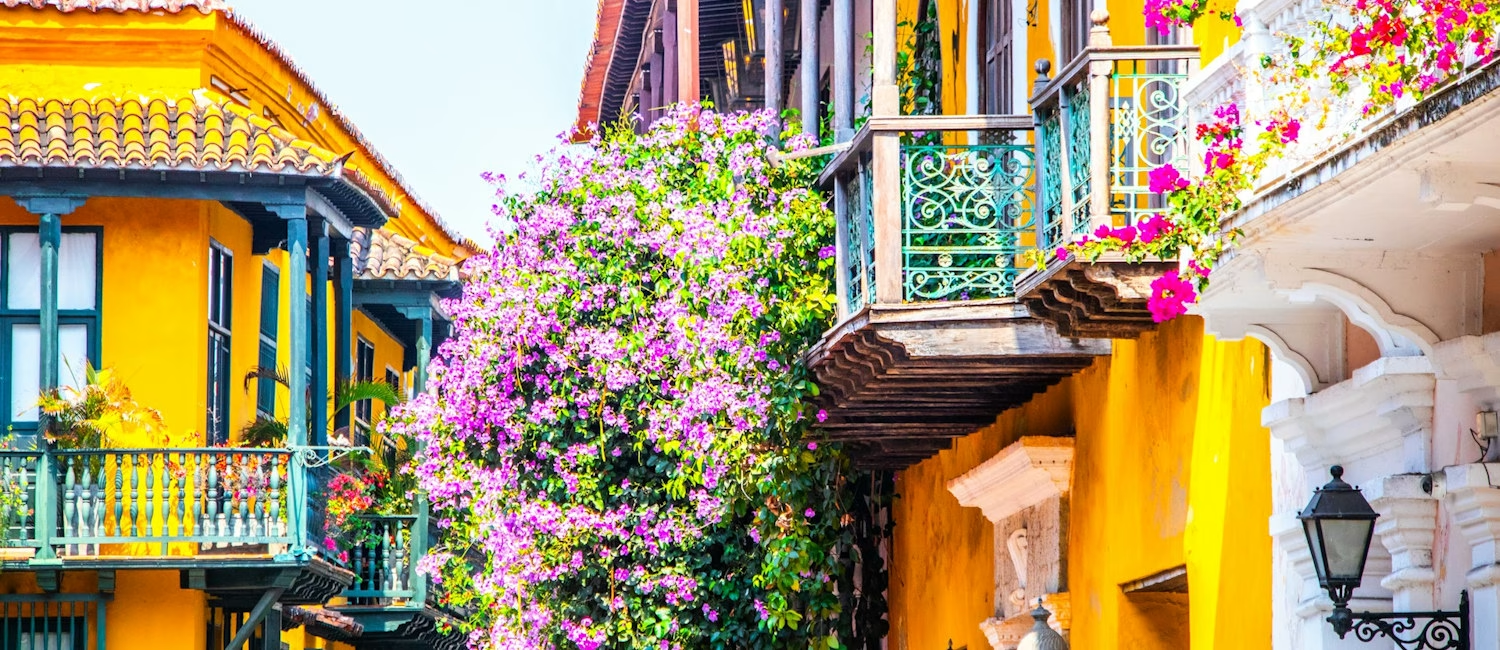
Growing up in Cartagena taught me that culture is something you experience every single day. I remember constantly interacting with people from very different backgrounds. The city naturally brought together locals, visitors, vendors, entrepreneurs and artists, and those interactions became completely normal for me.
◦ 17 min readYou often say, “People are the real destinations.” Where did that philosophy begin?
I believe that philosophy began long before I ever imagined working in tourism. I was born and raised inside Cartagena’s Walled City, where I grew up surrounded by people from every walk of life. Tourists, street vendors, artists, musicians, neighbors – we all shared the same streets. At home, there was never a distinction between people based on status. My father greeted everyone with the same warmth and respect, and that taught me that every person has a story worth listening to.
Growing up in that environment shaped the way I see the world. I learned that places are beautiful because of the people who bring them to life. Today, that belief is at the heart of everything we do at IMPULSE. We don’t simply introduce travelers to destinations – we create opportunities for meaningful human connection.
Growing up in Colombia, what experiences most shaped your understanding of community, culture and identity?
Growing up in Cartagena taught me that culture is something you experience every single day. I remember constantly interacting with people from very different backgrounds. The city naturally brought together locals, visitors, vendors, entrepreneurs and artists, and those interactions became completely normal for me.
What shaped me most was realizing that every person contributes to the identity of a place. A fine dining restaurant and a street vendor selling arepas can both tell equally important stories about Colombia. Neither experience is more valuable than the other; they simply reveal different parts of who we are.
That understanding continues to guide my work today. I believe that every community deserves to be seen, every voice deserves to be heard, and every story has value.
Before founding IMPULSE Travel, did you always imagine your future would be in tourism, or did that purpose reveal itself over time?
Not at all. Tourism actually found me.
After spending some time living in Bogotá and later in Germany, I returned to Cartagena speaking German and simply needed some extra income. Becoming a tour guide wasn’t part of a grand career plan – it was an opportunity that appeared at exactly the right moment.
Very quickly, I realized how much I loved it. I discovered that what truly excited me wasn’t showing monuments or explaining history – it was creating connections between people. I loved being a bridge between travelers and local communities, helping both sides understand each other better. Looking back, I realize that purpose revealed itself little by little, until it became impossible to imagine doing anything else.
What inspired you to co-found IMPULSE Travel, and what problem were you determined to solve?
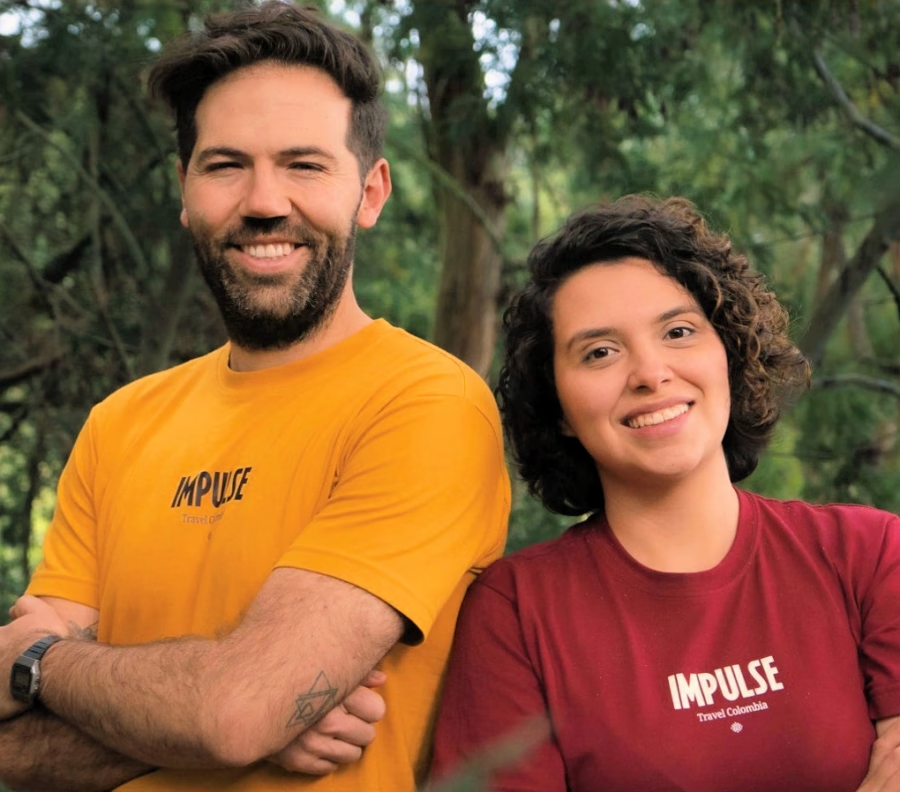
My co-founder and I both began our careers as tour guides – he in Bogotá and I in Cartagena. We eventually joined forces because we shared the same vision: tourism could become something much more meaningful than simply moving people from one attraction to another.
The real turning point came after Colombia’s Peace Agreement in 2016. We felt that peace wasn’t something that had simply been signed – it was something that needed to be built every day. We asked ourselves how we could contribute using the skills we already had.
The answer was tourism.
We wanted travelers to meet the people who were building the Colombian Renaissance: community leaders, artists, entrepreneurs, former conflict zones transforming themselves, and everyday people creating positive change. We believed that tourism could generate income, dignity and visibility for those communities while allowing visitors to discover a completely different Colombia.
That vision became IMPULSE Travel.
IMPULSE has become recognised internationally for community-based and purpose-driven tourism. What does “travel with purpose” genuinely mean to you?
For me, purpose-driven travel isn’t about making every trip serious or educational. People travel to celebrate, to rest, to reconnect with themselves and with the people they love. Our role is to make those moments even more meaningful.
At IMPULSE we often say that luxury isn’t about excess – it is about access.
We take care of every logistical detail so our travelers can focus on what truly matters: connecting with people. Whether they are sharing dinner with a local family, talking to a community leader or meeting an artist, those conversations are what transform a trip into something unforgettable.
Travel with purpose simply means returning home having understood another human being a little better than before.
Looking back, was there a defining moment when you realised the business had become something much bigger than a tour operator?
Yes.
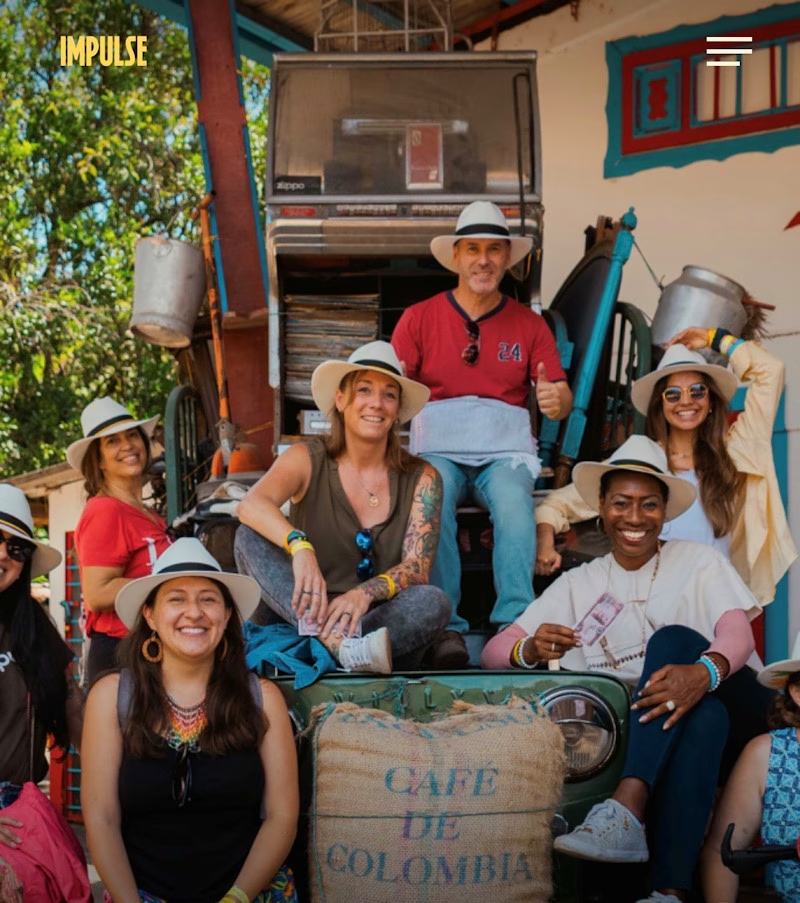
There was a moment when we gathered our guides, local experts and community partners to share the idea that we were all contributing to what I now call the Colombian Renaissance.
As we talked, I realized that everyone in the room felt ownership of that vision. We weren’t simply operating tours anymore. We were helping tell a new story about Colombia together.
That was the moment I understood IMPULSE had become much bigger than a tourism company.
Today I don’t see us as tour operators. I see us as part of a cultural movement that is helping rebuild the image of Colombia – both for the world and for Colombians themselves.
Colombia has spent decades overcoming outdated perceptions. How important has tourism been in helping rewrite the country’s story?
I believe tourism has played an extraordinary role because it creates one of the few situations where someone genuinely asks you, “Who are you? Tell me your story.”
Most people never have the opportunity to answer that question. Tourism invites us not only to explain who we have been, but also who we want to become.
For decades Colombia’s story was defined by conflict, violence and drug trafficking. Those chapters are real and cannot be ignored, but they are no longer the whole story.
Today we’re telling a different narrative – one of reconciliation, entrepreneurship, biodiversity, conservation and hope.
Tourism has helped Colombians believe in that new identity ourselves. Every conversation between a traveler and a local becomes another opportunity to tell a different story about our country.
And perhaps most importantly, tourism also protects what makes Colombia special. In many of our natural destinations, tourism creates economic reasons to preserve ecosystems rather than exploit them. When communities benefit from conservation, everyone wins.
So tourism hasn’t simply changed how the world sees Colombia – it has helped Colombians imagine a different future for ourselves.
Your itineraries introduce travellers to artists, community leaders, musicians and social entrepreneurs. Why are these human connections more important than simply visiting famous places?
Today, anyone can find a beautiful photo online – or even generate one with AI. You can see the Cocora Valley on Instagram a thousand times before you ever visit. But no picture can replace a conversation with the person who has dedicated their life to protecting those wax palms.
When you meet the environmental leader who explains why Colombia’s national tree matters, or you hear a community member describe how their territory has changed over the years, you stop seeing a landscape and begin understanding a place.
As human beings, we learn through empathy. We remember stories much longer than facts, and we are transformed by conversations much more than by photographs. That’s why we design experiences around people rather than landmarks. Long after travelers have forgotten exactly where they took a picture, they still remember the person who changed the way they see the world.
What experience most consistently changes visitors’ perceptions of Colombia?
There is one experience that I always recommend travelers do at the very beginning of their journey through Colombia. We created it ourselves, and it’s called A Taste of Change.
Rather than simply introducing people to Bogotá, it introduces them to modern Colombia.
During the experience we explore the country’s recent history, including more than fifty years of armed conflict, and we openly discuss the different actors involved – the guerrillas, paramilitary groups, the military, drug trafficking and, most importantly, the millions of Colombians whose lives were affected. We visit the Fragmentos memorial, built by melting down weapons surrendered after the Peace Agreement, where victims transformed the metal into the floor visitors now walk across.
Along the way, travelers drink coffee from crop-substitution projects, taste coca in its traditional Indigenous context, meet social entrepreneurs, enjoy lunch at a restaurant created by a woman displaced by violence who now empowers other women, and end the day sharing a beer brewed by former FARC signatories who chose to exchange weapons for entrepreneurship.
By the end of that experience, every other journey through Colombia becomes richer. Whether they’re rafting, visiting a market or hiking in nature, travelers now understand that every Colombian they meet carries a complex story of resilience, transformation and hope.
That changes everything.
Building a tourism business in Colombia has not always been straightforward. How have periods of political uncertainty, regional security concerns and international perceptions influenced IMPULSE’s development and long-term trajectory?
Building a tourism company in Colombia means constantly balancing reality with perception.
Whenever something happens politically – or even when events occur far from where we operate – we immediately receive questions from travelers and international partners asking whether Colombia is safe.
My responsibility has always been to answer with complete honesty. If I believe an experience presents any real risk to our travelers, I simply won’t operate it. Their safety always comes first.
At the same time, I’ve also learned that Colombia is often judged by headlines rather than by reality. Many international perceptions are rooted in events that happened decades ago. I still have travelers jokingly ask whether Pablo Escobar might be waiting for them, and I have to remind them that he died in 1993.
The Colombia I know has changed enormously. Every year I have seen improvements in safety, infrastructure and opportunity. Our greatest challenge today isn’t overcoming today’s reality – it’s overcoming yesterday’s narrative.
During those more challenging periods, what qualities did you discover in yourself as a leader?
I discovered that I am capable of much more than I usually think.
Every time a difficult situation appeared, I initially felt unprepared. But somehow, together with my team, we always found a way forward.
Leadership has also taught me the importance of community. You don’t need to know everything yourself. If you don’t have an answer, someone around you probably does. Asking for help isn’t weakness – it’s part of good leadership.
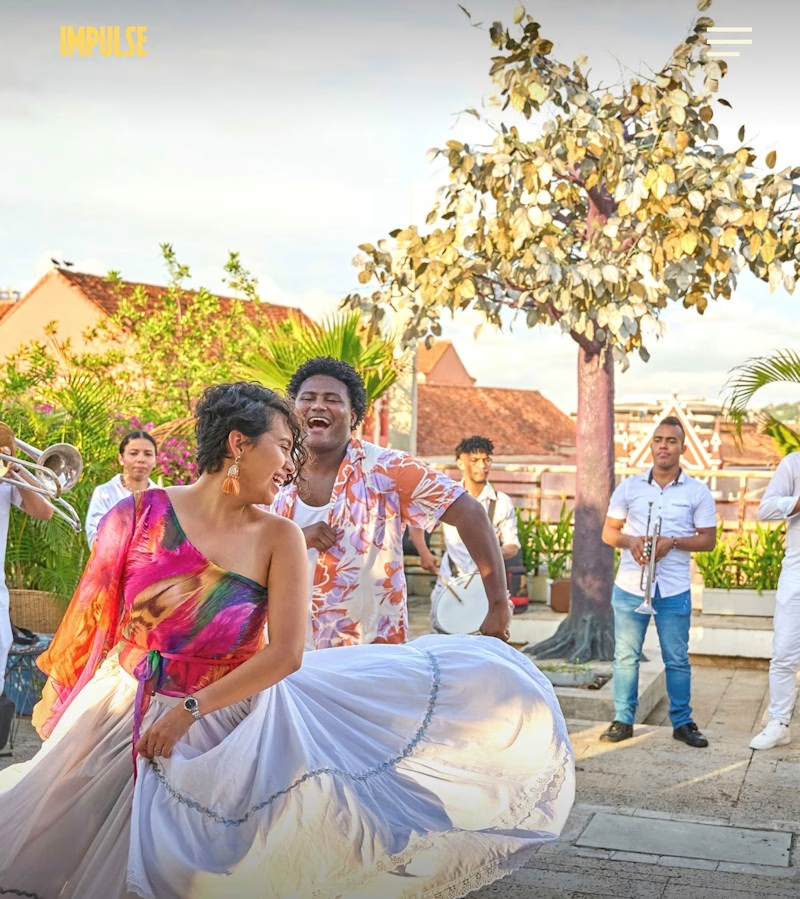
Perhaps my biggest personal lesson has been realizing that I don’t have to become someone else in order to lead. I’m a Caribbean woman. I’m warm, energetic, emotional, I laugh loudly, I dance, I speak quickly, and I genuinely enjoy people.
For a long time I wondered whether leadership required becoming more serious or more distant. Today I know it doesn’t.
Authenticity is one of the strongest leadership tools I have.
Tourism can be one of the first industries affected by global events. How do you maintain optimism and confidence when external circumstances feel beyond your control?
I don’t think optimism means pretending everything is fine.
There are definitely moments when I worry. Political events, elections or international headlines can create uncertainty almost overnight.
One of the greatest strengths I’ve had is my partnership with my co-founder. We balance each other incredibly well. Sometimes I’m the one imagining the worst-case scenario, and he reminds me to stay calm. Other times he’s the one feeling overwhelmed, and I become the optimistic one.
That balance has been invaluable.
I’ve learned that uncertainty is simply part of entrepreneurship. Rather than trying to control everything, we’ve learned to respond thoughtfully, stay transparent with our partners and focus on what we can actually influence.
IMPULSE has demonstrated that commercial success and positive social impact can exist together. Why is that balance so important?
One of the biggest lessons we’ve learned is that impact alone doesn’t sustain a business.
After receiving the UNWTO Award for our contribution to SDG 16 – Peace, Justice and Strong Institutions—we became so focused on impact that we almost forgot something essential: people travel because they want to enjoy themselves.
For a while, we believed every traveler had to come to Colombia to change the world. The reality is different.
People travel to celebrate, reconnect with family, rest and create beautiful memories. Colombia’s future matters deeply to me because I live here. My responsibility is to make sure travelers have extraordinary experiences while naturally creating positive impact along the way.
A healthy business allows us to keep employing people, supporting communities and investing in long-term projects.
Purpose without financial sustainability isn’t sustainable.
The real challenge – and the real opportunity – is finding the balance between both.
As a B Corp leader and ATTA Ambassador, what responsibility do travel businesses have beyond creating memorable holidays?
I believe our responsibility begins with recognizing that tourism doesn’t exist separately from society.
Every trip leaves something behind – economically, culturally and environmentally. The question isn’t whether we create impact; it’s what kind of impact we choose to create.
At the same time, I’ve also become careful about believing that tourism alone will solve every global challenge. Travelers shouldn’t feel guilty for wanting to relax or enjoy themselves.
Instead, our responsibility is to design experiences where positive impact becomes a natural consequence of an unforgettable journey.
If we can create trips that are joyful, authentic and economically beneficial for local communities at the same time, then everyone wins.
What have local communities taught you about leadership, resilience and success?
Local communities have taught me that resilience isn’t something extraordinary – it’s something people practice every single day.
Some of the most inspiring leaders I’ve met don’t have impressive titles. They’re women rebuilding their lives after displacement, former combatants creating businesses instead of carrying weapons, Indigenous leaders protecting ancestral knowledge, or young entrepreneurs transforming neighborhoods that were once defined by violence.
They’ve taught me that leadership begins with showing up consistently for your community.
They’ve also reminded me that change rarely happens through one big action. It happens through thousands of small decisions made every single day.
That philosophy has shaped both my leadership and the way we build IMPULSE.
We first connected through accessible tourism. Why do you believe accessibility and inclusion should become central to Colombia’s tourism future rather than remaining specialist considerations?
Because accessibility isn’t about a small group of people – it’s about all of us.
There are many different ways of moving through the world, experiencing places and connecting with others. Tourism should reflect that diversity.
When we first entered the world of accessible tourism, I quickly realized that accessibility isn’t about creating one solution for everyone. Every traveler has different needs, different abilities and different expectations.
Colombia is not yet a fully accessible destination, and it’s important to be honest about that. We don’t have ramps everywhere, perfectly adapted infrastructure or accessible bathrooms in every location.
Our responsibility isn’t to pretend otherwise. It’s to provide transparent information – slopes, widths, surfaces, distances, available equipment – so travelers can decide for themselves what works for them.
For me, accessibility begins with honesty.
Ultimately, I believe inclusive tourism isn’t about designing experiences for “special travelers.” It’s about recognizing that every one of us will need accessibility at some point in our lives.
The more we understand that, the better tourism becomes for everyone.
What opportunities do you see for Colombia to become one of the world’s leading inclusive and accessible destinations?
I believe Colombia has an extraordinary opportunity precisely because we’re still building our tourism industry.
We don’t have to retrofit decades of infrastructure – we can choose to build differently from now on.
One of the most beautiful things we’ve experienced is seeing how conversations create change. Sometimes we simply ask a supplier, “Why can’t someone using a wheelchair participate?” And instead of saying it’s impossible, people begin looking for solutions.
We’ve seen tejo courts build ramps. Hotels rethink their rooms. Guides become more descriptive. Communities become more creative.
Those small changes add up.
I hope Colombia becomes known not because we have perfect infrastructure, but because we have people willing to innovate, adapt and genuinely welcome everyone.
That’s the kind of accessibility that transforms a destination.
If you could change one thing about global tourism over the next decade, what would it be?
Honestly, I’m not sure I would try to change tourism itself.
Tourism simply reflects who we are as human beings.
I’ve become less interested in talking about changing the world and more interested in making small, meaningful improvements wherever we can.
Of course, I’d love to see more sustainable travel. But I’ve also learned to be realistic. Even those of us working in sustainability don’t always make the perfect choice. We all balance convenience, price and values every day.
Instead of expecting travelers to become perfect, I think destinations have a responsibility to create better options and make the right choice the easiest choice.
Real change happens through thousands of small decisions made consistently over time.
That’s the future of tourism I believe in.
What legacy do you hope IMPULSE Travel will leave – not only for travellers, but for Colombia itself?
I hope IMPULSE helps position Colombia as one of the world’s leading examples of sustainable tourism.
More importantly, I hope we become part of what I call the Colombian Renaissance.
I’ve traveled extensively, and I’ve noticed that many countries are trapped in narratives of decline and pessimism. Colombia, despite everything we’ve lived through, is different. Here you can genuinely feel transformation happening.
I want people to leave Colombia believing that change is possible.
I also hope we’ve challenged the tourism industry to become more inclusive. Sometimes our greatest contribution isn’t having all the answers – it’s asking better questions.
Why can’t someone using a wheelchair play tejo?
Why isn’t this information available?
How could we make this experience accessible?
Those conversations inspire innovation.
Finally, I don’t believe culture should be frozen in time. I believe in conscious evolution.
If IMPULSE helps Colombia evolve while preserving its identity, then I’ll feel we’ve left something meaningful behind.
Finally, when people think of Juliana Medina Rivero many years from now, what do you hope they will remember?
More than any professional achievement, I hope people remember my warmth and my closeness.
I hope they remember someone who genuinely cared about people, who brought others together, who listened more than she spoke, and who believed that meaningful connections could change lives.
If, through my work, I helped a few people see Colombia differently – and helped Colombians see themselves differently too – that would be enough.
At the end of the day, that’s what has always mattered most to me.
Quickfire
Caribbean sunrise or Andean sunrise?
Caribbean sunrise.
Cartagena, Medellín or Bogotá?
Bogotá.
Coffee or cacao?
Coffee.
Which place in Colombia still takes your breath away every time you visit?
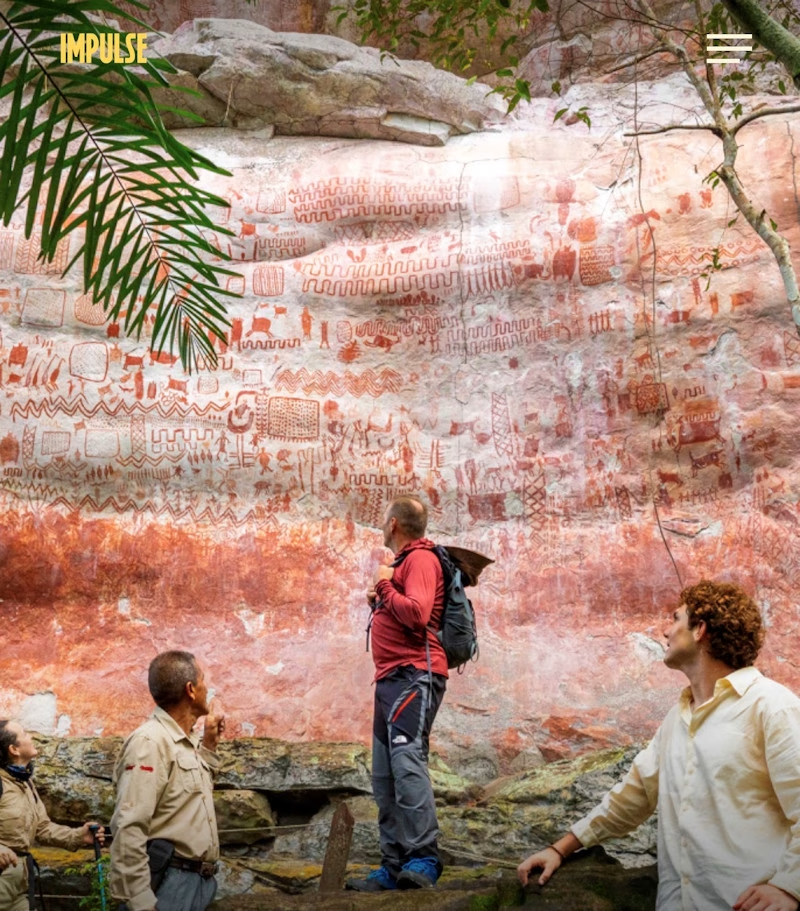
The Colombian Amazon. It reminds me how much of our country is still wild, alive and waiting to be understood.
Which Colombian dish should every traveller try?
Arepa de huevo.
Which person has most inspired your leadership journey?
My mother. She taught me that everyone deserves the same respect, regardless of who they are, and that lesson has shaped both my leadership and my life.
What never leaves your travel bag?
A book – and plenty of curiosity.
Which country has surprised you most outside Colombia?
Germany. Living there taught me to see Colombia from a completely different perspective and ultimately led me into tourism.
Complete this sentence: “Travel changes the world because…”
“…it changes the conversations people have with one another—and when conversations change, perspectives change too.”
And finally… What is the greatest lesson Colombia has taught you?
That even after the darkest chapters, renewal is possible. Colombia has taught me that resilience isn’t about forgetting the past- it’s about choosing, every single day, to build a better future together.