Iwona Arthur: Director of Sales, UK, Independently Yours
Working in hotel operations taught me to truly understand guests' needs and the importance of treating every person as an individual. We all respond to different things, but we all want to feel seen, recognised, and genuinely welcomed.
◦ 17 min readEarly Influences
Before hospitality became your profession, what early experiences most shaped the person you are today?
Leaving Poland shortly after finishing school was the experience that shaped me most. I had always dreamed of studying fashion, and London felt like the only place where that dream truly belonged.
Getting there wasn’t easy. I worked tirelessly to bring my English up to an academic standard, moved first to Leeds and then to London, and balanced part-time studies with a full-time job to fund my education.
That chapter taught me resilience. If there’s one thing people who know me would say about me, it’s that I rarely give up.
You studied Fashion Media, Culture and Communication. What first attracted you to creativity, style and visual storytelling?
Growing up, I wanted to become a fashion designer. I was inspired by my grandmother, who was a dressmaker, and by my older sister’s copies of Vogue and Elle. That passion eventually brought me to London, where the city’s creative energy and diverse culture challenged me to think beyond fashion itself.
During my degree, I realised that fashion wasn’t just about aesthetics – it was about understanding people. I became fascinated by consumer behaviour, cultural trends, and the psychology behind why we connect with certain brands and experiences.
That perspective has been invaluable throughout my career. Whether you’re marketing a luxury handbag or a five-star hotel suite, you’re not simply selling a product; you’re creating desire, building emotional connections, and communicating a lifestyle that resonates with the right audience.
Great storytelling isn’t just about beautiful campaigns – it’s about driving demand, strengthening brand equity, and ultimately delivering measurable business results. The most successful brands understand that when creativity is aligned with commercial strategy, it becomes a powerful engine for growth.
I’m currently obsessed by Explora Journeys’ latest campaign, ‘Maybe the best hotel isn’t a hotel.’ I love how it challenges a traditional category definition and reframes luxury travel around the experience rather than the product. It’s a brilliant example of how powerful storytelling can shift perceptions, create desire, and invite consumers to see something familiar in a completely new way. The same principle is evident in Bottega Veneta’s recent ‘Craft Is Our Language’ campaign, which elevates craftsmanship and human connection above the product itself, proving that the strongest luxury brands sell values and emotion, not just what they make.
Which values from your upbringing remain most visible in the way you work and lead?
I’m going to reach for the stars to answer this question… I’m a Virgo, raised by two Virgos. We’re often described as loyal, thoughtful, observant, organised, and always willing to help others. I’d like to think those qualities are clearly reflected in the way I work and lead.
Entering Hospitality
Your hotel career began at the front desk. What did those earliest guest-facing roles teach you about people, service and the importance of a welcome?
Working in hotel operations taught me to truly understand guests’ needs and the importance of treating every person as an individual. We all respond to different things, but we all want to feel seen, recognised, and genuinely welcomed.
When did you first realise hospitality could become a long-term career?
I often say that I didn’t choose hospitality – hospitality chose me. Initially, it was simply an opportunity to earn a living, but very quickly I discovered that it was about so much more than a job. The relationships I built, the people I met, and the experiences I was able to create made me realise this was an industry where I could truly grow and make an impact.
What particularly drew me in was the connection between hospitality, fashion, and lifestyle. As we discussed earlier, boutique hotels are not just about rooms; they are about creating a world, a sense of identity, and an emotional connection with guests. That intersection between design, storytelling, culture, and human experience became a key driver for me.
Over time, I realised hospitality offered the perfect platform to combine my creative background with my commercial mindset – understanding what people desire, creating meaningful experiences, and translating those insights into business success.
How valuable was your grounding in reception, reservations and hotel operations when you later moved into sales?
My operational foundation has been one of my greatest strengths in sales. Having worked across reception and reservations I understand the reality behind the experiences we sell. When I speak with potential hotel partners for Independently Yours, I can speak their language because I understand their priorities, challenges, and opportunities.
Equally, when I speak with hotels on the behalf our travel advisors, concierge partners, and other clients, I know how to navigate hotel structures and communicate effectively with different departments. That operational insight allows me to build stronger relationships and create partnerships that are valuable for everyone involved.
Building a Career in Luxury Sales
What do you believe enabled you to progress from operational roles into increasingly senior commercial positions?
I believe my progression has been driven by curiosity and a genuine desire for continuous improvement. I have always looked beyond the immediate task and wanted to understand the wider business: how a hotel performs within its competitive landscape, what drives success, and how we can create strategies that deliver long-term value for both the business and our partners.
I also believe strongly that data tells a story. The ability to interpret that story – to understand what the numbers are telling us and translate those insights into action – is essential for navigating change, identifying opportunities, and making informed commercial decisions.
What did your time at The Westbury Mayfair teach you about the expectations surrounding luxury hospitality?
My time at The Westbury Mayfair taught me that luxury is not one-size-fits-all. The property attracted a predominantly North American clientele, alongside European guests, and I learned how important it is to understand different cultures, expectations, and definitions of luxury.
The biggest lesson was that meeting expectations is not enough – you need to anticipate needs, create an emotional connection, and leave guests with a feeling they remember.
Mayfair itself brings out the most polished version of you. It taught me that in luxury hospitality, every detail and every interaction matters, because the experience is ultimately shaped by the people delivering it.
How do you build commercially valuable relationships without allowing them to feel transactional?
The foundation of any valuable commercial relationship is trust and alignment of interests. I have always believed that our role is not simply to sell a hotel – it is to create the right match between a property and the travel partners who are committed to delivering the right experience for their clients.
Authentic partnerships are built through transparency, consistency, and a genuine commitment to helping our partners succeed. Over time, that trust becomes the strongest commercial advantage, creating relationships that deliver long-term value for everyone involved.
Do you see effective sales as less about persuasion and more about listening, understanding and creating the right connection?
Absolutely. Listening is our superpower. In commercial roles, the ability to listen deeply is what allows us to move from selling to understanding.
It is unlikely that we can truly exceed someone’s expectations if we don’t first understand what they need and what matters to them. Of course, with experience, we can anticipate certain needs, but to create truly meaningful experiences, we need to take the time to understand the person we are serving.
And let’s be honest – we all love talking about ourselves. Just look at this interview! But the real skill is creating space to listen, ask the right questions, and build a genuine connection. For me, the best sales relationships are built when people feel understood and supported.
What separates an exceptional luxury-hospitality salesperson from someone who simply knows the product well?
An exceptional luxury hospitality salesperson does more than know the product – they know how to bring it to life and make people feel the experience before they have even arrived.
Knowing the product is important, but luxury sales is about being a passionate storyteller and creating an emotional connection. The story does not have to be complicated; it just needs to be authentic and memorable.
Leadership and Global Perspective
At The Doyle Collection, you moved from leading sales for an individual property to overseeing global sales and trade marketing across a wider portfolio. How did that change your perspective?
I joined The Doyle Collection as Director of Sales for The Bloomsbury before moving into the role of Director of Global Sales and Trade Marketing. That transition broadened my perspective significantly – it gave me a deeper understanding of the wider commercial strategy behind a hotel group and the opportunity to build relationships with global travel partners.
It also made me appreciate the balance between consistency and individuality across a portfolio: identifying the “golden thread” that connects the brand, while ensuring each hotel’s unique story, personality, and sense of place remain at the heart of the guest experience.
When representing several hotels with distinct identities, how do you protect the individuality of each property while still creating a coherent commercial strategy?
At Independently Yours, I represent a portfolio of independent luxury hotels, managing relationships with the UK travel trade on behalf of our hotel partners.
The collection provides the opening conversation, but each hotel is always positioned as a unique destination with its own personality, story, and target audience. My commercial strategy is based on identifying the right partners for each individual property rather than taking a one-size-fits-all approach.
By understanding both the hotel’s positioning and the specific needs of travel advisors and tour operators, I can match the right property with the right client. I often compare it to matchmaking – you wouldn’t introduce a bride to someone who is the complete opposite of what they’re looking for. The same principle applies to hotel representation: success comes from connecting the right hotel with the right partner.
Once that match has been made, the conversation shifts from the collection to the individuality of the hotel. I focus on bringing each property to life through its unique story, character, experiences, and sense of place, ensuring that it stands apart from the others while still benefiting from being part of a broader portfolio.
What have international markets taught you about the different ways travellers and travel professionals interpret luxury?
Working across international markets has taught me that luxury means different things to different people. Cultural differences, travel motivations, and client expectations all influence how both travellers and travel professionals define luxury.
The key is to listen first and understand what each market values. Rather than changing a hotel’s identity, I tailor the way I present its story and experiences to resonate with the right audience. That’s what creates meaningful connections and delivers commercial success.
How has your leadership style evolved as your responsibilities have grown?
With experience, I have become more relaxed and gained a better perspective on what truly matters. I still have high standards and believe in being proactive, accountable, and commercially focused, but I have learned that not everything requires the same level of urgency.
I also believe that leadership is a two-way learning process. While experience brings knowledge and perspective, I value the fresh ideas and different viewpoints that junior team members bring. Some of the best insights can come from people who see a challenge from a completely different angle, and creating an environment where everyone feels comfortable sharing their ideas is essential.
Ultimately, my role as a leader is to provide direction, support growth, and create the conditions where people feel trusted and empowered to do their best work.
Independent Luxury
What attracted you to Independently Yours and to the opportunity to represent independently owned hotels and resorts?
Independently Yours appealed to me because it sits at the intersection of two areas I am passionate about: luxury hospitality and the power of independent brands. The opportunity came at an exciting stage, as the company was re-establishing its UK presence, building on the success of its well-established US operations. Being part of that growth phase was particularly attractive because it offered the opportunity to help shape the strategy, grow and position the collection, and create a strong commercial foundation from the ground up.
What also gave me confidence in the opportunity was the strength and reputation of the owners within the luxury hospitality sector. Having the right infrastructure and expertise creates the platform needed to deliver meaningful results for independent hotels.
I was also particularly drawn to the opportunity to work alongside Mike Bonner and Salvatore Galati. I value working with experienced, knowledgeable leaders who inspire growth, challenge thinking, and share their expertise. For me, being part of a collaborative team with a strong vision is essential to achieving commercial success.
Independent properties often have remarkable character but less reach than major brands. What can thoughtful representation help them achieve?
Absolutely, independent brands often don’t have the same reach or marketing budgets as major hotel groups. That is why many of them benefit from being part of a collection and having access to shared resources, expertise, and group activities.
Travel advisors are increasingly overwhelmed by the number of individual hotels trying to reach them. I recently spoke with a UK-based advisor who told me she receives, on average, around seven emails from hotels every day. Her priority is making bookings for her clients, so she simply cannot engage meaningfully with every individual property.
Independent hotels benefit from my established relationships and market knowledge. I understand which partners are the right fit for each hotel and who has the potential to sell a specific experience. With the growing IC model, hotels benefit from having someone on the ground who understands the market and can build relationships consistently. Hoteliers can no longer rely on visiting the UK a couple of times a year and expecting to maintain strong connections with travel partners—many of those traditional office meetings no longer exist.
We help them grow revenue by targeting the right partners, reaching audiences they may not be able to access directly, and providing valuable advice and feedback on local market trends.
What makes an independent hotel genuinely memorable: its people, design, location, story or something less tangible?
I believe it is a combination of all of those elements, but ultimately, in hospitality, the most important factor is still people. A stunning property can create the first impression, but without exceptional service, it cannot create a lasting memory.
The most memorable experiences come from people who understand the importance of anticipation – knowing what a guest needs before they ask, surprising them with small thoughtful touches, and making them feel recognised when they return to the same destination.
For me, that human connection is what transforms a beautiful hotel into a truly memorable experience.
How do you translate the atmosphere and emotional character of a hotel into a story that travel professionals can confidently share?
For me, it starts with understanding that a hotel is more than its rooms, facilities, or design – it has a personality, an atmosphere, and a feeling that guests take away with them. My role is to translate those elements into a simple, authentic story that travel professionals can easily understand and share with their clients.
For example, I often describe the four boutique Italian hotels I represent as four Italian sisters – each with her own personality, style, and story. This allows advisors to immediately understand what makes each hotel unique and, more importantly, to confidently match the right experience with the right client.
Ultimately, the best storytelling is not complicated – it gives people a reason to feel connected before they have even arrived.
The Changing Traveller
How are expectations of luxury changing, particularly around authenticity, wellbeing, personalisation and a stronger sense of place?
Luxury is becoming less about extravagance and more about emotional connection. Today’s travellers are looking for authentic, meaningful experiences that help them connect with the destination, its culture, and its people. A strong sense of place has become just as important as exceptional service.
Personalisation will continue to evolve, with AI helping hotels better understand guest preferences and anticipate needs. However, the human touch will remain essential, as genuine hospitality cannot be replaced by technology.
Wellbeing is also becoming more sophisticated. As the industry moves beyond “wellness washing,” travellers are looking for credible, tailored wellness experiences rather than generic offerings. I believe there is growing value in qualified wellness specialists who can guide guests towards experiences that genuinely meet their individual needs.
What do luxury hotels still misunderstand about the needs of today’s traveller?
I think many luxury hotels still misunderstand that luxury today is not about adding more – it is about creating more meaningful experiences. Too often, hotels follow trends because competitors are doing the same, rather than asking what is genuinely valuable for their own guests.
Today’s luxury traveller is looking for authenticity, connection, and experiences that feel personal and connected to the destination. The hotels that will stand out are not the ones copying what is popular, but the ones brave enough to create something unique and become trendsetters.
When people reflect on working with Iwona Arthur, what do you hope they will remember—not simply about what you achieved, but about how you made them feel?
While I don’t currently manage a team directly, throughout my career I have led teams ranging from one to six people. I hope people remember me as someone who encouraged them to be proactive, take ownership, and think beyond their immediate responsibilities.
I have high expectations because I believe that is how people and businesses grow, but I also believe that expectations need to be balanced with support, fairness, and trust. My goal as a leader has always been to create an environment where people feel challenged, valued, and confident to bring their ideas forward.
Ultimately, I would like people to remember not only the results we achieved together, but that they grew professionally and felt respected along the way.
Quickfire
Parisian townhouse or Mediterranean hideaway?
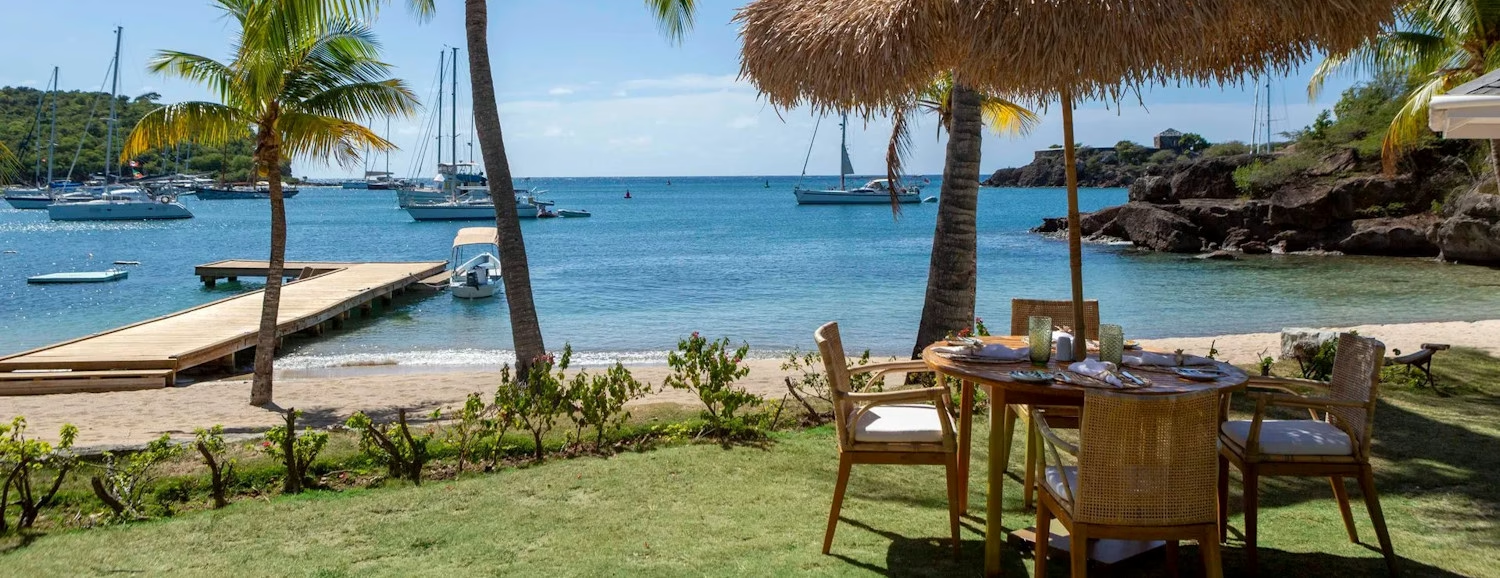
Give me sea view, sun and olives, please!
Grand historic hotel or intimate contemporary retreat?
I’d rather have a love affair between the two than choose one over the other.
Mountain air or island breeze?
I grew up by the seaside, so I’ll always choose the coast. Hopefully, by “island breeze” you mean somewhere warmer than the Baltic Sea.
Vintage market or modern art gallery?
Both are great passions of mine. I love that every vintage piece carries a story and a history, but I also appreciate seeing the world through a fresh perspective.
A destination you could return to endlessly?
My hometown in Poland. You never sleep better than in your childhood bedroom, waking up to breakfast prepared by your mum.
The most beautiful hotel arrival you have experienced?
They’re about the feeling that you’ve already been expected.
One object that always travels with you?
My big, flashy necklace – in case I need to turn a simple outfit into an evening look!
Dinner overlooking the sea or breakfast above the clouds?
Dinner overlooking the sea. Whenever I have trouble sleeping, I listen to the sound of the waves – there’s nothing more relaxing than the sea.
Complete the sentence:
“True luxury is…” having the time to be present and fully focus on myself.
Complete the sentence:
“The most memorable hotels make you feel…” like you have discovered something authentic, giving you a deeper connection to the destination and the people who bring it to life.