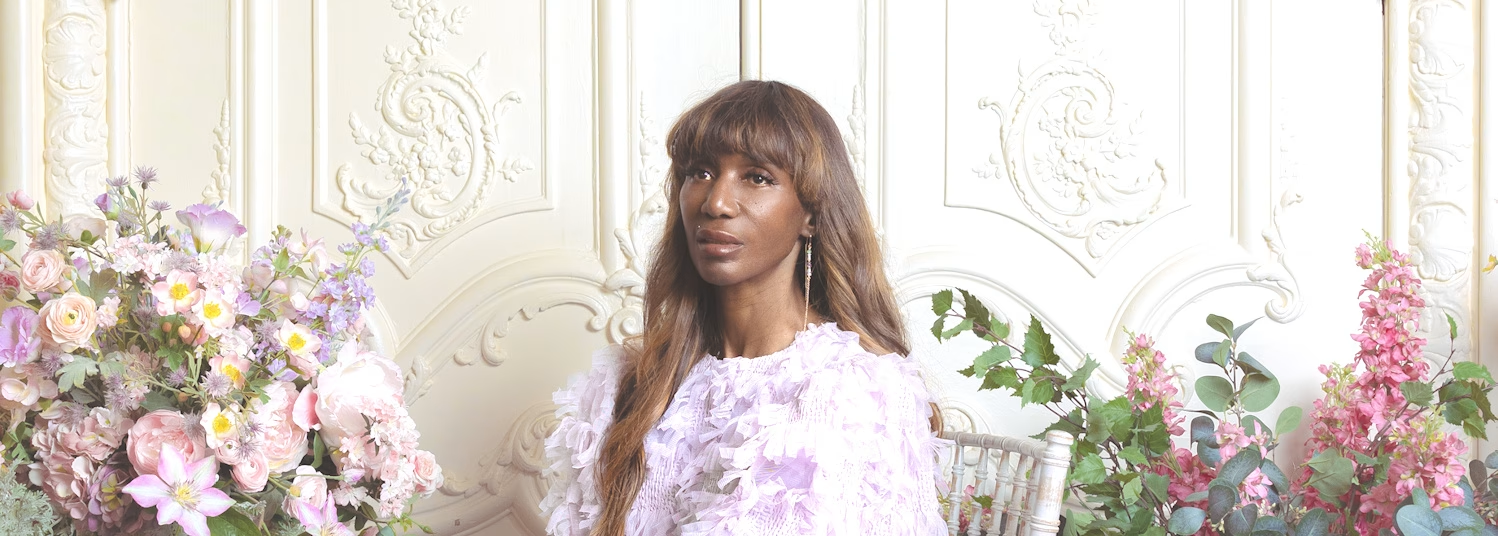
Angel Sinclair: Founder, Models of Diversity
Authenticity, persistence and empathy. You have to lead with your values, even when it's difficult, and always remember that the mission is bigger than yourself.
◦ 8 min readChanging the Face of Fashion Through Representation, Inclusion & Visibility
Early Influences
Growing up in East London, what first shaped your understanding of identity, belonging and representation?
Growing up in East London meant being surrounded by people from different cultures and backgrounds, but I also saw how quickly society labelled people based on appearance. From an early age, I understood that being different often meant being overlooked. Those experiences made me appreciate individuality and planted the seed for wanting everyone to feel they belong.
Before founding Models of Diversity, what did the fashion industry teach you about confidence, beauty and self-worth?
It taught me that the industry had created a very narrow definition of beauty, and many people spent their lives believing they weren’t enough because they didn’t fit that mould. I realised confidence shouldn’t come from meeting someone else’s standards but from embracing who you are. That became the foundation of everything I do.
Was there a moment in your early life when you realised you saw the world differently from those around you?
I’ve always questioned why society accepts certain standards without challenging them. While many people accepted “that’s just how it is,” I found myself asking, “Why?” If something excluded people or made them feel invisible, I believed it should change.
The Spark
You’ve spoken about your appearance on Gok’s Miss Naked Beauty being a turning point. What was it about that experience that changed your perspective?
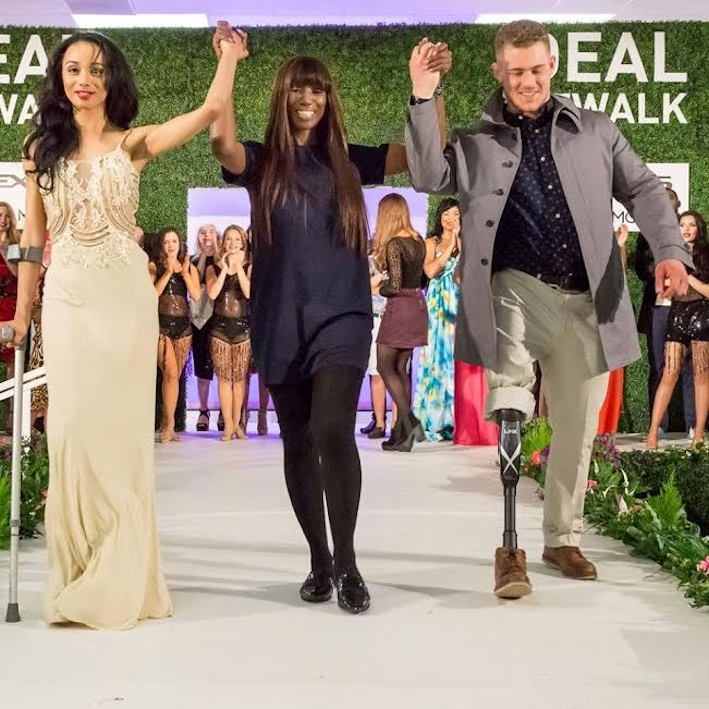
The programme highlighted how damaging unrealistic beauty standards can be and how deeply they affect confidence and mental wellbeing. It made me realise that conversations weren’t enough—we needed action. I left determined to help create an industry where everyone could see themselves represented.
When you launched Models of Diversity from your kitchen table, what problem were you determined to solve?
I wanted to tackle the lack of authentic representation. Too many talented people were excluded because they didn’t fit an outdated ideal. I wanted to open doors, challenge perceptions and prove that diversity isn’t a niche—it’s reality.
Did you ever imagine it would still be influencing the industry more than 15 years later?
Honestly, no. I simply wanted to make a difference. Seventeen years later, we’re still campaigning because the work isn’t finished, but it’s incredibly rewarding to see conversations that once seemed radical become part of mainstream thinking.
Challenging the Status Quo
Why has fashion historically struggled to reflect the diversity of the people it serves?
For many years, fashion sold aspiration by promoting exclusivity. The problem is that aspiration became exclusion. The industry forgot that its customers come from every background, every age and every ability.
What misconceptions about beauty remain most stubborn today?
That beauty has one size, one age, one colour or one ability. Beauty is diversity. It’s confidence, individuality and authenticity, not perfection.
Have you ever felt pressure to compromise your message in order to achieve wider acceptance?
There have certainly been moments when taking an easier route would have opened doors more quickly. But meaningful change requires honesty. If you dilute your message, you dilute the impact.
What has been the biggest resistance you’ve faced from the industry?
The biggest challenge has been moving people from talking about diversity to actually embedding it into their business practices. Representation cannot be a campaign; it has to become culture.
The Human Impact
Is there a particular person whose life was changed through Models of Diversity that stays with you?
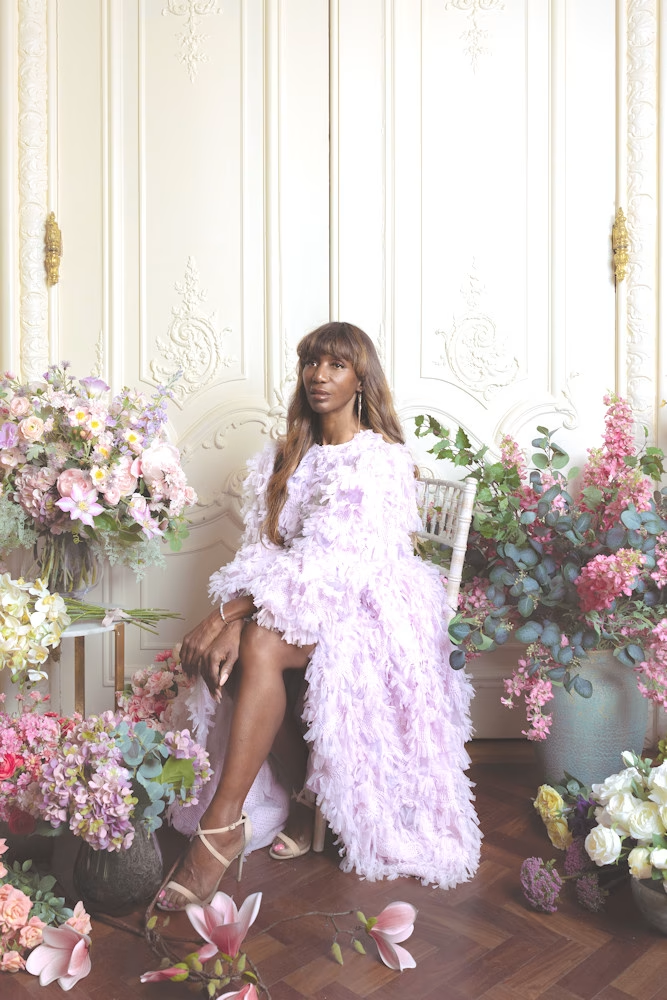
There isn’t just one. So many people have told us they finally felt seen because of our work. Whether it’s a young disabled model gaining confidence or someone saying they no longer feel invisible, those moments stay with me forever.
What role does representation play in building confidence and self-belief?
Representation gives people permission to believe they belong. When you never see anyone who looks like you succeeding, it’s easy to think success isn’t for you. Visibility creates possibility.
When people tell you, “I finally saw someone who looked like me,” what does that mean to you?
It means we’ve achieved something powerful. Representation isn’t about ticking boxes—it’s about changing lives and helping people feel valued.
What impact do you hope your work has on the next generation?
I hope future generations won’t have to fight the same battles. I want them to grow up believing their uniqueness is a strength, not something to hide.
Diversity Beyond the Runway
Diversity is often discussed as a business issue. For you, why is it fundamentally a human issue?
Because this is about dignity and belonging. Businesses benefit from inclusion, but the real impact is on people—their confidence, opportunities and wellbeing.
Which underrepresented voices still aren’t being heard enough?
People with disabilities, neurodiverse individuals, older people and those with visible differences are still significantly underrepresented. We also need to recognise intersectionality, where people experience multiple barriers at once.
What responsibility do brands and media organisations have in shaping how society sees itself?
A huge responsibility. The images we consume influence how we value ourselves and others. Brands don’t just reflect culture—they help create it.
How do we move from performative inclusion to meaningful change?
By making inclusion part of decision-making, leadership and everyday practice rather than a marketing campaign. It requires commitment, accountability and listening to lived experience.
Leadership & Resilience
What has campaigning for change taught you about resilience?
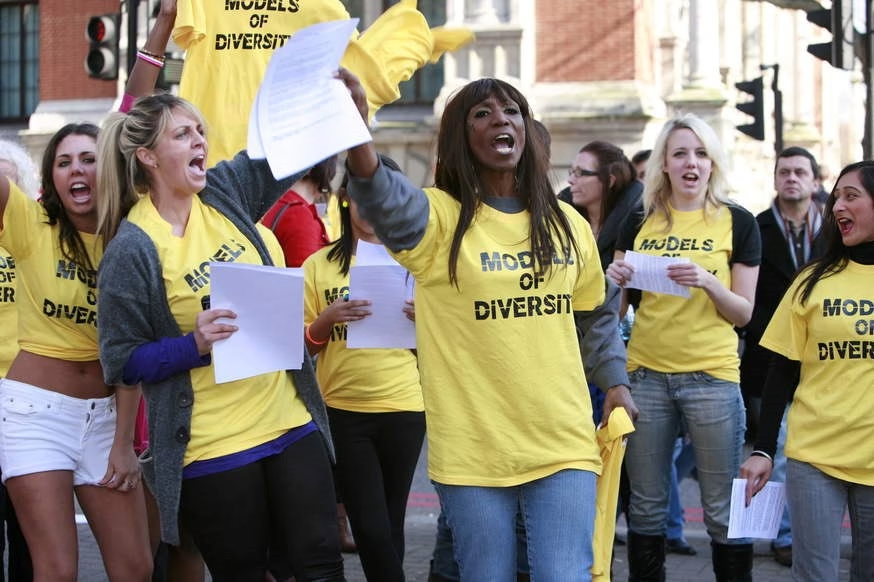
That change takes patience. There will always be setbacks, but if your purpose is strong enough, you keep going.
Have there been moments when you felt progress was too slow?
Absolutely. Sometimes it feels like you’re taking one step forward and two back. But then you see someone’s confidence transformed, and you remember why the work matters.
What keeps you motivated after nearly two decades of advocacy?
The people. Every time someone says, “Thank you, I finally feel represented,” it reminds me that our work has real human impact.
What leadership qualities have been most important in building a movement rather than simply an organisation?
Authenticity, persistence and empathy. You have to lead with your values, even when it’s difficult, and always remember that the mission is bigger than yourself.
Personal Reflections
What does beauty mean to you today?
Beauty is authenticity. It’s confidence, kindness and individuality. The most beautiful people are those who embrace who they are.
What would surprise people most about Angel Sinclair away from the public platform?
Probably that I’m quite ordinary. I enjoy family life, simple pleasures and spending time with people who keep me grounded. The campaign is a huge part of my life, but it isn’t all of who I am.
If you could change one thing about society’s definition of success, what would it be?
I’d like success to be measured by the positive impact you have on others rather than status or wealth. Changing one person’s life can be more valuable than any title.
What legacy would you like Models of Diversity to leave behind?
I want Models of Diversity to leave a legacy where representation is no longer exceptional but expected. If future generations grow up seeing diversity as normal and every child believes they belong, then our mission will have been worthwhile.
Exotic Quickfire
- Desert, rainforest or ocean? Ocean
- A photograph that changed how you see the world?
- https://www.wlns.com/news/patrick-hutchinson-man-in-iconic-london-protest-photo-on-changing-the-narrative/
- One person you’d place on a future Catwalk for Change? Tess Holliday
- A city that truly embraces diversity? London
- What’s more powerful: visibility or voice? Visibility
- One fashion rule you’d ban forever? There should be no rules in fashion
- A campaign you wish you’d created? Dove’s Real Beauty campaign because it made inclusion mainstream. But my ambition is to create campaigns where diversity is no longer a campaign at all—it’s simply the norm
- A song that makes you feel unstoppable? I’m coming out – Diana Ross
- If Models of Diversity became a movie, who would narrate it? – Me!!!
- One word you hope people feel when they see themselves represented? Proud
- What’s something society calls “different” that you consider beautiful? All differences are beautiful
- The most courageous thing you’ve ever done? Start MOD with no support
- A billboard message you’d place in every city in the world? Inclusion Matters
- If you could have dinner with one changemaker from history, who would it be? Nelson Mandela
- What does inclusion feel like in a single word? Belonging – because inclusion is ultimately about feeling that you belong without having to change who you are.