Matthew Burnford: Founder & Managing Partner, MBM Chalets
True hospitality comes from people who actually want the guest to have a good time, not just people who are doing their job. The difference is not always obvious in the moment but guests feel it.
◦ 5 min readWhat surprised you most about the similarities between the Army and luxury hospitality?
More than I expected. Both are fundamentally about people, reading them quickly, earning their trust and delivering under pressure. In the Army you learn fast that rank gets you compliance but character gets you commitment. The same is true in hospitality. The guests who remember you are not remembering the thread count of the bed sheets!
What does great leadership look like in high-stakes environments?
Calm. Not the performed kind, genuine calm that comes from preparation and clarity. In both worlds, people take their cue from whoever is in charge. If you are rattled, they are rattled. The other thing is decisiveness. A decent decision made quickly is almost always better than a perfect decision made too late.
Does hospitality underestimate discipline and accountability?
Yes, I think it does. There is a tendency to conflate warmth with laxity, as if being friendly and being rigorous are somehow in tension. They are not. The best hospitality operations I have seen are highly disciplined behind the scenes. Guests never see that, which is exactly the point.
What was missing from luxury chalet hospitality when you first entered the industry?
Consistency. You could have a wonderful first stay somewhere and a mediocre second one. The physical product was often excellent but the service was uneven, driven by whoever happened to be working that week. We built MBM around the idea that the standard should not depend on who is on shift.
Why are warmth, emotional intelligence and initiative harder to teach than operational skills?
Because they cannot really be taught. They are part of your DNA or you hire the potential and then cultivate. You can train someone to make a bed perfectly. You cannot train someone to notice that a guest seems stressed and quietly do something about it without being asked. That instinct either exists or it does not. If the seed exists it can be grown.
How do you preserve genuinely human hospitality in an era of automation?
By being deliberate about where technology serves the guest and where it just serves the operator. Automation is fine for booking confirmations. It is not fine for communications and the moment someone arrives after a delayed flight with tired children. That moment requires a human being who is genuinely pleased to see them.
Has luxury become less about things and more about feeling?
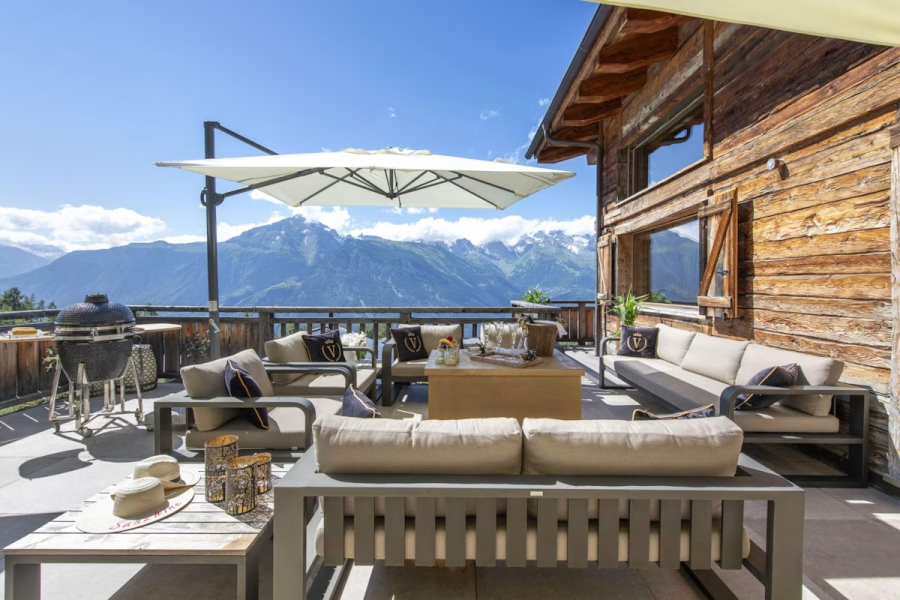
For the guests who matter to us, yes. The chalet is the stage but it is not the performance. People can rent a beautiful property anywhere. What they remember, what they come back for, is how they felt during the stay. That is a people business, not a property business.
Why do the smallest details leave the biggest impression?
Because they signal that someone paid attention. A perfectly made bed or a fridge stocked exactly as requested tells the guest that they were thought about before they arrived. That is quite a powerful feeling. The details are just evidence of care.
What separates true hospitality from performance?
Intent. You can spot performed hospitality immediately – it is technically correct but somehow hollow. True hospitality comes from people who actually want the guest to have a good time, not just people who are doing their job. The difference is not always obvious in the moment but guests feel it.
What does success mean to you today?
Repeat guests and a team that is proud of what they do. Both take time to build and neither can be faked. Beyond that, being present enough at home that my children actually know me. The Army taught me that status is largely noise. What matters is whether the people around you trust you.
Has fatherhood changed the way you lead professionally?
It has made me more patient and less precious about being right. Children are relentless at exposing the gap between what you say and what you do. That keeps you honest.
What values do you hope your team and children carry forward?
Straightforwardness. Do what you say you will do, say what you actually think, treat people as you would want to be treated. Everything else follows from that.
Quickfire
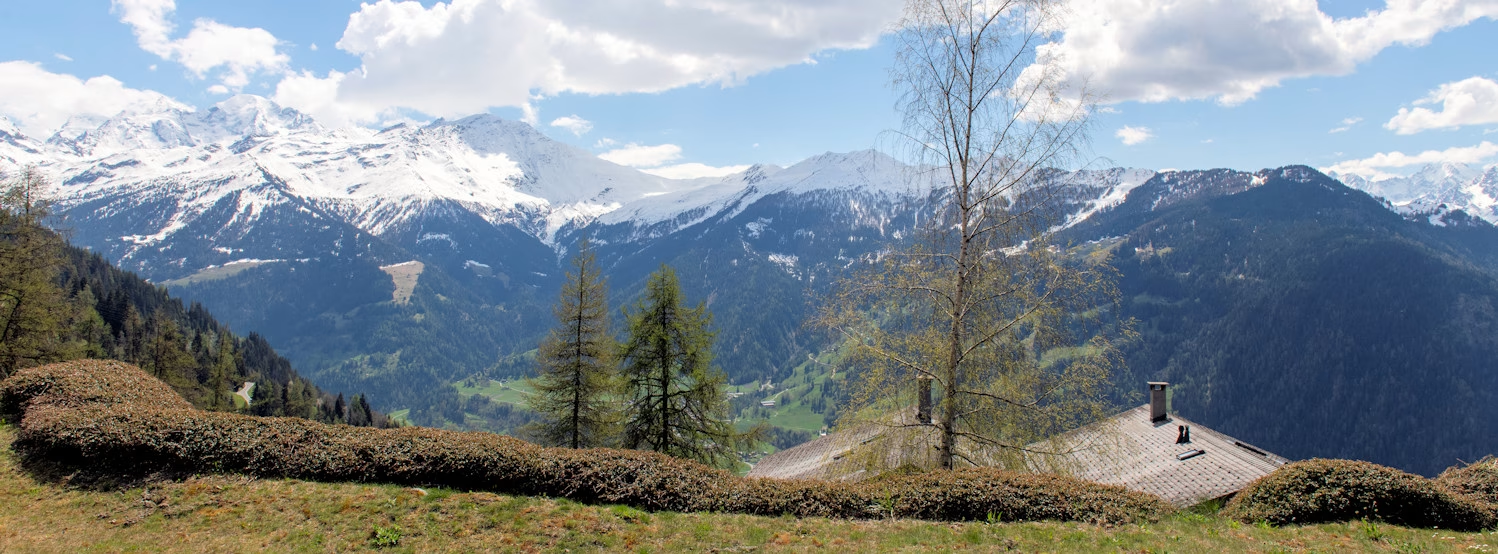
Verbier or Val d’Isere? Verbier. It has edges.
The one luxury guests secretly value most? Being remembered.
Army precision or chalet charm? Both. The charm only works if the precision is invisible underneath it.
A guest request you’ll never forget? I’ll keep that one private!
Most underrated hospitality skill? Knowing when to disappear.
Champagne on arrival or perfect morning coffee? Quality coffee. Anyone can open champagne.
Ski season survival essential? A decent pair of boots. Everything else is negotiable.
One word that defines MBM? Reliable.
What instantly makes a place feel welcoming? Someone who means it when they say hello.
Fireside conversation or mountain adventure? Fireside conversation after the mountain adventure.
The habit that makes you a better leader? Listening before speaking.
A luxury trend you wish would disappear? The word curated.
If not hospitality, what would you have done? Something involving land. I am not entirely sure what!
The greatest lesson the Army gave you? That most people are capable of far more than they think, including you.
What does home mean to you? Somewhere you do not have to explain yourself (though my wife may disagree!)