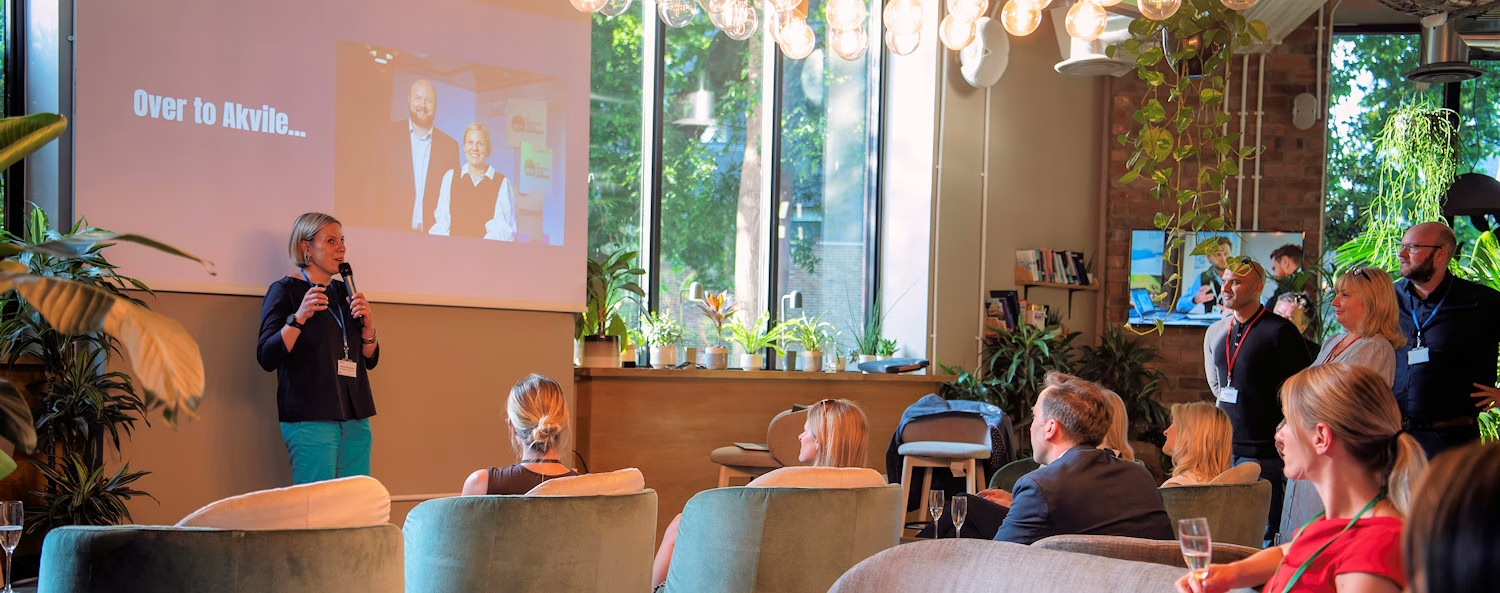
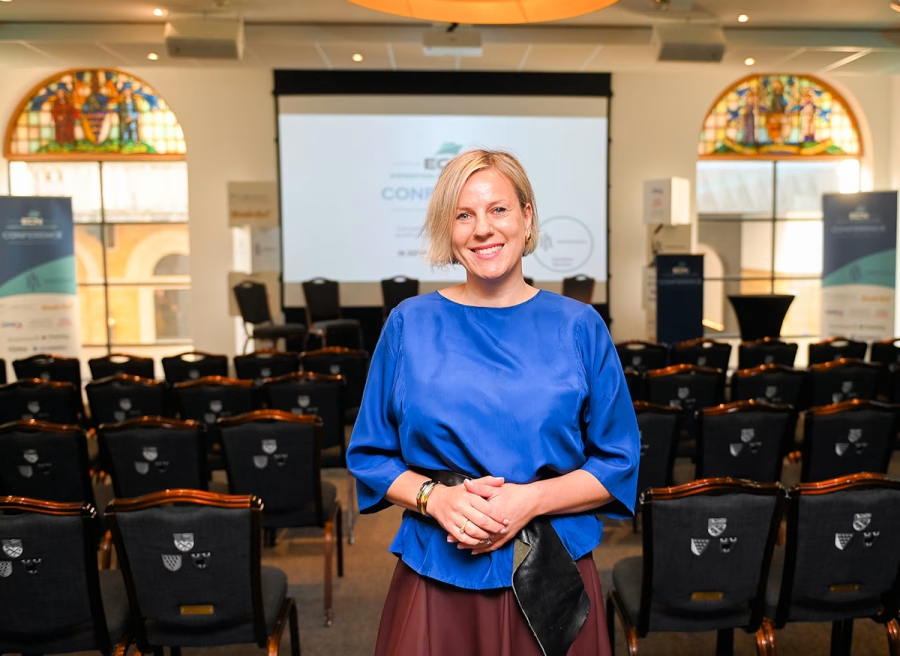
Akvile Marozaite: CEO & Co-Founder of Expedition Cruise Network
I think modern life, with its challenges such as loneliness, disengagement, mental health struggles, and lack of empathy, stems in part from forgetting how to be human in that broader sense—part of a living, interconnected organism. Expedition cruising, with its emphasis on exploring the natural world alongside education, provides a powerful way of reconnecting with that understanding.
◦ 11 min readBefore entering the travel industry, what shaped your early perspective on the world – personally or professionally?
I grew up in Lithuania. As a child born in the 80s, at the end of the Soviet Union era, my early adventures were more based on books than real-life experiences. As the grandchild of two literature teachers, I was introduced to books very early, and reading continues to be a lifelong passion. I remember reading tens of books based on fairytales from various parts of the world, including the Middle East, Africa, Europe, Russia, and beyond—meeting different creatures and learning about cultures through those folk tales.
As a family, we used to go on week-long kayaking trips through the interconnected lakes in Lithuania’s national parks during summer holidays, and it was perhaps during these adventures that I found my love for the natural world. I feel that Lithuanians, as a culture, are generally quite close to nature—we love foraging in forests for berries, mushrooms, and so on, and we are one of the few European countries that still has large, beautiful forests.
I would also say I am a very curious person, and I have been very lucky to be surrounded by people who fostered that curiosity in whatever ways were available to them at the time.
Looking back, were there early influences or experiences that hinted at the path you would eventually take?
I would probably return again to books and curiosity. If you have that as one of your personality traits, many things can become interesting, and travel perhaps brings it all together—the world is so diverse, and there is so much to learn.
I did not travel outside Lithuania until I was sixteen, despite really wanting to experience different countries and cultures, but the moment I could, I travelled as much as possible.
Like many young people, I did not intuitively know what I wanted to do with my life, and I ended up studying political science for my bachelor’s degree. It quickly became apparent that it was not going to be my path, but I am grateful for that time. I took advantage of the Erasmus programme and spent a semester living and studying in Italy. That was when I learned Italian, a language I still speak fluently today, and the experience showed me that languages not only help in practical terms when travelling, but also add another dimension to understanding culture and connecting with people.
You have described your first expedition cruise experience as life-changing. What was happening in your life at that moment, and why did it resonate so deeply?
I was in my early thirties, a little unsure of what I wanted to do with my professional and personal life. Experiencing expedition cruising felt like all the separate pieces coming together, and for the first time I could clearly see the direction I wanted my professional life to take.
I may not have known exactly what I wanted to do or become (and I still believe we continue to evolve throughout our lives), but it became very clear that I had found something that combined many of my passions into one—travel, curiosity, reading, adventure, and much more.
It was one of those rare moments of clarity in life, and I am very grateful to have experienced it.
That moment clearly altered your trajectory. What did you see or feel that made you commit to this world?
From a philosophical point of view, I love how being in nature and appreciating it teaches you how everything is connected, and how small a part we humans are within a much larger system.
I think modern life, with its challenges such as loneliness, disengagement, mental health struggles, and lack of empathy, stems in part from forgetting how to be human in that broader sense—part of a living, interconnected organism. Expedition cruising, with its emphasis on exploring the natural world alongside education, provides a powerful way of reconnecting with that understanding.
Entering a space where you are not at the centre of everything is a humbling experience. It helps us treat other forms of life with more respect and dignity, and it is also beneficial for us—it reconnects us with a more compassionate, collective side of human nature.
Expedition travel is often described as transformative. What does meaningful exploration mean to you now, beyond the destination itself?
Trips that teach me something new—about a place, its people, and myself—and that remind me of the positive nature of people.
During my recent trip with UnCruise Adventures to Baja California, a destination I have visited multiple times and consider one of the most exciting places to explore, I was inspired by the company’s commitment to the region and its communities. Captain Dan Blanchard, the founder, was travelling with us and spent hours each day collecting rubbish on the beaches we visited. This is something they do regularly, helping to clean remote and wild environments. It reinforced my own commitment to do better at home.
That, combined with the privilege of seeing wildlife in its natural habitat and witnessing unique natural phenomena, is humbling in the best possible way.
You operate at the intersection of operators, advisors, and destinations. Where do you see the biggest disconnects in the industry today?
At times, it is a lack of knowledge about the range of destinations available. In other cases, it is a more cynical approach to selling places such as Antarctica, positioning them as “last chance” destinations.
Expedition cruising is a niche form of travel, and there is a responsibility to ensure that clients understand how privileged they are to visit some of the most remote regions in the world, and to treat them with respect. This is something I feel very strongly about instilling in our members.
How has the role of the travel advisor evolved in the expedition space – and what still needs to change
There are more travel advisors interested in selling expedition cruising, which is very positive. They will continue to play a key role in setting expectations and guiding clients, and they already sell a significant proportion of expedition cruise trips.
It is essential that this is done well. Expedition cruises are often considered purchases, and matching the right ship and experience to the right client is crucial.
This is why education and, where possible, first-hand experience are so important—something we at Expedition Cruise Network work hard to support through our Academy, webinar series, conferences, in-person events, and industry insights.
You are passionate about amplifying local voices. How can expedition travel ensure that the places it visits are not just seen, but understood?
Education and a genuine understanding of what expedition travel is. This develops over time through investment in knowledge, but one of the most impactful moments comes from experiencing it first-hand.
Being in a place and learning from passionate expedition team members often creates a moment of realization where deeper understanding begins.
These journeys often take place in fragile environments. How should the industry balance access with responsibility?
The expedition cruise industry is strong in self-regulation, alongside the frameworks set by local governments and authorities. Organisations such as AECO in the Arctic and IAATO in Antarctica play an important role in ensuring safe and environmentally responsible operations, while managing visitor numbers.
Ship-based tourism in the Galapagos is often cited as a good example of how tourism can be managed to avoid overtourism—something not always achieved with land-based travel.
Expedition cruising has built its reputation on providing access to remote places that are otherwise difficult to reach, and it is in the industry’s interest to maintain that balance. With smaller ships and controlled operations, it offers a considered way to explore fragile environments.
Partnerships are central to your work. What makes a partnership truly meaningful rather than transactional?
Many companies in this sector share a genuine passion for expedition travel and want it to succeed in the right way.
The industry depends on the preservation of the environments it visits, and there is a shared understanding of the importance of protecting these places. When speaking with organizations that care deeply about expedition cruising, there is often a sense of alignment—that we are working towards the same goals. That is what makes partnerships meaningful.
The expedition cruise sector is growing rapidly. What risks come with that growth – and how should the industry respond?
While the sector is growing, it still represents a small part of global tourism and will likely remain a niche.
Growth can bring challenges, particularly as companies learn and adapt, but industry organizations play an important role in helping mitigate risks, especially in fragile environments.
From an advisor perspective, education remains critical. We are part of an interconnected system—if the right clients are introduced to expedition travel, they will expect accountability and high standards from operators, which in turn supports the integrity of the sector.
You have built a global community through ECN. What role does community play in shaping the future of travel?
What makes ECN unique is its singular focus on expedition cruising, allowing us to explore the topic in depth. From the beginning, our aim was to create a platform where all expedition cruise operators feel welcome—from small, 12-passenger catamarans in the Galapagos to global operators, and everything in between.
This creates an opportunity to represent the sector with all its diverse voices, and to have meaningful discussions about its future. For travel advisors, it provides access to a wider range of operators and destinations, and more opportunities to introduce this style of travel to their clients.
In many ways, we are helping to level the field while also bringing people together to address important questions about where the sector is heading and how it can evolve while preserving what makes it special.
Looking ahead, what does the next generation of expedition travel look like – and who is it for?
I believe expedition travel will continue to become more responsible, with operators adopting alternative fuels and more sustainable ways of operating. Respect for the environments visited is already deeply embedded in the sector, and travellers are increasingly expecting this.
The sector is also becoming more diverse and experiential, with a growing focus on authentic experiences, collaboration with local communities, and strong destination storytelling.
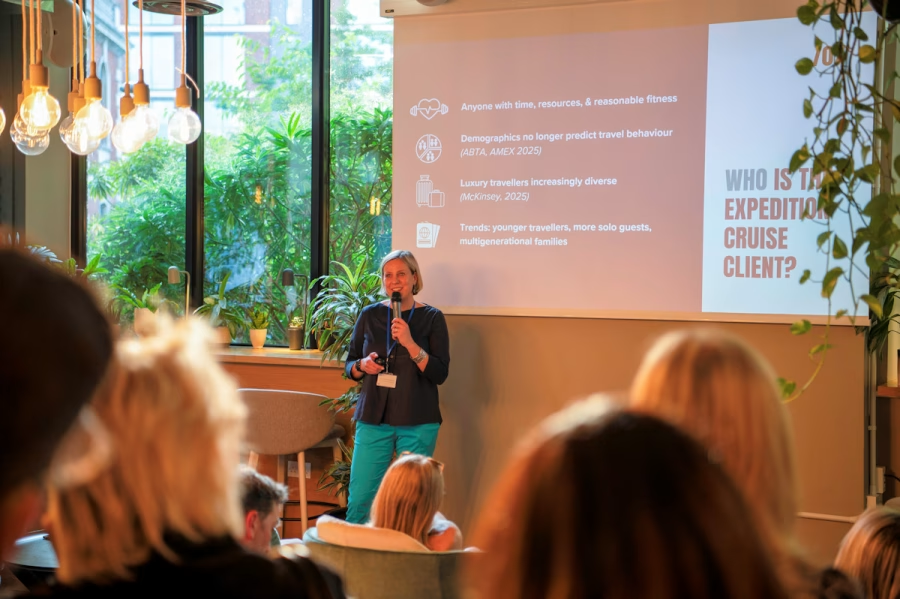
This approach resonates with travellers who value these elements, and we are seeing increasing interest from younger audiences. At the same time, the core expedition traveller is likely to remain within the 50+ demographic—curious, with the time and resources to explore the world. That remains a key audience for the sector.
Quickfire
A place that made you feel like a true explorer?
The Russian Far East—Kamchatka Peninsula, the Kuril Islands—as well as remote regions of Alaska, including the Aleutian Islands.
A landscape that silenced you?
Torres del Paine National Park in Chile, and the Antarctic Peninsula.
A journey that challenged your assumptions?
The islands of the Pacific Ocean and their people. Lifestyles so different from ours, yet certain things- family, dance, curiosity – connect us all.
A sound that instantly brings you back to a destination?
The sound of a whale breathing. I associate it with expedition cruising, having experienced it in Antarctica, Baja California, and the Russian Far East. It is one of the most powerful sounds in nature.
A guide or storyteller who changed how you see a place?
Chris Cutler, a guide onboard Silversea. He taught me how to truly observe wildlife, and his love for the natural world was infectious. Sadly, he passed away ten years ago. He was a wonderful guide and friend, with a deep understanding of the natural world.
Something travellers often misunderstand about expedition travel?
How unique this way of exploring the world truly is, and the incredible value of the education and enrichment provided by expedition team members.
A question every traveller should ask before they go?
Am I prepared to be active, and am I approaching this experience with an open heart?
A moment where nature reminded you of your place in the world?
Almost every place I have visited on expedition ships. That is one of the most important aspects of this form of travel for me.
What makes an exploration truly meaningful?
The right attitude—being ready for adventure, and approaching it with an open mind and heart. That is what allows it to transform you.