Clare Minchin: Founder of Vumbua Africa
I am passionate that individuals and families should have a full range of opportunities, be able to think positively and achieve their dreams. I include in this the older traveller who remains keen to experience the world around them, alone or with extended family but have age related limitations.
◦ 14 min readAccessibility, Advocacy & Purpose
Your career spans social work, disability advocacy and accessible tourism. What inspired the transition into travel and safari experiences?
Over a varied career I have worked as a hospital social worker to include supporting parents through stillbirth, and provided support in a child development centre , where parents were at the start of a journey following diagnosis which would turn their understanding of what family life entailed on its head. Further years in a social care team supporting children and their families with a range of significant learning, physical and developmental difficulties made me realise how families struggled to manage days out, simple holidays and to travel further afield.
I am passionate that individuals and families should have a full range of opportunities, be able to think positively and achieve their dreams. I include in this the older traveller who remains keen to experience the world around them, alone or with extended family but have age related limitations.
As a parent, my daughter was diagnosed with EDS (Ehlers Danlos Syndrome) and POTS (postural orthostatic tachycardia) in her teenage years ,which significantly impacted her education and prevented her getting to university. At the age of 17 following a head injury she was a wheelchair user and unsafe to fly. We spent a month interrailing in Europe, and I experienced first-hand the challenge travel presented, steps to “accessible” accommodation, failure of booked assistance to disembark from trains etc. All in spite of hours of planning.
All of the above have shaped the person I am today and my desire to use the training and experience I have to allow others to achieve things which so many of us take for granted.
After more than 35 years working within disability and advocacy spaces, what changes have encouraged you most – and what still frustrates you?
When my colleague/partner and I started out attending travel shows, contacting agents, hotels and lodges we were constantly told Africa was not accessible and that there was no interest in changing facilities, vehicles etc unless we could commit to a regular quantity of clients. This view is slowly changing, but not fast enough and many of the provisions in place have come about due to personal experiences of accident, disability or age and our continuous pressure on the African Travel Industry to change their thinking. However, there is a growing understanding in the travel industry that the numbers of travellers within this cohort make up a significant proportion of the future market.
What frustrates me is the term accessible because what works for one does not work for another. We work with individuals to create a trip that works for them. I need the detail.
Also, what is frustrating is being told a hotel/lodge is accessible but then finding there is no access to an adapted vehicle.
What originally sparked the vision for Vumbua Africa?
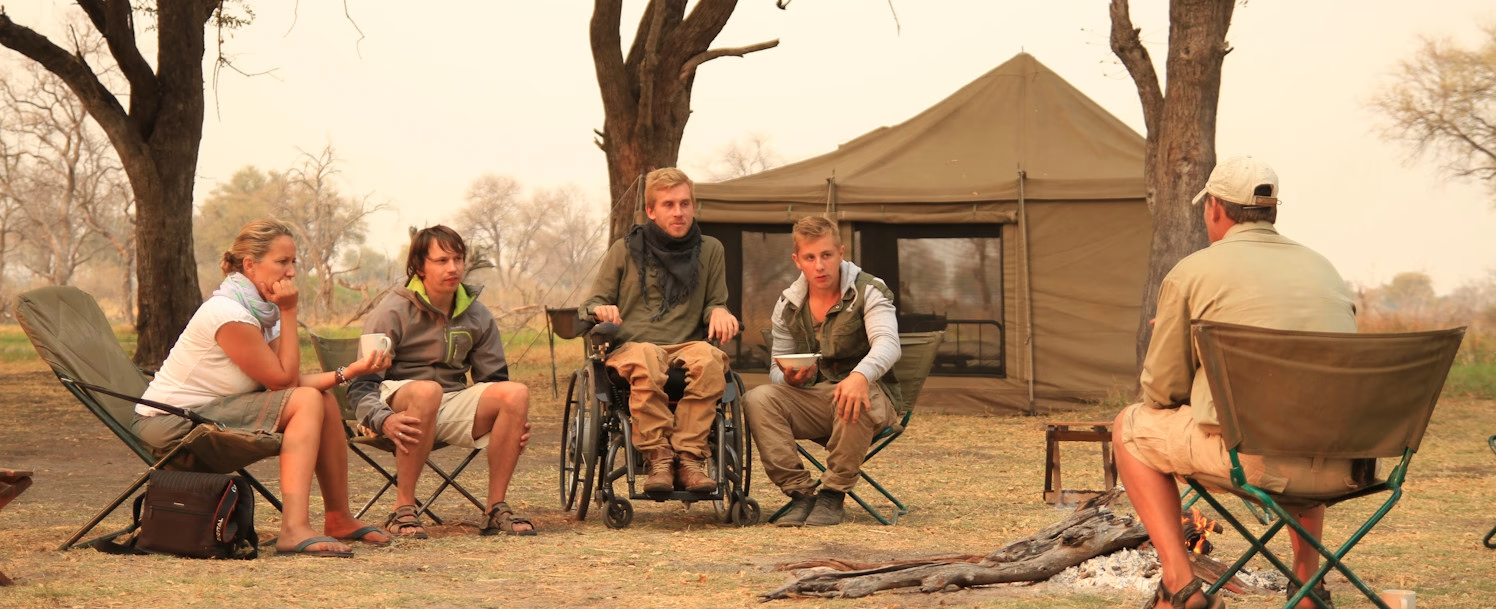
Vumbua means discover in Swahili. Keith Johnston, my colleague & partner already had a deep love of Africa having been brought up in Zambia and lived a number of years in Botswana .Since we met we have travelled together and discovered the joys of African sunrises and sunsets, the sound of grazing hippos, the roar of distant lions, the quiet heat of midday and the experience of travelling the dirt roads. We feel that anyone regardless of age or ability should be able to experience this for themselves if they wish.
Keith has a diploma in nature conservation, has travelled widely across the continent and has experience of the safari industry. Together we felt we could capture a travel market which has had relatively little exposure. With his knowledge of the countries and my knowledge of the right questions to ask and the facilities required to make a trip work we felt we had the basic skill set to make Vumbua Africa viable.
Why was it important for you to create accessible African travel experiences specifically?
Early on we discovered that many accessible travel companies did not offer Africa especially Southern and Eastern Africa. As we became known several travel agents in the UK, Europe and even America sought us out when they had clients wishing to visit Africa.
A Safari, ascending Table Mountain, or seeing Victoria Falls is on many people’s bucket list. It is a hugely rewarding experience when families can take their children to see the wildlife they have only seen in books ,toys or a zoo .It is our aim to encourage the industry to make simple physical changes, educate staff ,and build in the bigger adaptations as time goes on so that more of Africa becomes available to individuals and multigenerational groups regardless of disability, age etc
Many people with disabilities are often told certain destinations are “too difficult” or “not possible.” How important is challenging those assumptions?
Challenging assumptions is everything. Each person has different needs and abilities. Asking the right questions is all important. They will have been finding ways round the “too difficult” or “not possible” all their lives. Each person will have adapted to make things work for them so asking them where they want to go, what their interests are and what they need is the starting point.
What does meaningful accessibility look like in travel beyond ramps and infrastructure?
It means ensuring that individuals are not treated differently. It is about training and understanding. Physical disability does not mean individuals are deaf or have a cognitive impairment. Disabilities can be invisible. Accessibility is about equality and inclusivity.
How has your background in social work influenced the way you approach hospitality and guest experience?
For me social work in the disability field has been a journey about support and advocacy in difficult or challenging times with the aim that with the correct input individuals become stronger and more independent and less reliant on social care services. My approach to hospitality provision is much the same .it is about challenging assumptions, providing practical advice on change learned from close working with occupational therapists with the end goal being that individuals and families will be able to travel knowing that their experience will be appropriate to their needs.
What emotional impact can accessible travel have on travellers and families?
Travel especially further afield can cause an element of concern for many people. For those with additional needs it can be hugely stressful with challenges from airport check in onwards. To know that your individual needs are catered for and that you can relax and enjoy the time away from home is very important. For parents or carers, the emotional impact of being able to unwind and recharge is incalculable.
Why do you think accessible tourism is still overlooked globally despite representing such a significant audience?
The statistics relating to the older traveller and to those with additional needs or disabilities are huge. I think much of the tourist industry is complacent. It has its market and its profits and, in many instances, shows little inclination to address the future. For others it is lack of understanding of the market. A concern sometimes of getting it wrong. There is a need for education from the bottom up from design and build through to hospitality training.
What misconceptions do safari operators and tourism businesses still have about travellers with disabilities?
There is often still a view that safari is not for those with significant disabilities, that it is too rough and adventurous and that they cannot access a safari vehicle. Adapting hotel facilities is sometimes seen negatively with adapted rooms viewed as clinical and unwanted by other travellers.
When you start in an industry you know little and learn as you go. Creating an environment which is inclusive for most travellers is no different if the tourism business asks the right questions, is open to advice, is willing to learn and commit to some costs then the traveller with additional needs will feel welcome on an equal basis.
Accessible Africa & Inclusive Safari Experiences
Africa is often perceived as adventurous but inaccessible. How are you helping change that narrative?
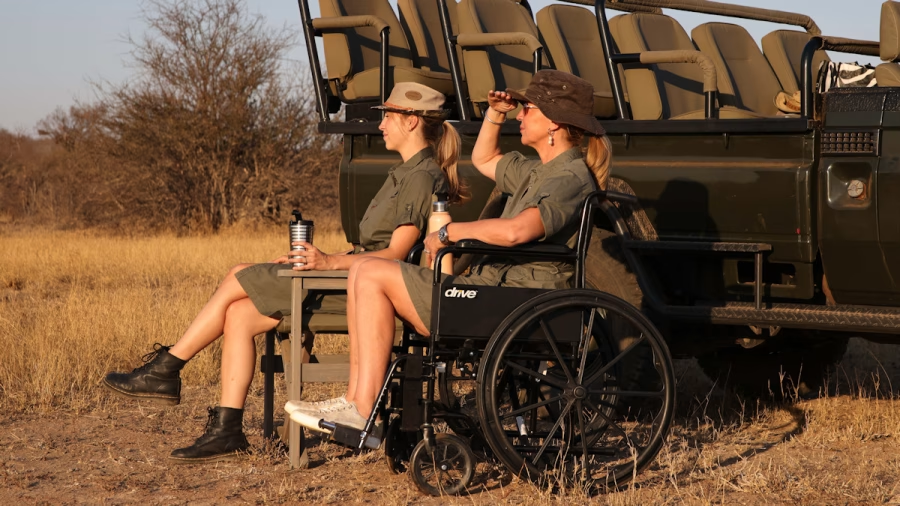
We offer individual carefully planned trips. By advertising these on our website and on social media we raise awareness of what is possible. We attend as many travel trade events as we can challenging operators to look at what they offer and identify areas where they have already made changes and suggesting next steps. We offer advice on adapted vehicles putting people in touch with those who have already made changes and encourage organisations to consider sharing these vehicles. We are making our voice heard and are being contacted by travel agents in other countries.
What have been some of the biggest challenges in building accessible safari and tour experiences across Africa?
Getting people to listen and finding suitable safari and WAV transport.
How important are local partnerships and community collaboration in making inclusive travel successful?
Hugely important. We rely heavily on our relationships with a small number of partners. Those relationships ensure that the detail is correct for each trip we do, that they have the fullest information on each client’s needs before they arrive. The individuals who support our clients have experience and understanding. If a specific property is not known they will often undertake a visit to check that facilities are as stated. We are always welcomed to undertake site visits ourselves when travelling in Africa.
What destinations across Africa do you believe are making the greatest progress in accessibility?
All African countries are patchy in terms of accessibility, but that could be said of most countries.
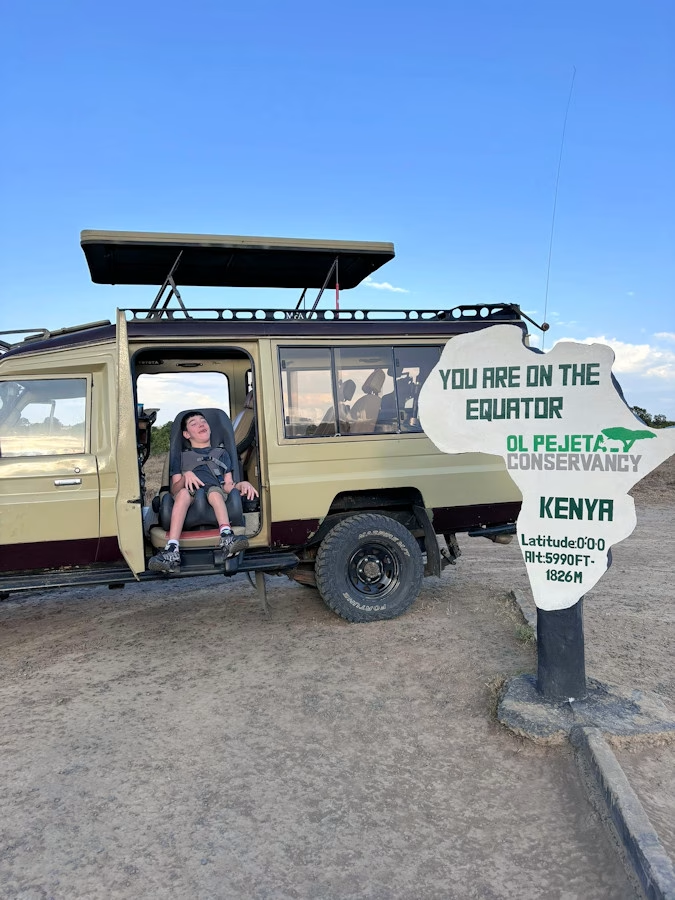
Kenya has good access to provision in Nairobi and to a number of safari destinations with a good range of WAV vehicles.
Botswana has a company which has adapted its own vehicles and provides accessible holidays.
In South Africa there is some provision in KwaZulu Natal, Western / Eastern Cape and one company within the The Kruger National Park.
How do you balance authentic adventure with comfort, dignity and safety for travellers?
Safety is paramount. The aim is to provide independence as far as possible. This includes being able to access a vehicle by slide transfer or remaining in a wheelchair inside a vehicle for example. Willingness to assist is always present in my experience but it must be at the clients wish and in a manner which promotes their dignity and enhances their experience.
What role does staff training play in creating truly inclusive hospitality experiences?
Staff training is a very big area especially when bringing in younger staff who may have had limited exposure to those with additional needs or the adaptations which make their lives independent. Clients with disabilities are people first and should not be treated differently.
What have travellers taught you about resilience, curiosity and the desire to explore?
Keith and I have been inspired by many of those we have encountered. From ex-service personnel with prosthetic limbs wanting to go up Mount Kilimanjaro to parents of profoundly disabled children with added visual impairment wanting their whole family to experience Africa together. Disability whether from birth or acquired later frequently creates resilience and with that comes a desire not to be identified by illness or limitation but to get out there and experience the world.
Are there any particularly emotional or unforgettable guest moments that have stayed with you?
The photos we have received showing wide smiles and a sense of wonder at the environment and animals they have seen first-hand is always hugely rewarding.
How can luxury travel brands better understand accessibility and inclusion?
By not being complacent and in recognising the huge market out there be willing to embrace a learning process which will ultimately work in their favour.
What would your dream future for accessible African tourism look like?
My dream would be that all clients could have their choice of destination and accommodation not limited by the need to check if it was suitable, whether there was appropriate transport or pressure to make a quick decision because options were limited.
Leadership, Humanity & Vision
What keeps you motivated after decades in advocacy and inclusion work?
The desire to share the skills and knowledge I have built up to the ultimate benefit of others. Travelling Africa presented itself to me later in life but it has given me so much I want to share it with those who thought it was not possible for them.
How important is empathy in leadership and travel design?
Empathy is hugely important. Trying to understand what an experience is like for others less able or mobile allows for a wider view and opens eyes to exploring alternative design and ensuring that whole teams embrace accessibility in all its forms.
What does inclusion mean to you personally?
Freedom to be yourself and be included in all settings.
How can the tourism industry better include people with lived experience in decision-making?
Including individuals with a range of disabilities in the design and adaptation process would go a long way to mitigating all the bits that get forgotten or missed. Who best to understand all that is needed to make tourism inclusive than those who experience its inequalities daily.
What advice would you give to destinations beginning their accessibility journey?
Look at the setting with open eyes and consider what is already possible. Seek advice from those who have undertaken it successfully to avoid costly changes which may still not be appropriate. Eg short steep ramps which do not meet the 1 in 12 ratio ideal for independent use. Look at the whole package not just accommodation, but transport, activities etc
What role does storytelling play in changing perceptions around disability and travel?
Telling the stories of other individuals travels to show what is possible has a positive impact particularly within the disability community. We often get contacts from families who have seen or heard the stories we post and want to find out more.
What legacy would you ultimately like Vumbua Africa to leave behind?
That the company has a lasting impact for future generations and is remembered for its role in creating inclusivity and accessibility for all in Africa regardless of age or disability.
Exotic Quickfire
Safari sunrise or safari sunset?
Both – sunrise brings cooler, tranquil conditions, active predators. While sunset offers a more colourful and dramatic scenery, and warmer temperatures.
One word that defines Africa for you?
Diverse
The true meaning of accessible travel is…?
Freedom to be oneself and inclusivity
Most underrated quality in hospitality?
True hospitality is about how you make people feel – It is about being observant without being intrusive.
Your favourite African wildlife encounter?
Coming upon a family of the very rare Bat-eared fox.
Window seat or aisle seat?
Aisle
Accessibility should feel like…?
Normality
One destination everyone should experience once?
Botswana
Luxury means more than…?
Fancy rooms and a big price tag – It is about experiencing the real Africa.
A travel myth about disability you’d love to erase?
That it is too hard or impossible
Bush lodge or ocean retreat?
Bush Lodge
The sound that instantly reminds you of Africa?
The echoing cry of the African Fish Eagle.
One thing the travel industry still gets wrong about accessibility?
It is not just about ramps!
Most unforgettable safari moment?
Lion spoor behind our tent.
Coffee at dawn or wine at sunset?
Coffee at dawn, the whole day lies ahead
Inclusion starts with…?
Understanding
One destination currently inspiring you?
Zambia
The future of accessible travel looks like…?
Opportunity for all
What emotion do you hope travellers leave Africa with?
A sense of awe and an itch to return
Your personal definition of adventure?
Anything which inspires you and takes you out of the day to day.