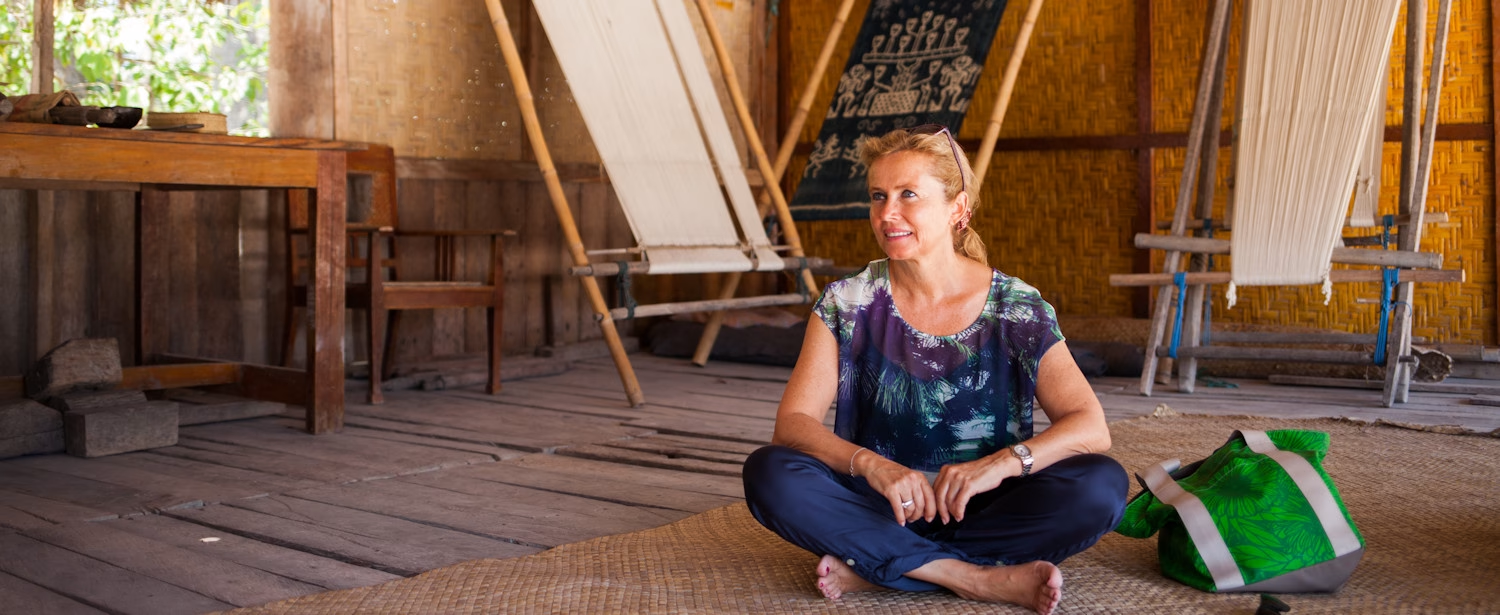
Inge De Lathauwer: Founder, Sumba Hospitality Foundation
Every time I visit, I feel the incredible positive energy of the students, their ambition, their smiles, their gratitude. That energy feeds me. It brings me joy and renews my strength. Knowing that we can change even one person’s life makes everything worthwhile. It reminds me why the work matters. In difficult moments, that reminder helps me overcome the obstacles and stay hopeful and positive.
◦ 7 min readPersonal Journey
You founded the Sumba Hospitality Foundation with a clear belief in the power of education to change life chances. Can you take us back to the moment when the idea first became real for you?
The idea became real when I saw the contrast between Sumba’s natural beauty and the limited opportunities available to its young people. Tourism was arriving slowly, but the benefits were not reaching the local community because they weren’t prepared. I realised that education and training could change this. That was the moment it shifted from an observation to a responsibility.
What was it about Sumba; its people, culture, or challenges, that moved you enough to commit long-term?
It was the integrity of the people and the strength of their values. Sumba has a deep cultural identity and a life rooted in nature and community. Their Marapu traditions haven’t changed in the last 500 years (one of the oldest animist beliefs in the world) and are about respecting and remembering the ancestors, the rituals about honouring the land for generations.
At the same time, the challenges – limited infrastructure, access to education, economic opportunity and a high malnutrition- were very real. That combination of dignity and difficulty stayed with me. I came initially as a tourist but just couldn’t leave without doing something. It didn’t feel like a place to just visit for me, it felt like a place to invest in for the long term.
You combine academic grounding with deep personal conviction. How have those two sides shaped the way you lead and build the Foundation?
The academic side gives me and the project structure, it pushes us to measure impact, think systematically, and design a model that is sustainable. The personal conviction gives me persistence. When you work in a remote region, growth rarely follows a straight path. Data informs the strategy, belief sustains the journey. I have learned that lasting change requires both: critical thinking and deeply human commitment.
Purpose & Impact
Sustainable tourism sits at the heart of your work. What does “responsible hospitality” mean to you in practice, beyond the buzzwords?
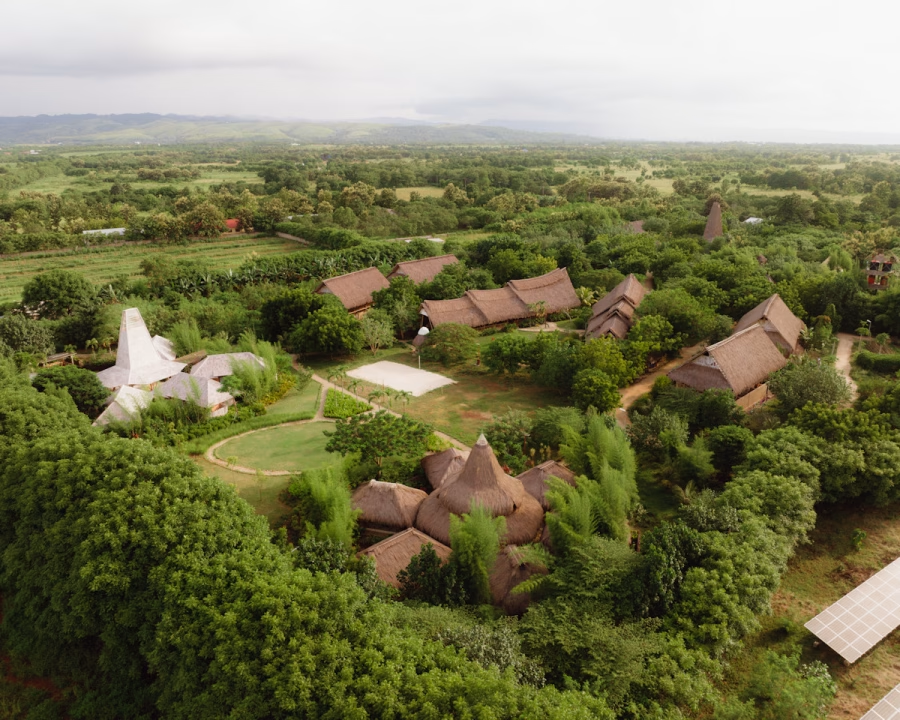
Responsible hospitality means making decisions that respect both people and place. It’s about long-term stewardship rather than short -term gain. In practice it means investing in local talent, protecting natural resources, being transparent about impact and ensuring that tourism strengthens the community instead of extracting from it.
What impact are you most proud of seeing in the young people who have come through the Foundation so far?
Their confidence! Watching young people who once doubted their opportunities- who were afraid to dream beyond the lives they were born into- step into leadership roles, speak English fluently, travel, are able to support their extended families, that transformation is so powerful. It’s not just about employment, it’s about self-confidence, pride and choice.
How do you balance creating opportunity locally while working within a global industry like hospitality?
The global industry brings structure, standards, professionalism and opportunity- but the soul must remain local. For me the balance lies in ensuring that international expectations never dilute cultural authenticity. Instead, they should elevate local talent and showcase local values to the world.
Have there been moments along the way where the scale of the challenge felt overwhelming? What kept you going?
Many times… Working in a remote region means infrastructure challenges, funding uncertainty and slow systemic change. In those moments- what keeps me is always the people – the students, the team and the community.
Every time I visit, I feel the incredible positive energy of the students, their ambition, their smiles, their gratitude. That energy feeds me. It brings me joy and renews my strength. Knowing that we can change even one person’s life makes everything worthwhile. It reminds me why the work matters. In difficult moments, that reminder helps me overcome the obstacles and stay hopeful and positive.
Leadership & Legacy
Starting something in a remote region takes courage and resilience. What has been the most difficult leadership lesson you’ve had to learn?
That good intentions are not good enough.Listening deeply, building trust and adapting to local realities matter more than having the ‘right idea’. I’ve learned that leadership in a remote context requires humility first, decisiveness second
How has this journey changed you personally?
I believe it made me more patient and more grateful. It grounded me in what truly matters : community, purpose and simplicity.
Your family has supported the Foundation from the beginning. How important has that been to sustaining your vision?
It has been essential. Knowing my family deeply believes in the mission has given me emotional resilience and clarity during difficult moments. My four sons have supported the Foundation from the beginning. This work is part of the legacy I hope to leave them, and knowing they will continue to stand behind it – and help ensure it thrives far into the future – gives me profound piece of mind. Their support is not just practical. It is the Foundation beneath the Foundation.
What does success look like for you now, compared to when you first started?
In the beginning, success meant proving that the model could work. Today, success is quieter and more meaningful. It is seeing local leaders emerge, systems functioning independently, and the community shaping its own future. Success now is about sustainability and legacy, not scale.
Looking Forward
What excites you most about the future of the Sumba Hospitality Foundation?
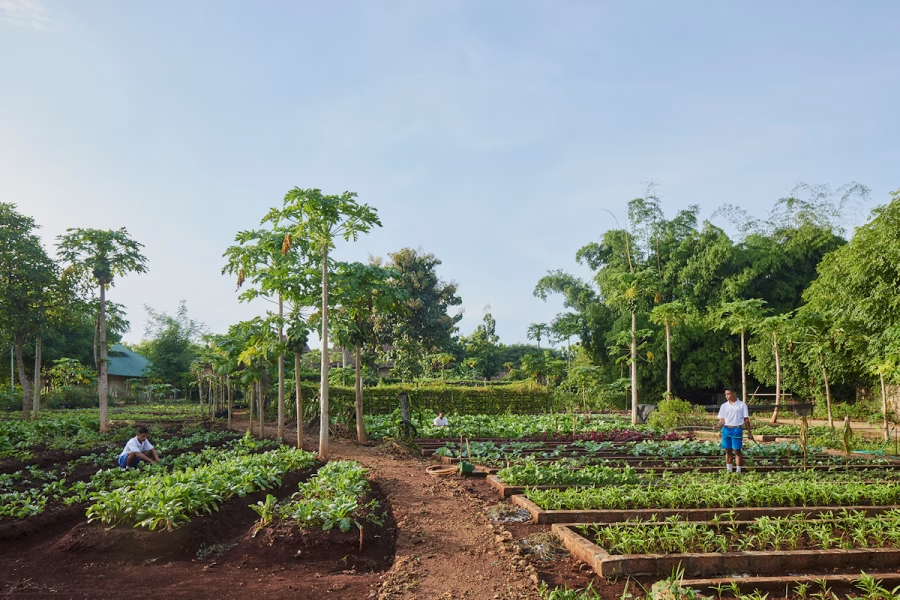
What excites me most is seeing the shift from dependence to leadership. More and more alumni are not only finding employment but becoming role models, mentors, and change makers within their own communities. The future feels less about what we build and more about whatvthey will build, independently, confidently and sustainably.
If the next generation of hospitality leaders could take one lesson from your work, what would you want it to be?
Hospitality is not just about providing good service but about responsibility. The places we operate in are living communities, not backdrops. If you design your business model to elevate local people and protect local ecosystems, profitability and purpose do not compete, they reinforce each other.
What kind of legacy do you hope the Foundation leaves; both in Sumba and in the wider world of hospitality and education?
In Sumba, I hope the legacy is opportunity, a generation of young people who have choices, confidence and the ability to shape their own futures.
In the wider world, I hope the Foundation demonstrates that education, sustainability and hospitality can be integrated into one coherent model. That a school can also be a social enterprise. That tourism, when done responsibly, can be a vehicle for dignity and long-term community resilience. If we can prove this model works in a remote region, then it can inspire replication elsewhere, adapted to local contexts, but rooted in the same belief: that vocational education linked to industry can be a powerful for for equitable development.
Quickfire
A moment at the Foundation that has stayed with you forever?
The ritual of the First stone where Marapu priests asked permission to the ancestors to build the Foundation. It is when the idea became a reality and I felt supported by the local community.
Three words that describe Sumba to you.
Authenticity, nature-rooted values and resilience
The best piece of advice you’ve ever received?
Don’t hesitate to reach out, none of us succeeds alone
A daily ritual that keeps you grounded?
Five minutes each morning in gratitude meditation
Coffee or tea?
Black coffee
Early riser or night thinker?
Early riser
A place in the world that feels like home (besides Sumba)?
Wherever my family is.
A book that shaped your thinking?
The Promise of a Pencil
One thing people might be surprised to learn about you?
I have a soft spot for great champagne
What gives you the most hope right now?
Most people are genuinely good and want to be part of building a better world.