Elly & Patrick Suverein: Founders, Ximuwu Lodge
Wilderness meets refined comfort at Ximuwu Lodge.
◦ 8 min readOrigins & Shared Vision
What first brought each of you to the bush, and how did that passion evolve into the idea for Ximuwu?
We both fell in love with South Africa many years ago while travelling. The bush has a way of getting under your skin. What started as holidays slowly became a dream to live here permanently.
When Patrick temporarily had to use a wheelchair after surgery, we experienced firsthand how limited luxury safari options were for guests with mobility challenges. That was a turning point. We realised that if we ever created something ourselves, it had to be different. It had to be beautiful, intimate, and fully inclusive – without looking clinical or feeling different.
Was there a moment when you realised you wanted to create something of your own together?
It happened naturally. We were already hosting many friends and family in the bush and saw what this place does to people. The peace, the wildlife, the connection. We wanted to create a space where others could experience that too – but in our own way, with our own philosophy.
What was the original vision for the lodge – and how has that vision grown?
Originally, it was simply a small luxury safari lodge. Accessibility became part of the vision through personal experience. Over time it grew into something much bigger. It is not just about comfort. It is about independence, dignity and freedom in the bush.
What does Ximuwu represent to you, beyond being a business?
Purpose. It represents something very personal to us. It represents the belief that safari is for everyone.
Building Something Together
What did those early years ask of you personally?
Everything. Energy, resilience, creativity. Building in the bush is challenging on its own. Designing every detail to be fully accessible without making it “in your face” accessible was even more challenging. But we were determined to prove it could be done beautifully.
How do your strengths complement each other?
Elly takes care of all enquiries and reservations. That’s where the journey begins. It’s so important to ask the right questions. What does a guest really require? Do they need special equipment? What makes them feel comfortable? This initial contact and asking the right questions give the potential guests confidence that we know what we’re doing.
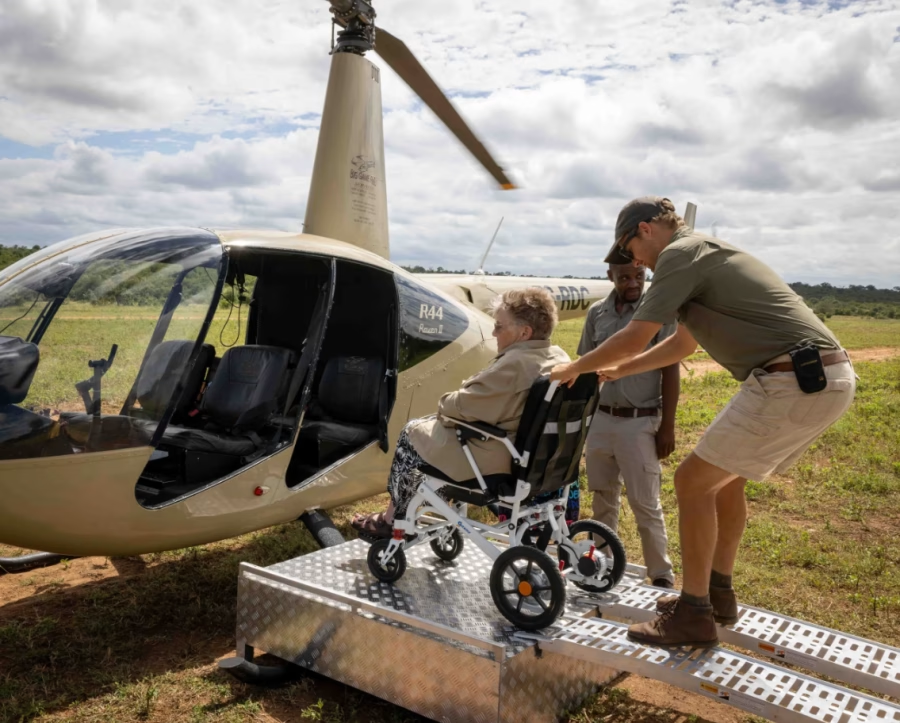
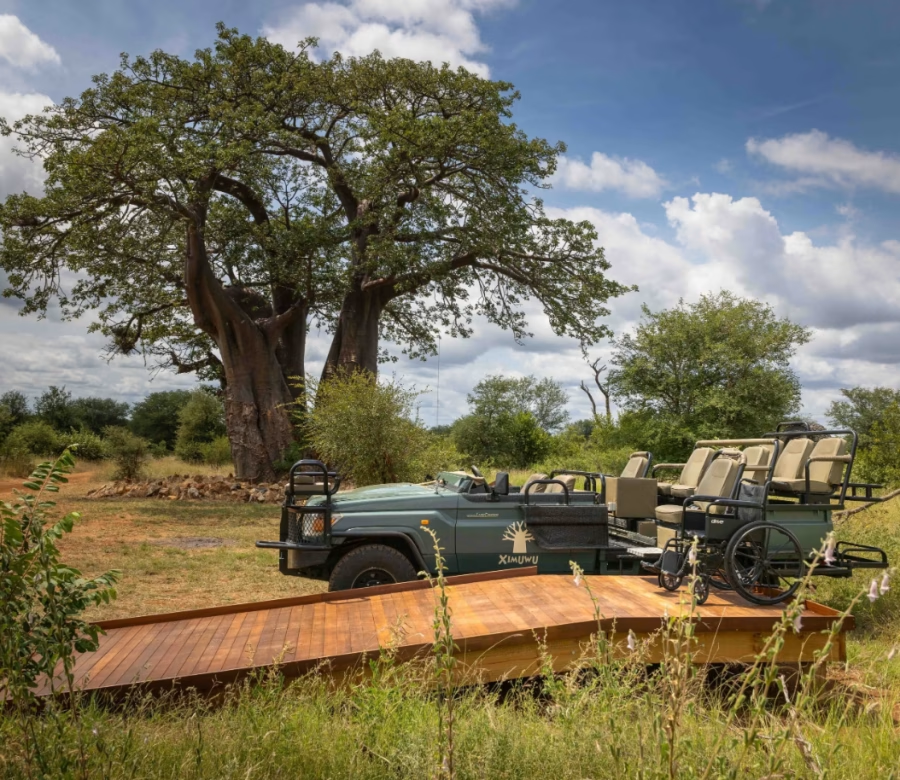
We have a lot available free of charge: wheelchairs, shower chairs, electric adjustable beds, a bath lift, cooling vests, heated seats for body temperature regulation. But every guest is different. You just want to be prepared for them. That preparation changes everything.
Patrick focuses strongly on the creative and strategic side. He designs and maintains the website, our brochures, and maintains contact with magazines to spread the word about Ximuwu. Awareness is still our biggest challenge. So many people don’t know that a true luxury safari is possible for everyone.
What has building something meaningful together taught you?
It has taught us humility. It has shown us how powerful independence really is. And it keeps us grounded.
You can all have days where you feel sorry for yourself. Patrick still deals with pain after his failed back surgery. But then you see our guests. People facing real physical challenges every day, yet they are positive, funny and determined to enjoy life. That perspective changes you.
Redefining the Safari Experience
How would you describe the experience you set out to create?
Intimate and personal. With only four suites, it feels private and exclusive. Guests dine when they want, go on drive when they want. It is flexible. It is tailored. And the wildlife is right there around you.
What makes a safari transformative rather than simply luxurious?
Transformation happens when someone feels truly connected – to nature, to themselves, to the moment. Luxury alone does not do that. Freedom does.
What do you hope guests feel when they leave?
Empowered.
For many of our guests, safari was once only a dream. At Ximuwu it becomes possible.
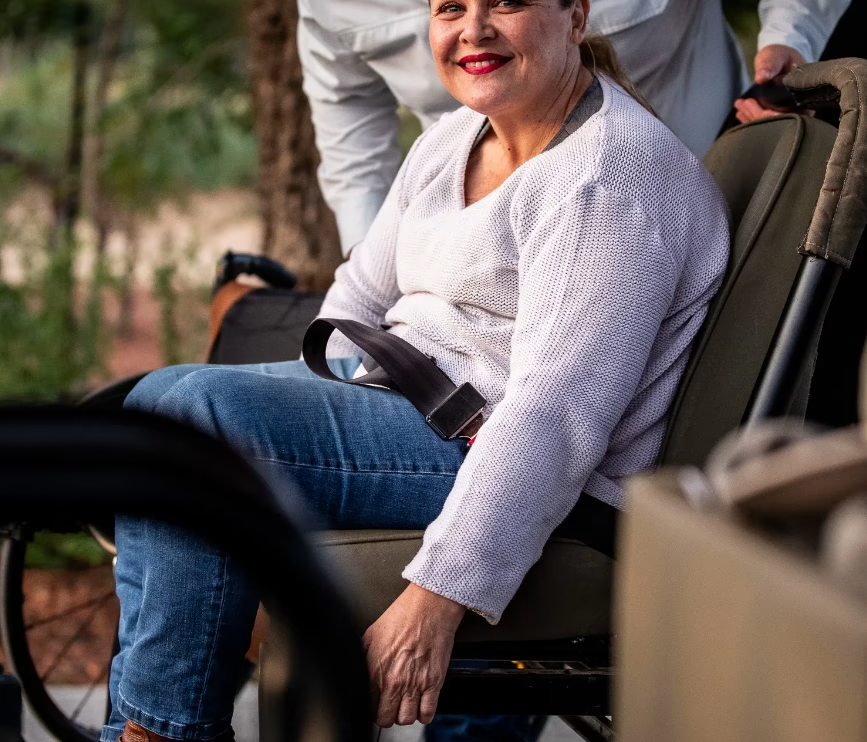
More importantly, they are treated like everyone else. No pity. No awkward behaviour. No over-questioning about their condition. They already experience that wherever they go. Here, they just want to have the best time, like every other guest. And that is exactly what they get.
Accessibility as Philosophy, Not Category
Was this always intentional?
Luxury and accessibility should go hand in hand. There is such a misunderstanding that if you use a wheelchair, you don’t care about luxury. Why would that be the case?
Everyone appreciates beauty, privacy and high standards.
How do you approach accessibility as part of hospitality?
Design and accessibility should not negatively influence each other. Our lodge is not only for guests with limited mobility. We host honeymooners and multigenerational families from all over the world who come purely for the privacy and high-end safari experience.
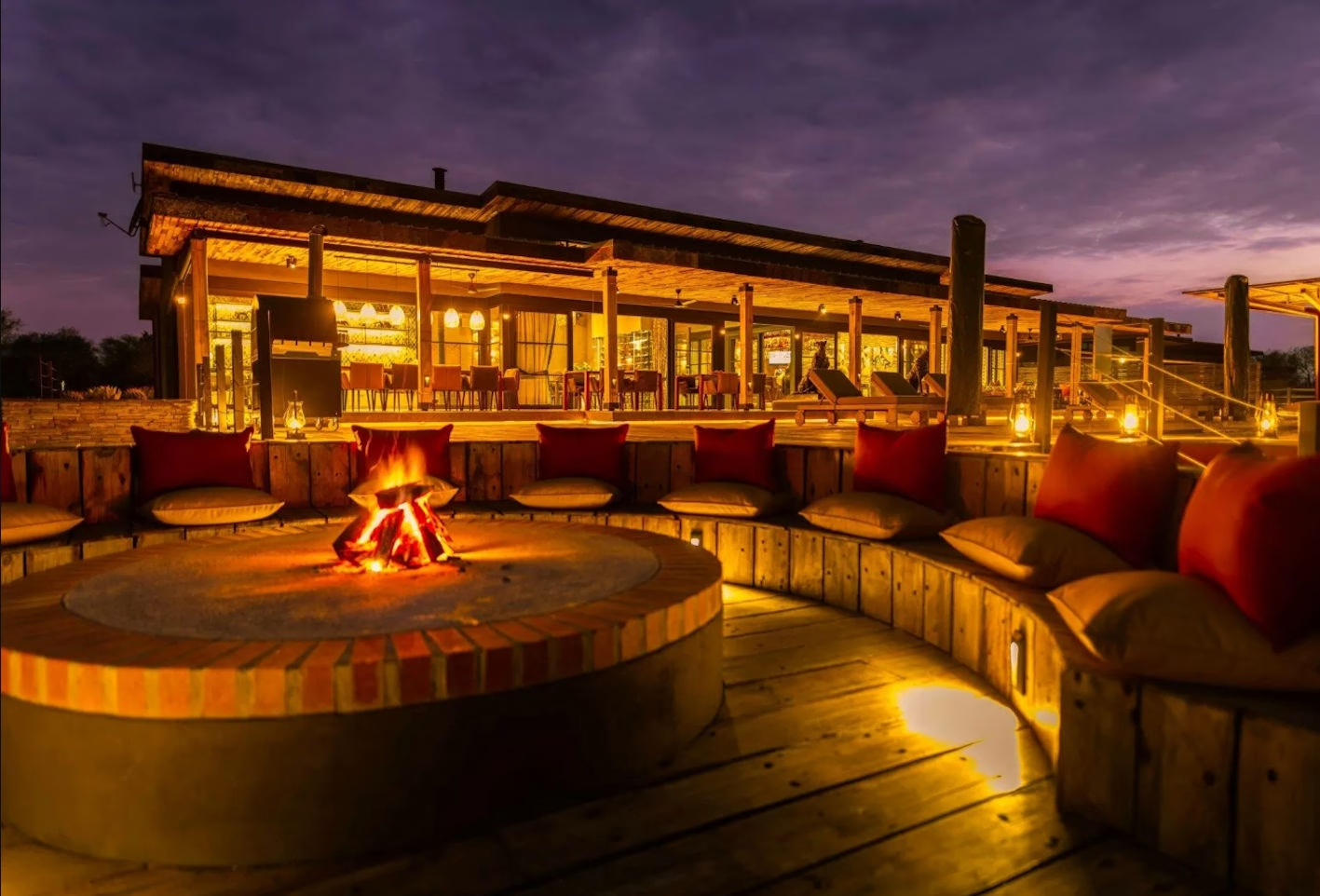
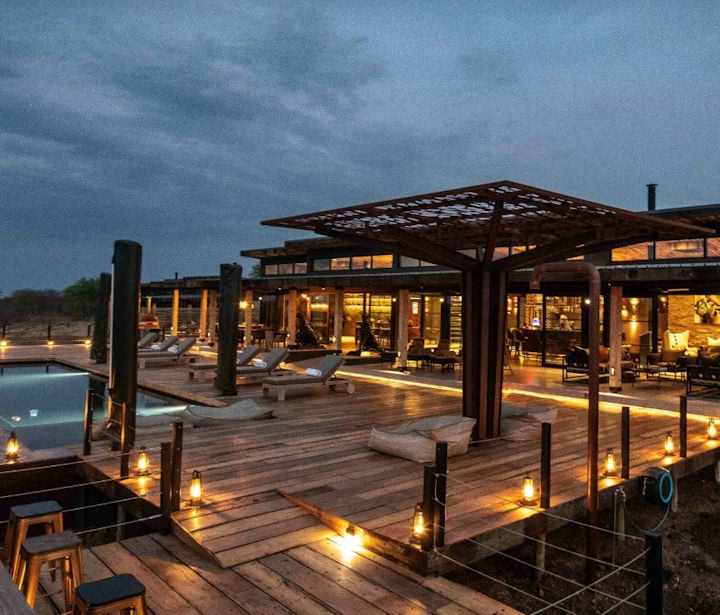
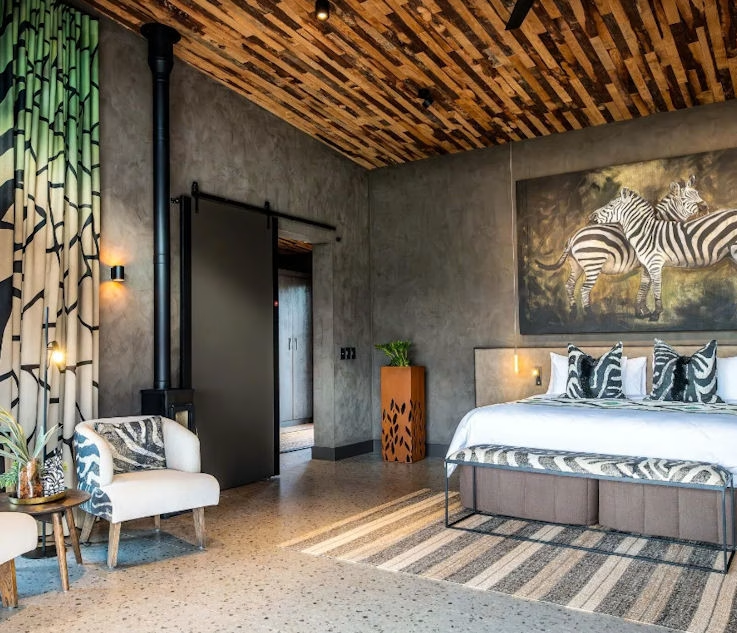
Our biggest challenge was to make accessibility invisible. Many agents were hesitant at first. They thought it would look like a hospital. We searched far and wide for details – even bronze grab bars in the showers to match our taps. We had guests stay four nights and only realise at check-out that the lodge is fully accessible. That is the best compliment.
What misconceptions exist?
That accessibility ruins design. It does not. Thoughtful design enhances everything.
Have guest reactions reinforced that belief?
Absolutely. Even older guests appreciate even terrain and no steps. Accessibility benefits everyone, not only someone using a wheelchair.
Is this the future of luxury travel?
It should be. But it is a huge investment with no additional financial return. A pool lift, electric wheelchairs, bath lifts, adapted vehicles – these are very expensive. I understand why many lodge owners hesitate. It requires belief and commitment.
Life in the Bush
What has the bush taught you?
Patience. Definitely patience. Nature moves at its own pace.
Is there a moment that captures why you chose this life?
Seeing guests being as independent as possible here. Imagine going everywhere in life needing assistance. At Ximuwu they can move around mostly without help. That feels like freedom.
We once had a family of five in camp. The oldest boy, 14, used a wheelchair. At home he uses a manual chair, but here he chose our electric one. He drove up to eye level to hug his mom. She said, “Do you realise I never look my child in the eyes at eye level?” We were all emotional.
When families arrive with a child using a wheelchair, you see within 24 hours how they relax. At home it is often about limitations. Here all kids are in the pool together. No one watching from the side. Parents relax. Siblings relax. They are just a family on holiday. That impact is enormous.
What keeps your passion alive?
The feedback from our guests. Seeing happiness on their faces. Many leave in tears, thanking us for their stay. Where else do guests thank you for letting them stay? That stays with you.
Impact & Industry Influence
Is the industry thinking more broadly?
Too slow. And it is a large investment without extra return. So I understand the hesitation. But awareness is growing.
Have attitudes shifted?
Not really enough. Some places say they are accessible because they have a ramp and one room. But true accessibility is a full experience – rooms, vehicles, pathways, staff training. There is so much more involved.
Our staff training has been crucial. We know firsthand how people react when someone uses a wheelchair. Sometimes they speak louder, or differently, as if the person cannot hear or understand. From day one we told our team: this guest is just like you and me. He just cannot walk. Treat them normally. Do not behave sorry for them. They want to have fun. Often they joke more than anyone else.
There is so much more involved than people realise.
If your work at Ximuwu could influence one positive change in the wider travel industry, what would you hope it would be?
That accessibility is considered from the very beginning of a project, not as an afterthought. If you build it in from day one, it does not have to be complicated or ugly. It simply becomes part of good design.
Looking Ahead
What is your long-term vision for Ximuwu?
To remain small, personal and deeply authentic. We do not want to grow too big. We want to refine what we already have and continue raising awareness that safari truly belongs to everyone.
What kind of legacy would you like the lodge to leave – for guests, for your team, and for the land?
For guests, we hope they leave knowing that their dreams are possible.
For our team, we hope they carry forward the understanding that inclusion is normal, not special.
And for the land, we hope we protect it and honour it – so that future generations can experience the same magic.