Destination Guide to The Philippines
Best for island-dotted horizons, coral-blue seas, heritage towns and warmly hosted, slow-paced escapes - best enjoyed with careful routing and supported logistics.
◦ 7 min readBest for island-dotted horizons, coral-blue seas, heritage towns and warmly hosted, slow-paced escapes – best enjoyed with careful routing and supported logistics.
Getting There
Most long-haul arrivals route via Manila (MNL – Ninoy Aquino) or Cebu (CEB – Mactan–Cebu), both with step-free terminals, pre-bookable meet-and-assist, accessible washrooms and priority procedures.
Clark (CRK) serves select international flights and can be calmer for North Luzon access. For travellers using mobility aids, share dimensions, weight and battery type (if powered) with airlines in advance; request aisle chairs and kerb-to-seat assistance.
Domestic links connect Manila/Cebu with major islands; build generous layovers for terminal changes and lift access.
Getting Around
The Philippines is an archipelago; your routing determines your comfort.
- Domestic flights are the most reliable way to bridge long distances (e.g., Manila ↔ Cebu ↔ Palawan/Bohol/Iloilo/Davao). Pre-book PRM assistance and ask for seats near accessible lavatories where available.
- Private road transfers are best for hotel moves and day touring; WAVs are limited but available in Manila and Cebu via specialist partners — reserve well ahead.
- Ferries & boats: Large ro-ro ferries offer ramp or vehicle-deck boarding (often the most workable sea option). Fast crafts, bancas (outrigger boats) and small dive/snorkel vessels are usually not suitable due to step/gap and beach landings. Choose stabilised catamarans or resort-operated boats with assisted boarding, shade and calm-water routes.
- Urban mobility: In Manila, stick to airport transfers + private vehicles and lift-served malls/museums; pavements are inconsistent. Cebu’s resort areas are largely car-based with buggy support on property.
Destination Highlights
Themes
- Coast, Reefs & Calm Bays: Prioritise stabilised boats, shaded decks and resort pontoons for water time; enjoy coral and fish from glass-bottom viewing or gentle snorkelling with floatation aids where offered.
- Heritage & Town Plazas: Spanish-era churches, plazas and ancestral homes are best via vehicle drop-offs and short, level loops; museums in major cities are increasingly lift-served.
- Wellness & Slow Retreats: Beach and hillside resorts offer hydro circuits, spa pavilions, sound baths and private cabanas in step-free settings; many can deliver in-suite treatments.
Key Regions Snapshot
- Greater Manila (Metro Manila)
Why go: Gateway to the islands, museums, dining, shopping and heritage day trips.Access reality: Traffic and pavements are challenging; rely on private vehicles, lift-served malls (Greenbelt/BGC/MOA) and museum clusters. Historic Intramuros has cobbles/kerbs — enjoy short, mapped circuits, ramped museum entries and courtyard cafés.Highlights: National Museum complex; Intramuros (Fort Santiago visitor areas, San Agustin Museum courtyards); bay-view promenades; skyline dining in lift-served towers. - Cebu & Mactan
Why go: Central hub with beach resorts close to an international airport.Access reality: Resorts lead inclusivity with adapted rooms, buggies, level pool decks and assisted sea entry on calm days. Island-hopping by banca is not suitable; choose stabilised catamarans or no-landing lagoon cruises.Highlights: Mactan beach clubs, sunset sailing on larger craft, historic Cebu City via vehicle-assisted stops (Basilica exterior plazas, Fort San Pedro perimeters), foodie circuits in accessible malls. - Palawan (El Nido, Coron, Puerto Princesa)
Why go: Limestone karsts and lagoon blues.Access reality: Iconic tours use small boats and beach landings — often unsuitable. Opt for large, stability-focused day boats with ramps/transfer support, deck-only lagoon viewing and resort pontoons for safe water access; choose no-landing scenic routes when seas are choppy.Highlights: Big-boat cruises around Bacuit Bay, calm resort lagoons, Puerto Princesa bayfront dining; Underground River viewpoints via visitor centre and boardwalk segments where available. - Bohol (Panglao & Countryside)
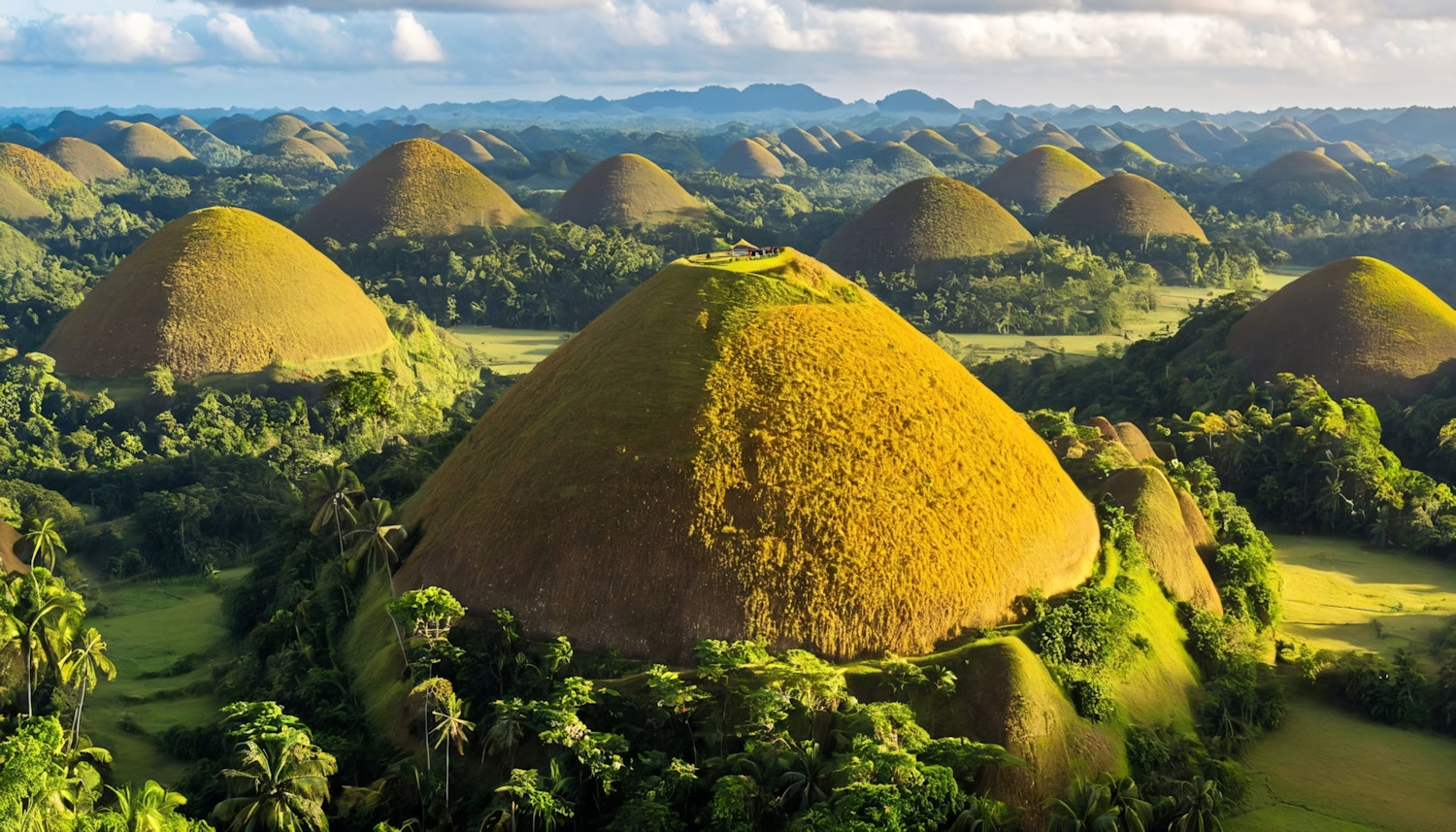
Why go: Gentle island, tarsiers and Chocolate Hills vistas.Access reality: Quality resorts with level grounds and adapted suites; private vehicles for countryside loops. Expect steps at some viewpoints — favour drive-up miradors, butterfly/tarsier centres with managed access, and river cruises on larger boats with assisted boarding.Highlights: Panglao beachfront promenades; Loboc River lunch cruises (stabilised vessels); heritage churches via plaza-side viewing. - Boracay
Why go: Powdery White Beach, dining and sunsets.Access reality: Many hotels now provide boardwalk-level access, buggies and adapted rooms. Sand is soft; use beach wheelchairs/mats where available. Avoid small-boat hops; request main jetty transfers and resort-managed boats for any water activity.Highlights: Station 1–2 walkway dining, sunset on beachside terraces, calm-water sailing on larger craft. - Ilocos (Vigan & North Luzon)
Why go: Spanish-era streets, coastal drives, wind farms.Access reality: Calle Crisologo has cobbles; best enjoyed with short, seated stops in ancestral houses/museums with managed access. Coastal viewpoints are mostly drive-up.Highlights: Vigan plazas/museums, Paoay Church exteriors, Laoag sand-dune lookouts (from vehicle). - Davao & Mindanao
Why go: Markets, Mt Apo vistas, islands.Access reality: Stick to city museums, riverfronts and resort zones; island boats are variable. Choose hotel-curated activities and private drivers.
Cuisine & Culinary Exploration
Filipino cuisine is soulful, citrus-bright and deeply regional, perfect for seated discovery in calm, accessible settings.
- Signature flavours: adobo (vinegar-soy braise), sinigang (tamarind broth), inihaw (grill), kare-kare (peanut stew), lechon (roast pork), pancit (noodles), kinilaw (citrus-cured fish).
- Inclusive dining: International hotels and modern Filipino restaurants offer step-free floors, companion seating and quieter corners; private rooms are common in Manila and Cebu.
- Curated tastings: Market-to-table menus served in-restaurant (skip crowded alleys), halo-halo dessert flights, cacao/coconut/coffee tastings; seated cooking classes adapted for mobility.
- Dietary needs: Pork-free and halal options are available in cities; pescatarian/vegetarian dishes (laing, pinakbet, grilled fish) feature widely. Specify chilli/sourness levels and texture preferences — kitchens are happy to adjust.
Luxury Perspective
The Philippines luxury is sun-drenched and service-forward, with resort teams eager to personalise. Look for:
- Adapted rooms/suites (roll-in showers, grab bars, visual alarms) and ground-floor or lift access.
- Resort mobility: Buggies, boardwalk links, zero-entry or hoist-equipped pools (select), shaded daybeds and quiet lounges.
- Marine days: Stabilised catamarans with assisted boarding, back-rest seating, floatation vests and deck-only lagoon viewing for non-swimmers; no-landing itineraries in choppier seasons.
- Wellness: Spa villas with step-free entry, hilot-inspired therapies, hydro circuits and in-suite treatments.
- Private touring: Driver-guided plaza circuits, museum clusters, glass-bottom or semi-submersible viewing where offered.
- Accessible celebrations: Seated beach dinners on level decking, sunrise/sunset terraces and adapted vow-renewal/ceremony setups.
Attitudes
Filipino hospitality is famously warm, flexible and solutions-oriented. Staff will try hard to help when needs are explained clearly, and resort teams are used to adapting experiences. LGBTQ+ travellers generally find relaxed, friendly service in hotels, islands and nightlife districts; a low-key approach is sensible in rural communities.
The Rules
Accessibility is strongest at airports, modern malls, international-brand hotels and new attractions. Heritage streets, provincial pavements and many piers are uneven, and island activities often rely on small boats. Expect partial access at historic churches/forts and a need for vehicle drop-offs plus short, mapped circuits. Modest dress is appreciated at religious sites; remove hats inside churches. Alcohol is widely available in resort areas; rules tighten at certain local festivals or public spaces.
Resources & Support
- Specialist DMCs (Manila/Cebu/Boracay/Palawan) arrange WAVs, portable ramps, shower chairs, limited hoists, caregivers and medical-equipment hire.
- Airports & airlines: Meet-and-assist smooths connections; reconfirm 48 hours pre-flight.
- Museums/attractions: Increasing access notes; call ahead for alternative entrances and quieter slots.
- Marine operators: Request written boarding plans, gangway width/angle, seating layouts and shaded areas; specify stabilised hulls.
- Healthcare: International-standard clinics in Manila/Cebu/Boracay; carry essentials and a mobility-aid datasheet.
Final Tips
- Build around two bases (e.g., Cebu + Bohol; Manila + Boracay; Cebu + Palawan via large day boats) rather than multi-hop island chains.
- Pre-book adapted rooms, WAVs and stabilised boats — inventory is limited and seas/weather can alter plans.
- Time the water: Mornings are calmer for boarding; check pier gradients and tides.
- Surface-ready: Expect uneven pavements; bring anti-slip tyres, rain covers and a compact repair kit.
- Heat & pace: Schedule outdoors for mornings/evenings; choose air-conditioned museums/malls midday.
- LGBTQ+ comfort: International hotels and resort zones are relaxed; keep public affection low-key in rural areas.
- Polite asks work: Filipino teams respond brilliantly to clear, kind requests — let them host you well.