United Kingdom
Destination Guide to London
Best for world-class museums, theatre, dining and history, supported by improving accessibility, inclusive attitudes and exceptional cultural depth.
◦ 4 min read
Destination Guide to London
Best for world-class museums, theatre, dining and history, supported by improving accessibility, inclusive attitudes and exceptional cultural depth.
Getting There
- London is served by multiple international airports, including London Heathrow Airport, London Gatwick Airport, London City Airport and London Stansted Airport.
- All provide step-free routes, pre-bookable assistance, accessible washrooms and priority lanes.
- Rail links from airports into central London are frequent; assistance should be reserved in advance, particularly for rail travel.
Getting Around
London is large but navigable with planning and the right transport choices:
- Underground & Overground: Step-free access is increasing; many central stations are lift-served. Journey planners clearly indicate step-free routes.
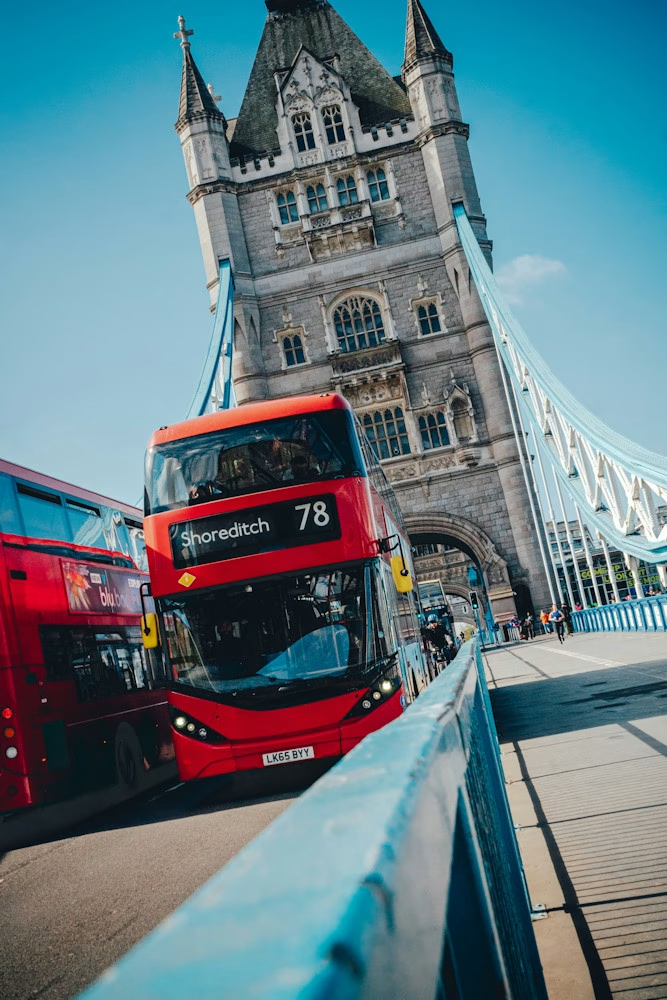
- Buses: All London buses are low-floor with ramps, wheelchair spaces and audio-visual announcements — one of the city’s strongest accessibility features.
- Taxis: Black cabs are universally wheelchair accessible and can be hailed on the street.
- Private vehicles: Wheelchair Accessible Vehicles and chauffeur services are widely available for touring and evening travel.
- River services: Thames riverboats increasingly offer ramped boarding and accessible seating.
- Walking/rolling: Pavements vary, but major districts have dropped kerbs and pedestrian crossings; distances are manageable when broken into neighbourhoods.
Destination Highlights
Themes
- Arts & Museums: Many of the world’s leading museums are fully accessible and free to enter.
- Theatre & Performance: West End venues increasingly offer step-free access, captioned and relaxed performances.
- Royal & Historic London: Palaces, parks and ceremonial routes combine grandeur with managed accessibility.
- Exploring: Distinct districts allow focused, low-exertion discovery.
District and Borough Snapshot (Compact)
- Westminster & South Bank – Accessible Parliament area viewpoints, Westminster Abbey partial access, level riverside promenades, theatres and galleries.
- Bloomsbury & Kings Cross – British Museum (excellent access), library districts, hotels and wide pavements.
- Mayfair & St James’s – Luxury shopping, galleries, private clubs and high-end hotels with strong accessibility.
- Soho & Covent Garden – Dining, theatre and shopping; pavements can be busy but venues are largely step-free.
- Greenwich – River access, wide park paths, maritime museums with good accessibility.
- Kensington & Chelsea – World-class museums, accessible high streets and elegant residential calm.
Cuisine & Culinary Exploration
London is one of the world’s most inclusive and adaptable dining cities.
- Signature experiences: Michelin-starred tasting menus, modern British cuisine, global fine dining, afternoon tea and riverside restaurants.
- Inclusive dining: Most restaurants provide step-free entry or portable ramps; accessible toilets are common in modern venues.
- Curated tastings: Private dining rooms, chef’s tables, wine tastings and seated market experiences.
- Dietary needs: Exceptional awareness of allergies, vegan, halal and specialist diets.
Luxury Perspective
London luxury blends heritage with modern comfort. Expect:
- Adapted suites in five-star hotels with roll-in showers, lifts and attentive concierge teams.
- Private cultural access: After-hours museum visits, guided architectural tours and box seating at theatres.
- Wellness & calm: Accessible spas, rooftop lounges, garden terraces and private members’ clubs.
- Chauffeured touring: Ideal for royal routes, museums and evening experiences.
Attitudes
- London is diverse, progressive and accustomed to supporting disabled travellers.
- Staff in museums, hotels, theatres and restaurants are generally knowledgeable and responsive.
- The city is highly inclusive for LGBTQ+ travellers, with visible community presence and strong legal protections.
The Rules
- Accessibility is protected under the Equality Act.
- Most public venues must provide reasonable adjustments, including step-free access, lifts, accessible toilets and companion seating.
- Historic buildings may offer partial access, alternative entrances or viewing routes.
- Assistance dogs are welcomed across transport and hospitality settings.
Resources & Support
- London offers extensive accessibility resources via transport authorities, museums and visitor organisations.
- Specialist providers supply WAV hire, mobility equipment rental and personal assistance.
- Most major museums offer wheelchair loans, sensory maps and quiet visiting times.
Final Tips
- Use buses and black cabs as your primary transport – both are consistently accessible.
- Pre-book theatre seating, rail assistance and adapted hotel rooms well ahead.
- Break sightseeing into neighbourhood clusters to reduce fatigue.
- Historic streets may be uneven; concierge advice is invaluable.
- London rewards slower exploration – cafés, galleries and river walks offer rich experiences without physical strain.
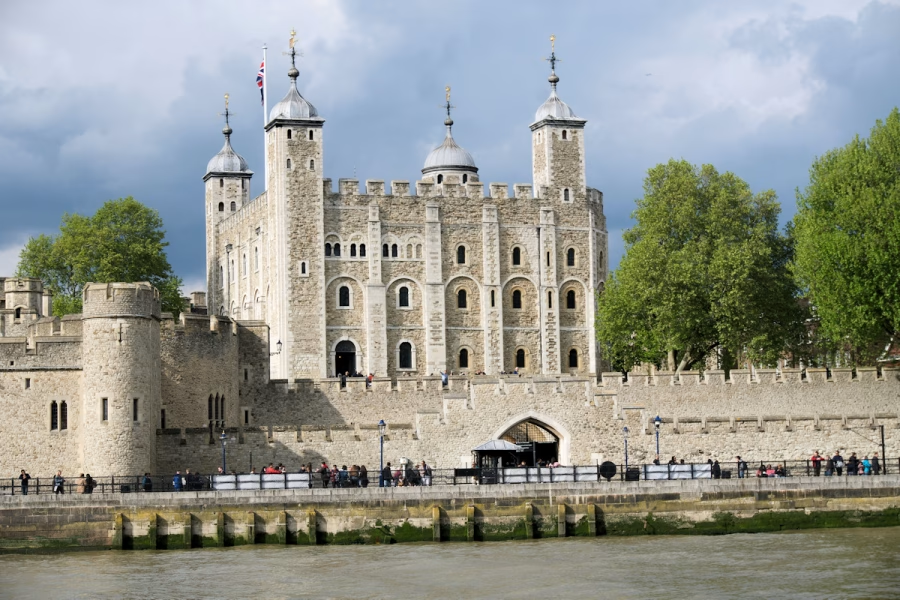
Photo of Tower of London by Gavin Allanwood on Unsplash
Photo of London bus by Dawid Tkocz on Unsplash
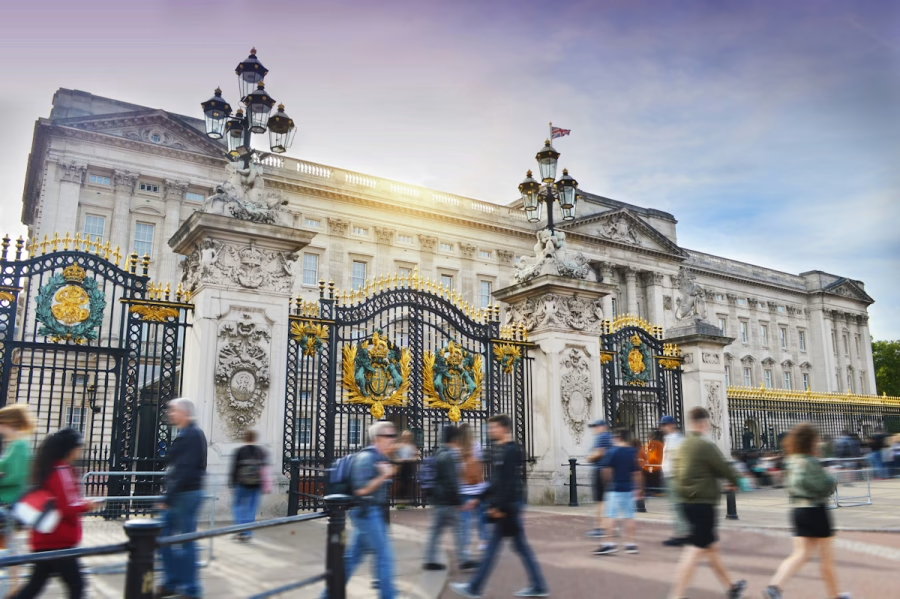
Photo of Buckingham Palace by Debbie Fan on Unsplash