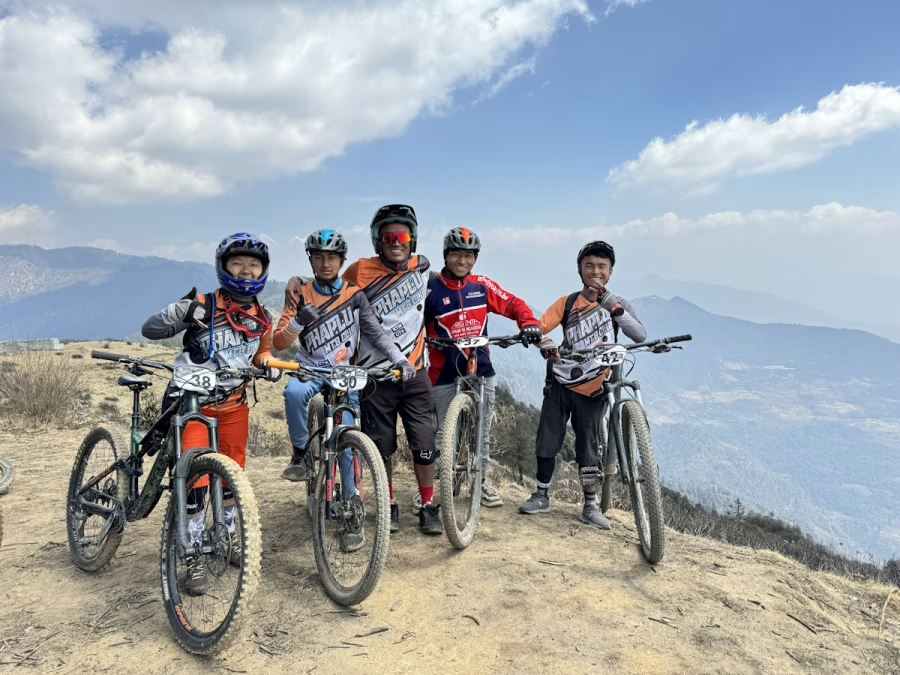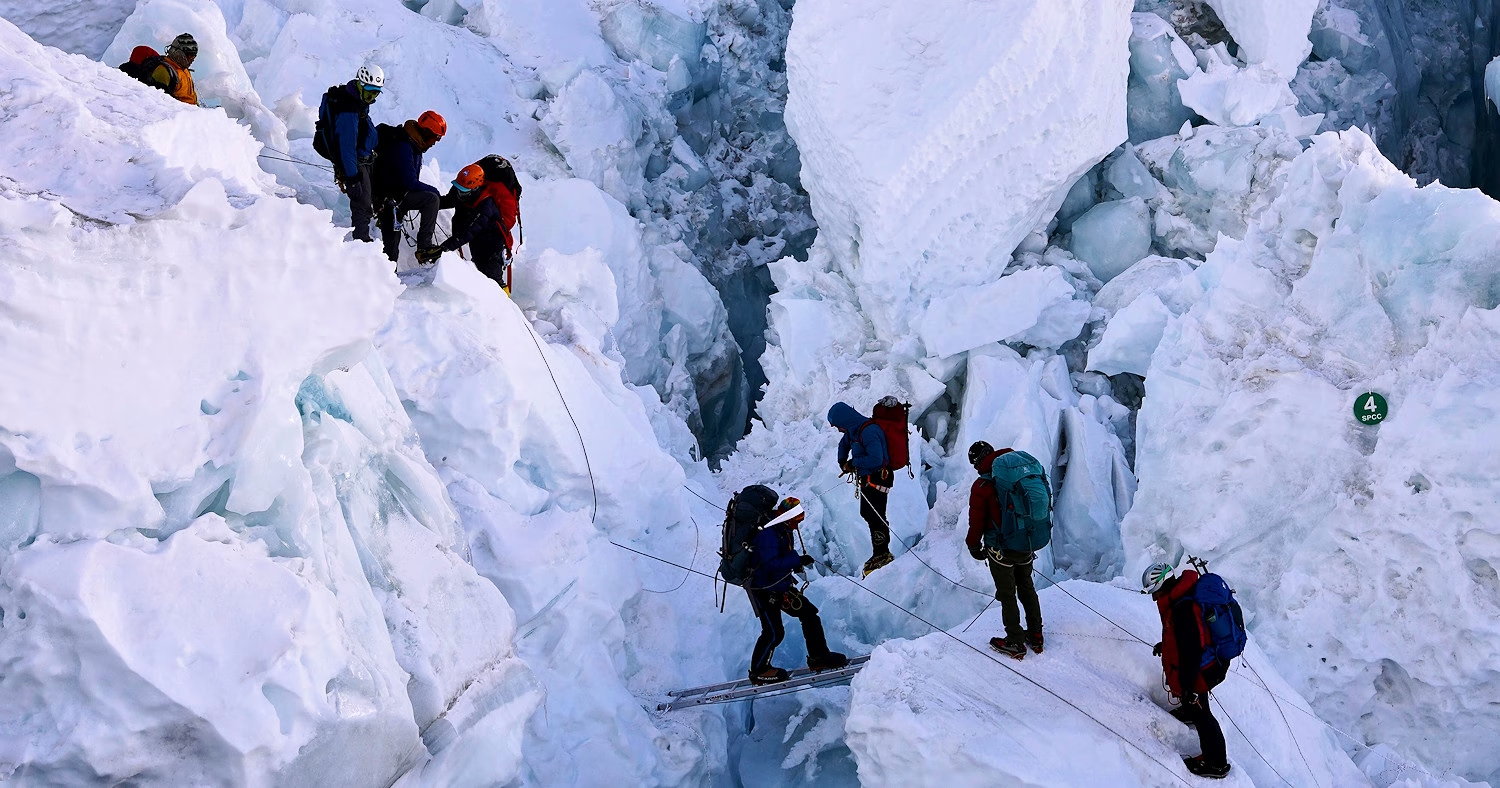
Ang Tshering Lama: Everest Summiteer & Chief Experiences Officer, The Happy House
This has been the most important undertaking of my life, and I feel the work is still continuing because the vision itself is constantly evolving and growing. To return home and restore a space that carries so much family history, while also creating something meaningful for future generations, has been deeply fulfilling. To go back to the concept of Dharma, I feel I am finally in alignment with it.
◦ 14 min readYou grew up in the Solu Khumbu region and later studied and worked in New York. How did those two very different worlds shape the person you are today?
Growing up in Solu Khumbu, my hometown, it was a very small village, where everyone knew each other and the sense of community was incredibly strong. I could walk into any of my neighbours’ house at any time during the day and have meals with them or stay there and play with my friends. To keep ourselves entertained and busy, we had to come up with our own imagination and invent different games in the fields, by the river bank, in the forests, in school playgrounds etc, and that is what I miss most of my childhood.
Once I moved to the U.S., life was very different- there was no space for mucking about, it was action all the time. I went to school, work, and had to constantly keep up with the rush of life there. It was incredibly exhilarating for a young man to be in New York during those formative years, and I made the most out of it. Being there taught me to constantly step out of the comfort zone and realise that life and growth happen in those areas of pushing ourselves. So, both have had an incredible impact on my life. One has taught me to value importance of community, power of nature, while the other has taught me not to remain too comfortable and to keep chasing dreams and passions. But because of the first, I have been able to do so with my feet on the ground and not get carried away by the chasing, which I feel is most important.
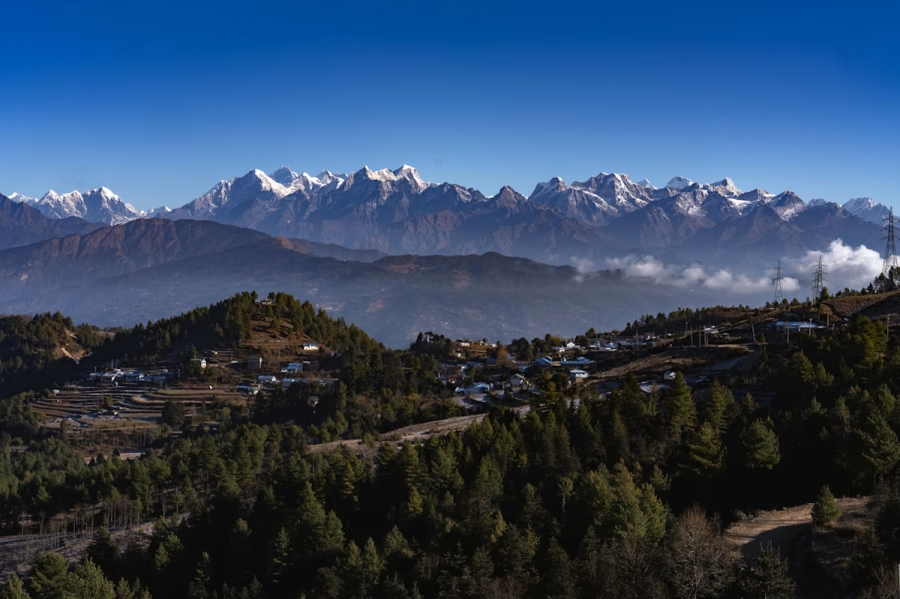
You have described feeling the mountains “calling you home.” What was the moment when you knew it was time to return to Nepal?
In our part of the world, we have a word called Dharma, this is an incredibly difficult word to translate into just one meaning as it can mean cosmic order, righteous conduct, teachings of Buddha, personal purpose, etc .and it is said that when we constantly feel out of place or have inner struggles then it means that our actions are not aligned with our personal Dharma and looking back now that is what it was.
I was greatly enjoying my time in New York, had everything a young man could want- starting his career with a good job etc, lots of entertainment to keep busy, but there was this feeling of voidness inside me and that kept making me not fully satisfied or fulfilled, I was longing for something else.
And that is when I decided to quit my job, take some time off, travel around the world, and spend time in Nepal. And while I was in Nepal, very quickly, I realised that the feeling that I was missing something wasn’t around anymore, and that is when I decided to stay back in Nepal. It was a realization that only became clear looking back.
Of course, when I was in my small cubicle staring at multiple monitors with numbers constantly, I was dreaming of the mountains of my childhood.
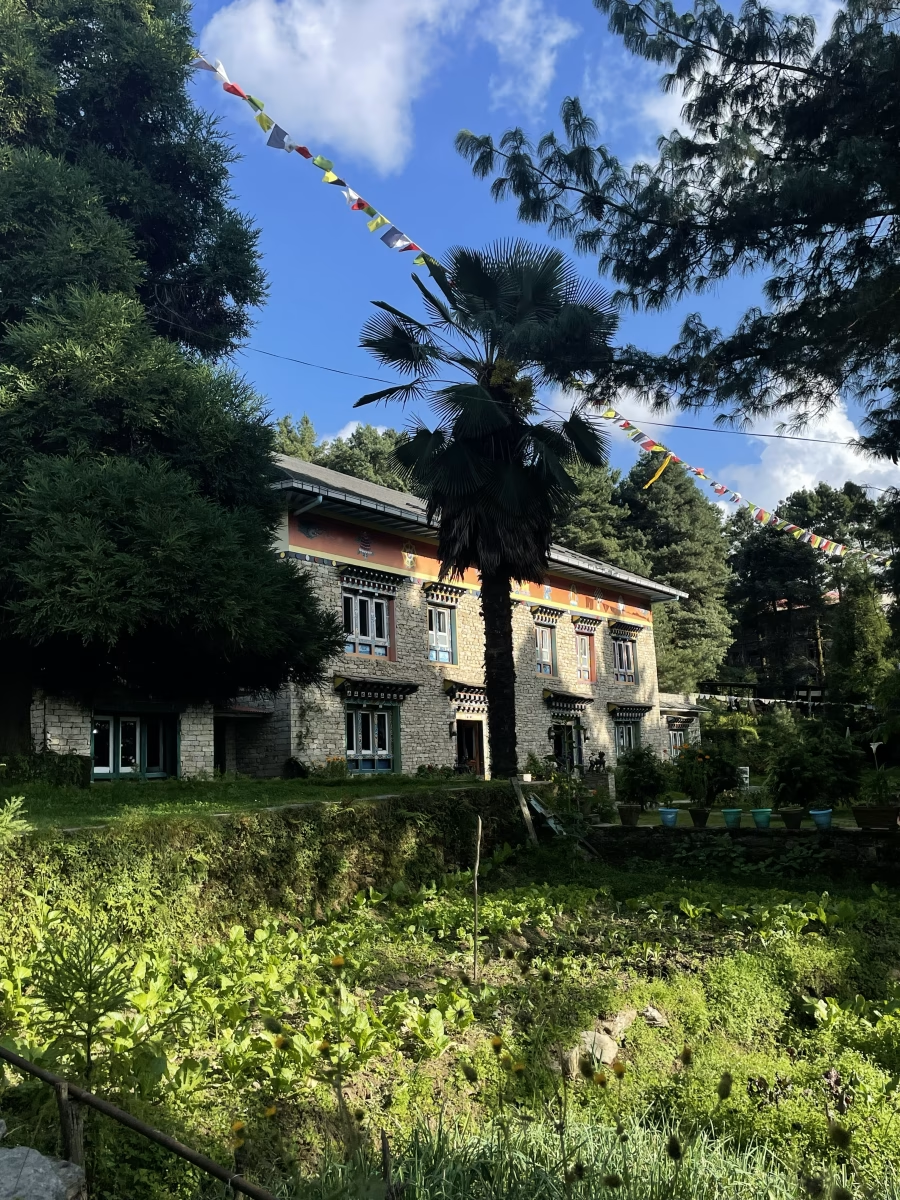
Restoring your family home and turning it into The Happy House carries deep personal meaning. What did it feel like to bring that vision to life?
This has been the most important undertaking of my life, and I feel the work is still continuing because the vision itself is constantly evolving and growing.
To return home and restore a space that carries so much family history, while also creating something meaningful for future generations, has been deeply fulfilling.
To go back to the concept of Dharma, I feel I am finally in alignment with it.
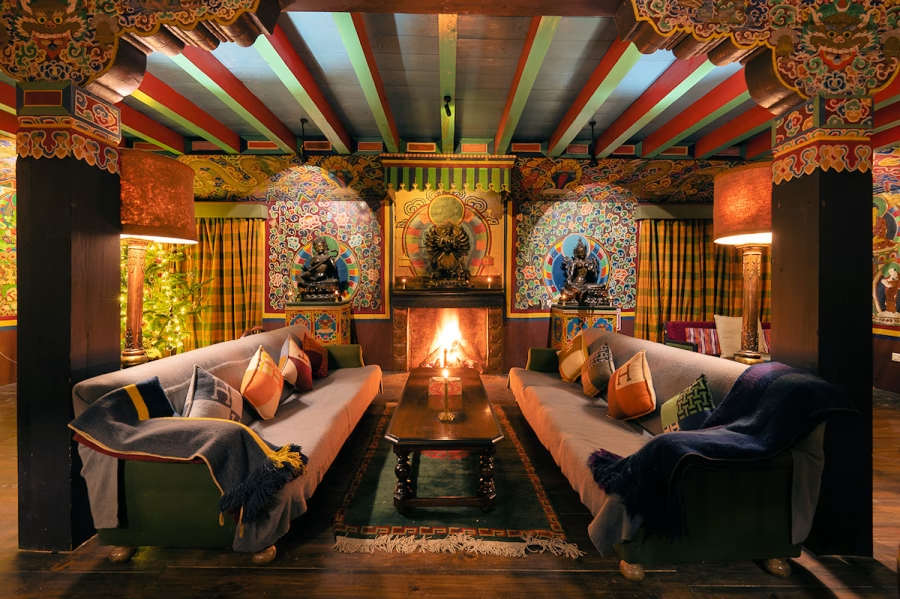
The name “Happy House” itself has a special story tied to Sir Edmund Hillary. What does that legacy mean to you today?
Sir Edmund Hillary climbed the highest mountain in the world, was one of the most famous individuals of the 20th century setting new limits and standards for mankind. But when he was asked, he would frequently answer “getting to the summit had brought him incredible recognition and success around the world, but nothing had been more rewarding to him than his work with the Himalayan communities of Nepal”.
And that is where I always find inspiration, the fact that he used his position for the benefit and betterment of so many others. That has remained one of the guiding principles of The Happy House since the very beginning.
And that is where the legacy of Sir Ed. means everything to us.
Your work bridges hospitality, culture and heritage preservation. How can tourism help protect Himalayan traditions rather than dilute them?
I am a strong believer that tourism, specially today more than ever, has the power to protect and preserve fragile cultures and heritages around the world.
As the world paces ahead towards becoming incredibly similar in look and style, things are starting to look very sterile, and traditional identities are increasingly being traded for global trends.
But at the same time when travel has become more accessible than ever, people want to have authentic experiences, they don’t want to travel the world and visit a café or restaurant that looks exactly similar to their neighbourhood.
And I am seeing everywhere, especially in Nepal, while the locals might want something that feels more international, the only few places still preserving the traditional are places that attract tourists, so this is just one simple example.
But even when we talk about larger communities, ways of life, traditions, tourism have a direct impact.
We cannot expect to preserve every single aspect of tradition and heritage, because it is the nature of the world to evolve, but whatever we can protect, especially in the Himalayas, tourism has a direct impact because some of the remote Himalayan communities where they are facing huge outmigration for opportunities in cities and elsewhere, the only few staying behind have in one way or the other, engagement with and support from tourism.
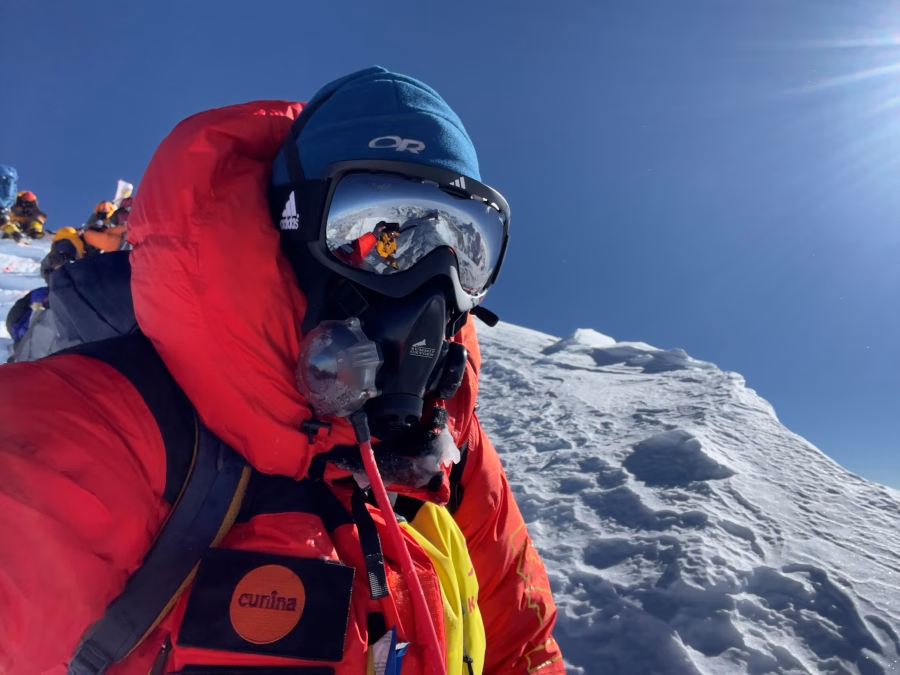
You’ve summited Mount Everest as part of an all-Sherpa-led expedition. What did that achievement represent personally and culturally?
Personally, it represented a journey toward a deeper understanding of the mountain that has given so much to the communities living in its shadow. Being part of the expedition was also an opportunity to witness and learn from the immense strength, resilience, and teamwork of the people who come together each year to make such journeys possible.
The expedition was also meaningful because, for so long, Sherpas were seen mainly as support on expeditions led by foreigners, despite being at the very heart of Himalayan mountaineering. An all-Sherpa-led expedition served as a powerful reminder of how far the Sherpa community has come in taking on the responsibility and leadership of such challenges. It was also a way of showing that Sherpas are not only communities living in the shadow of these mountains, but leaders, explorers, and storytellers in their own right.
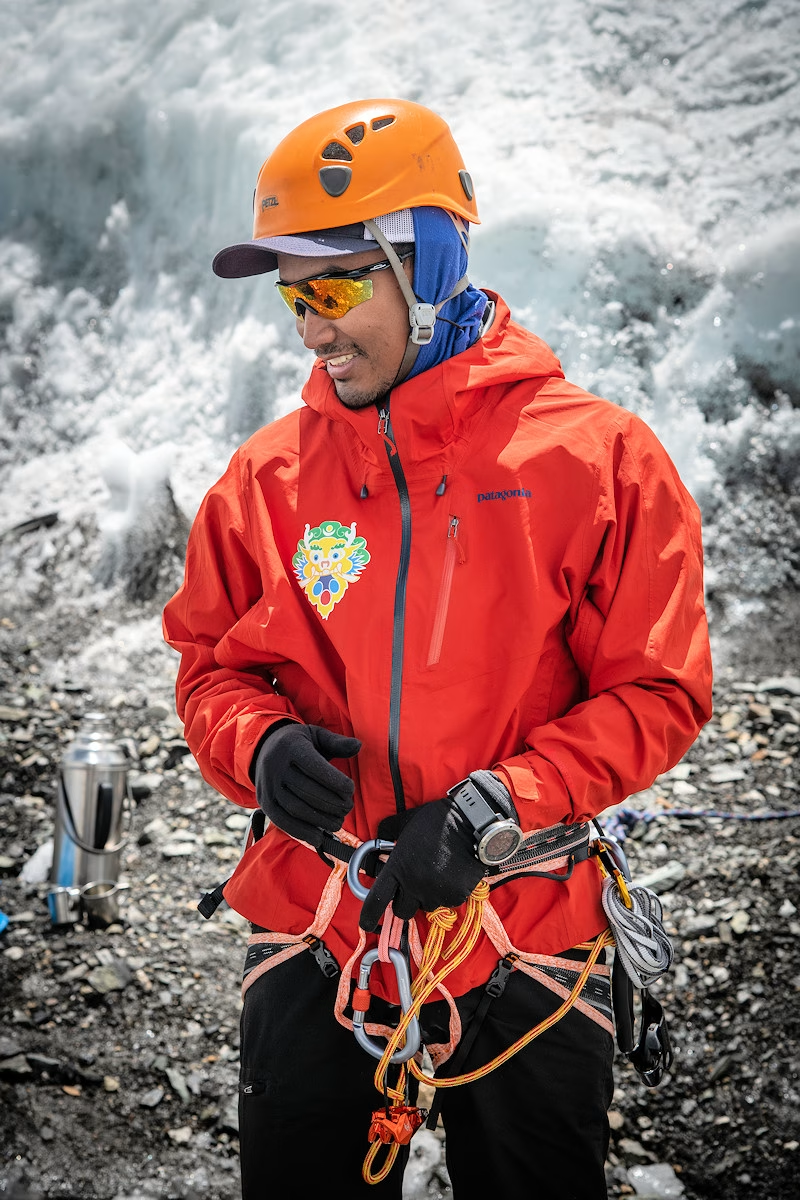
Many travellers visit the Himalayas seeking adventure. What do you hope they discover beyond the mountains themselves?
Everyone is on their own journey, but the most common thread I see in many travellers is curiosity, curiosity to discover a bit more about themselves.
We live such a busy life, so totally immersed in the external that we seldom venture inwards, but as I mentioned earlier, through my own experience, I have learnt that a bit of stepping out of the comfort zone, we come in face to face with our innermost selves and that is where important self-reintroduction takes place.
And since Nepal offers the perfect blend of physical adventure, way of life that constantly urges self-enquiry (so called spirituality), people do arrive with a bit of this aspiration and in most cases leave with certain realizations as a result and that is why so many visitors leave Nepal feeling they experienced something deeply meaningful and often feel called to return again.
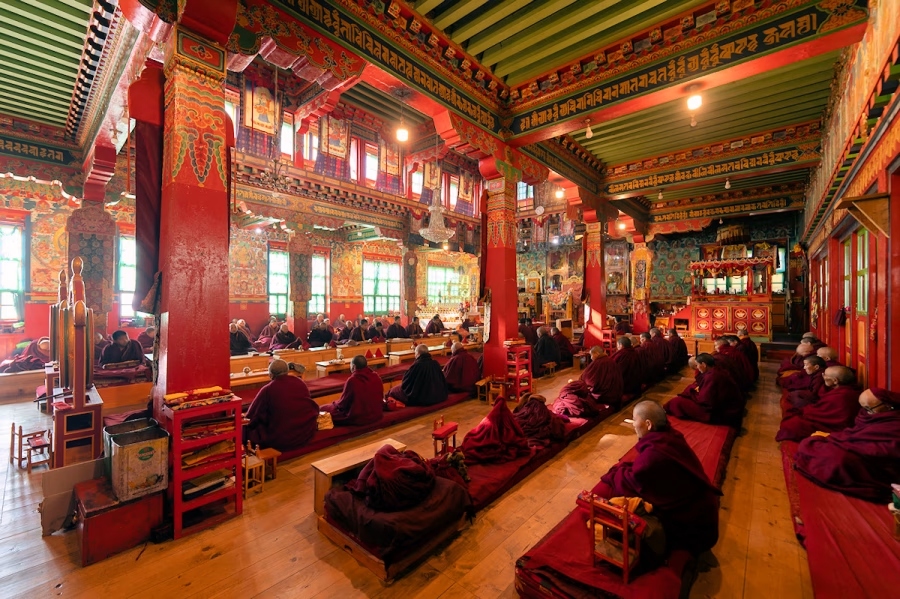
You are also involved with the Rubin Museum and Chiwong Monastery. How important is it to keep Himalayan art, spirituality and storytelling alive for future generations?
Himalayan Art and storytelling find their roots in the teachings of the Buddha and other teachers who walked (and continue to walk) these paths.
These teachings are guides for one to become great travellers and adventurers, but the journey not necessarily is outwards, these are guides to journeys towards the innermost landscapes of ourselves. Often considered the most sacred journeys. Therefore, specially while the world rushes towards all external explorations, we have come to see there has been a great push or calling for ‘conscious living’ around the world, because people are genuinely concerned about losing themselves and more importantly the future generations in the age of A.I., and so I believe anything that encourages, supports, and inspires one towards self-enquiry is beyond crucial to be kept alive.
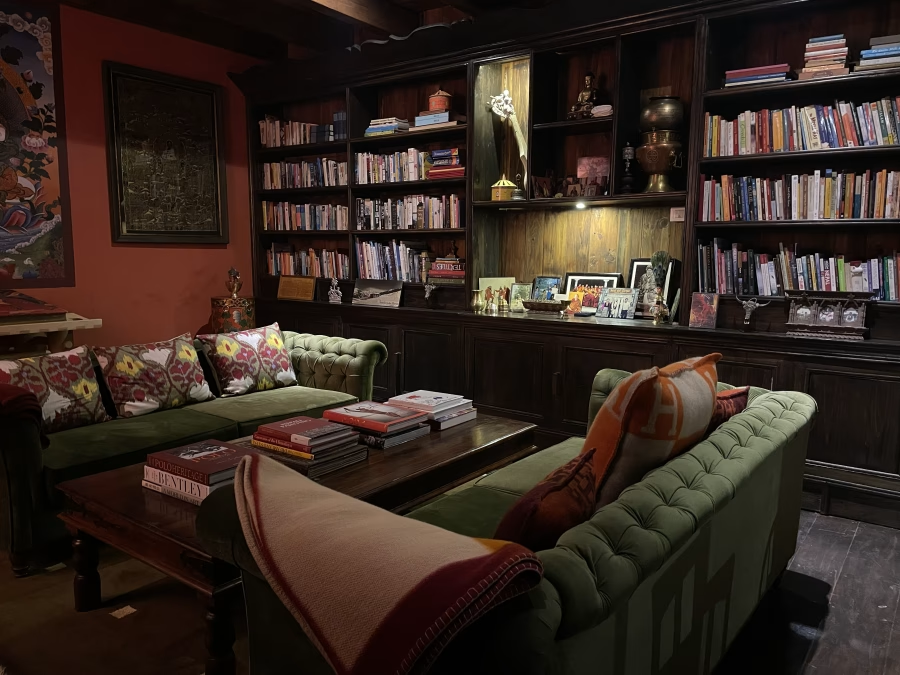
When guests arrive at The Happy House, what kind of experience do you hope they leave with?
We have not created a space where guests will come and leave with the feeling that they had the most “luxurious” holiday in the Himalayas, that has not been our intention.
We have focused most of our energy into creating a space where guests can arrive, instantly feel at ease, drop their shoulders, relax, and feel at home. And when they leave, we want them to leave with the feeling of having found a new community to be a part of.
Communities today are so important, again in the age of individualism, having this sense of community, whether its your neighbourhood, or book club, or run club, or whether it’s a community on WhatsApp, it is so vital that one feels part of something that supports their journey and more importantly where one can lend support to others, even through simple acts of kindness or words of generosity, this becomes a great source of joy in our world.
And that is what we hope guests leave with that they have found a community.
Looking ahead, what is your vision for responsible tourism in Nepal and the Himalayan region?
Responsible tourism starts with the operators and all the different stakeholders in the country.
One odd one can create a spark but to keep the light going, it has to be a joint effort.
My vision is for all of us to work together in continuing to make Nepal a destination that leaves a deep and meaningful impact on the lives of both the visitors’ and the visited while encouraging more conscious and joyful ways of living.
Himalayan Quickfire:
First memory of the mountains?
Very difficult to pinpoint one, they have always been there for me growing up.
Your favourite sound in the Himalayas?
The low and subtle hissing of the wind coming up the valley.
Dawn prayer flags or evening monastery bells?
Both – as they remind me to come back to myself.
Tea in a Sherpa kitchen or whisky by a mountain fire?
This is a tough one – but I would say tea (specifically Himalayan salt butter tea in the kitchen. It is an acquired taste).
A trail in Nepal everyone should walk at least once?
There are many trails and each has their own special quality but for me one I really enjoyed has been the trails in the far west of Nepal, in a region, still largely untouched by outsiders other than the local community there.
This is the region of Dolpo, where Peter Matthiessen walked in the early 70s and wrote his book The Snow Leopard.
The most humbling moment you’ve ever had in the mountains?
Watching the mountains remain completely unmoved by all our ambitions.
Snowstorm or star-filled night sky?
Starry night sky.
The smell that means “home” in Solu Khumbu?
Burning of juniper incense and pine woods
A Sherpa value the world could learn from?
In Solu Khumbu, you will find that almost every single house has prayer flags outside their homes.
Locals believe when the wind blows and the flags flutter, their prayers and wishes are carried away into all directions and to all beings.
This comes from the practice of spreading Loving Kindness and Compassion and I have always felt very touched by this.
Your favourite place to sit and do absolutely nothing?
Anywhere with an expansive views of the mountains, valleys, with sounds of nature.
A mountain lesson that applies to life?
I recently came upon this story which I am coming to appreciate greatly:
A farmer lived in the mountains. One day a traveler asked him, “What sort of weather are we going to have today?”
The farmer replied, “The kind of weather I like.”
Surprised, the traveler asked, “How do you know it will be the kind of weather you like?”
The farmer smiled and said, “Having found out that I cannot always get what I like, I have learned to like what I get. So I am quite sure we will have the kind of weather I like.”
What travellers misunderstand most about Everest?
I feel truly sad sometimes because Everest may be the most misunderstood mountain in the world. People everywhere project their own perceptions onto it and build their own realities around the mountain. Some come to “conquer” it, some come seeking fame, some see it as a personal challenge, while others question why people climb it at all. Everyone arrives with their own idea of what Everest means.
But to me, Everest has remained there long before we arrived and will continue to remain long after we are gone. Through it all, it has quietly imparted wisdom to everyone who has come into contact with it. No matter what personal aims or ambitions people arrive with, by the time they leave, they carry with them some imprint of that wisdom, knowingly or unknowingly.
That wisdom may come in the form of humility, compassion, gratitude, or a deeper appreciation for life itself. And interestingly, most people do not suddenly find this on the summit. They discover it much earlier through the communities they pass through, the people they meet, and the immense human resilience, teamwork, and kindness they witness along the journey. But like many important realizations in life, this too is often only understood once it has passed.
For the people native to the region, Everest is known as Chomolungma- the Mother Goddess of the World. She provides for the communities around her much like a mother cares for her children, offering what is needed according to the time. For centuries, she shared spiritual wisdom and protection, and in the last century she has also begun providing material opportunity and livelihoods, because that is the age we now live in. For Sherpas and the communities of the Khumbu, Everest has made possible a way of life that otherwise would never have existed.
The most beautiful moment you’ve ever seen at high altitude?
This was during my Everest expedition at Camp 4, above 8,000 metres, what climbers call the “death zone.” It was around sunset after a long day of climbing and struggling to rest. I had just woken up in preparation for the final summit push and stepped outside the tent to find the sky glowing gold above and below me. It felt as though the whole world had been enveloped in divine light.
In that moment, all my fatigue and exhaustion disappeared, replaced by a deep sense of energy, gratitude, and joy for having witnessed something so beautiful. The glow across the entire horizon was unlike anything I had ever seen before. I still find it incredible that I stepped out of the tent at that exact moment. Without that experience, I truly feel I would have struggled much more during the final climb to the summit.
To me, it felt like a blessing and permission to continue from Miyolangsangma, the protector goddess of Everest.
If the mountains could speak, what would they tell us?
Why the rush? Be still. Relax. Things will unfold naturally, as they are meant to.
The greatest luxury in the Himalayas?
The richness of our natural world from forests, rivers, and valleys to the high mountains. Alongside living cultures and wisdom that still remain deeply connected to the land.
And finally…
When someone leaves The Happy House, what feeling do you hope they carry with them?
A feeling of having slowed down enough to reconnect with themselves, with nature, and with others. More than anything, I hope they leave feeling they have found a home and community in the Himalayas.