
When Temporary Disability Changes Everything: A Personal Insight by Juliet Kinsman
Tips from Juliet Kinsman, whose “temporary” disability became a wake-up call for what travellers of all abilities need
◦ 6 min readTips from Juliet Kinsman, whose “temporary” disability became a wake-up call for what travellers of all abilities need
I was lying flat on a hotel bed in Singapore when the entire building went dark.
No air-conditioning. No lift. My phone dying. Multiple fractures. 17th floor. Alone. Unable to walk. And suddenly unsure whether there was an evacuation happening and if so, how I could possibly survive it.
I have never felt so vulnerable.
We like to imagine the life-reset arrives somewhere cinematic – in the Himalaya, on a silent retreat, or during a matcha-fuelled awakening in Bali. Mine arrived supine in searing pain after one unlucky step in a remote private-island hotel in Indonesia.
This isn’t a “poor me” story. I’ll be back on my feet. But it is a useful one because many of us will face temporary or permanent disability at some point, and travel is where that reality becomes brutally clear. What follows is the practical intel I wish I’d — and the empathy I wish every hotel automatically knew how to offer.
Before You Leave Home
Insurance isn’t optional
Get travel insurance. Proper insurance. Without mine, I’d have been facing tens of thousands in surgery and travel expenses. It didn’t cover everything, but it saved me. Make sure you understand excesses, medical caps, and what “reasonable costs” actually means.
Choose an emergency person; and brief them
Pick someone who can be there for you: either to make calls and send emails remotely or ideally even be by your side: friend, partner, family member, assistant. Tell them they’re your emergency contact and make sure they have:
- your insurer details
- your itinerary
- your passport info
- any medical notes/medications
- a list of key contacts
When It Happens
Stay calm – but don’t minimise
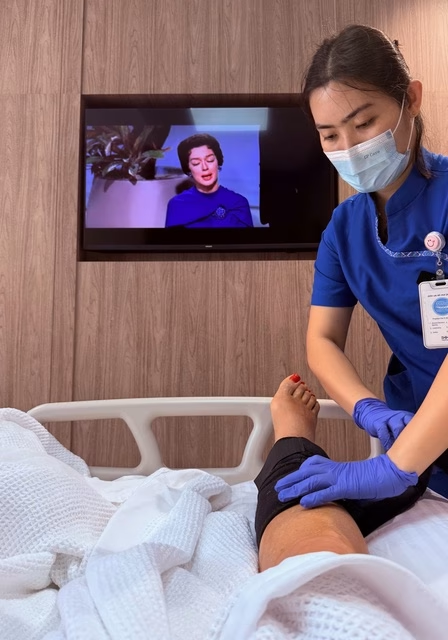
I knew instantly: this wasn’t a sprain. People around you may try to play down the likely condition, but don’t be a martyr: severe pain is a red flag. Treat it seriously.
Alert your insurer immediately
If you can’t, delegate. This is the moment to “pull strings”: ask your hotel, local contacts, or trusted friends to help you locate the best medical route quickly.
Document everything
When you’re in pain, memory becomes unreliable. Ask someone to:
- take notes during consultations
- track medication schedules
- keep receipts and paperwork
- photograph documents if needed
Hydration is key
Injury and immobility take a toll. Keeping hydrated helps with everything from fatigue to recovery. (It sounds basic. It isn’t.)
Choosing the Right Accommodation (When You Can’t Simply “Move On”)
My first Singapore hotel scheduled a power outage without warning this bedbound resident. That alone tells you something: some hotels still don’t understand vulnerability.
If you’re stuck somewhere due to medical advice or surgery timing, move to the most functional option you can; ideally a reputable chain near the hospital, and then advocate for yourself clearly.
Speak to the duty manager, not just reception. Outline what you need. Calmly. Firmly. No apologising.
And a note to fellow Britons: this is not the moment to be quietly stoic.

When You’re Solo: Accept the Help
Independence is a commendable trait – until it becomes a trap.
If someone asks, “Do you need anything?”, don’t auto-reply “I’m fine.” You’re not. Let people help with deliveries, errands, company, admin, logistics. You will remember kindness with startling clarity.
Recovery: Switch the Mindset
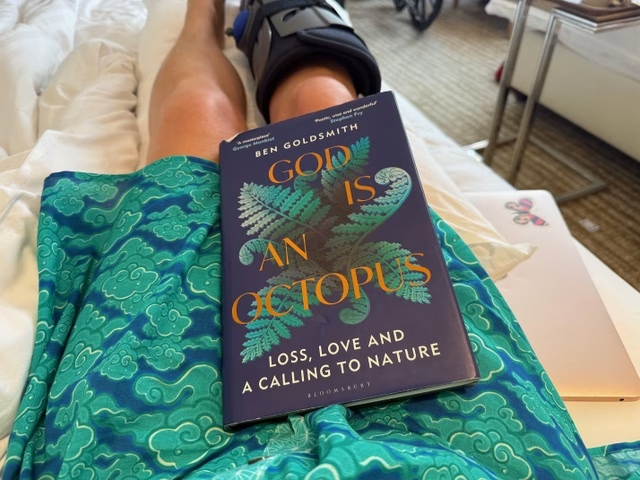
Rest without guilt. Watch the comfort TV. Let your brain soften. Don’t force productivity because someone suggests you “finally write that book.” Sometimes staying mentally and physically still enough to heal is the only job.
And try, gently, to find the silver linings:
- deeper conversations with friends or family you don’t speak to enough on the phone or video calls
- catch up on those podcasts you’ve been meaning to listen to
- familiarise yourself with what it means to be fully present and just be
A Note for Friends & Colleagues: What to Say (and What Not To)
Do: message. even a short one.
Do: offer something specific (“Can I send snacks?” could be a more effective prompt than “Let me know if you need anything.”)
Do: understand replies may be slow or absent.
Avoid: breezy optimism like “you’ll be back to normal in no time.”
It can land badly – especially if the situation is serious, long-term, or unknown.
What Hotels Need to Get Right When a Guest is Immobilised
There’s a difference between accessible and actually workable when you cannot move.
Room essentials
- Controls you can reach from bed (lights, temperature, curtains)
- Accessible power sockets beside the bed
- Space to manoeuvre without obstacle-course furniture
- Reliable air-conditioning and good ventilation
- Strong Wi-Fi and simple TV/streaming access
- A mini-fridge you can access without standing
- Flexible room service with genuinely nourishing options
- Ice on request (and not treated like a drama)
- Water replenished without making you beg for it (ideally not just in small plastic bottles)
Bathroom essentials
- Walk-in shower, non-slip flooring
- Proper grab rails (not flimsy add-ons)
- Shower chair and handheld shower head
- Toilet height/support that works for limited mobility
- Towels placed within reach
- Emergency cord that genuinely connects to a response
Human essentials
This is the part most hotels get wrong – and it costs them far more than they realise.
A quick sincere, human welfare check-in. A friendly hello. Eye contact. A name used kindly.
When you’re injured and alone, staff may be your only human contact that day.
One of my lowest moments was being wheeled outside for a rare dose of sunlight – and on return being pushed back into my room and left like a piece of luggage, without a word. It doesn’t take much to make someone feel human. It takes even less to make them feel erased.
If your staff do one thing better:
Speak to the person, not over them. Ask if they’re comfortable. Make sure they can reach what they need before you leave. Communicate between shifts so the guest isn’t forced to re-explain their situation again and again.
Quality hospitality is not just service. It is care, delivered with dignity.
The Real Lesson
That pitch-black hotel room taught me more than any wellness retreat ever could: how fragile bodies are, how quickly independence can disappear, and how much the world still assumes mobility.
Sometimes your body forces the sabbatical you didn’t know you needed.
And if travel teaches anything worth keeping, it’s this: we are all only ever temporarily able-bodied. The future of travel — and of luxury, belongs to the places that plan for that truth.