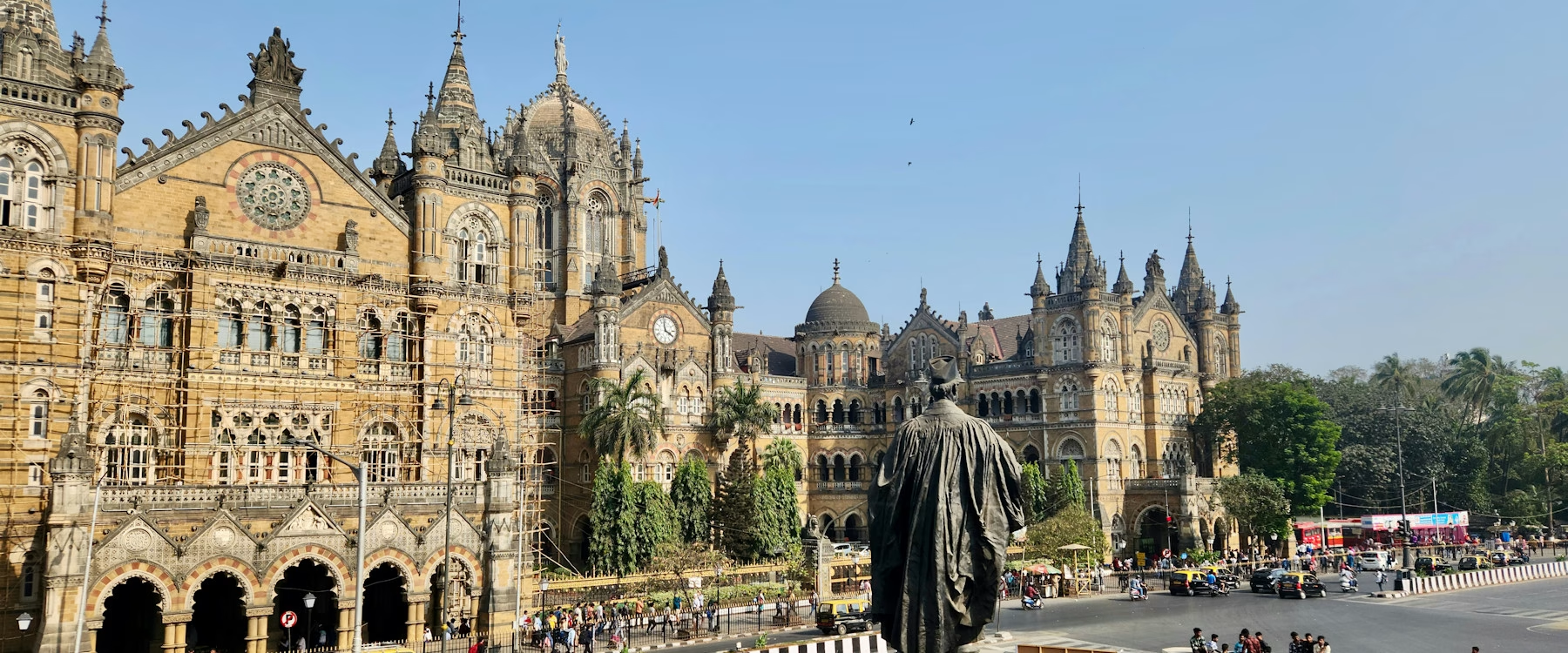
Vivek Angra: President (UK) – Trail Blazer Tours India (TBi)
Early Inspirations & Career Foundation What first inspired you to pursue a life in travel and tourism? My career in India Railways started where journeys, timetables, and stations were part...
◦ 13 min readEarly Inspirations & Career Foundation

What first inspired you to pursue a life in travel and tourism?
My career in India Railways started where journeys, timetables, and stations were part of my daily life. As a result, I got to travel to many areas in India. Apart from work, I used to get a lot of free rail tickets as a part of perks of working with Indian Railways. I guess this was the early inspiration to travel and I always had a career in travel in my mind and was waiting for an opportunity.
Lessons from Oberoi Hotels and Indian Railways that shape your leadership today
Those years taught me two complementary disciplines:
- From Oberoi: an obsession with attention to detail. Luxury is not only chandeliers; it is consistency, anticipation, and respect. I learned that every guest, regardless of budget, deserves to feel genuinely cared for.
- From Indian Railways: scale, systems, and resilience. Moving millions of people safely every day forces you to think like an operator: contingency planning, safety, union relationships, and efficiency. You also learn to listen to frontline staff; they usually know the truth much earlier than any report.
Today, my leadership style is a blend of both: human, service-oriented, but very grounded in processes, training, and accountability.
How has your bicultural experience (India + UK) influenced your approach?
Living and working in the UK for more than two decades and after working with the Government of India for many years has given me two lenses on the same destination.
From the UK side, I understand what British and Irish travellers worry about: safety, hygiene, reliability, and transparency. From the Indian side, I understand how hard our teams work behind the scenes to deliver complex itineraries in a very dynamic environment.
This dual perspective helps me translate expectations in both directions – setting realistic promises with partners, being brutally honest about what we can and cannot do, and then pushing our teams in India, Nepal, Bhutan, and Sri Lanka to deliver to international standards while preserving our warmth and flexibility.
Building Tourism Bridges Between India and the World
As Director for UK & Ireland with the Ministry of Tourism, you were responsible for promoting India to British and Irish travellers.
What were the biggest opportunities; and challenges that you encountered in shaping India’s global identity?
The opportunity was enormous: to move the narrative of India in the UK and Ireland from “Taj Mahal and chaos” to a sophisticated, multi-layered destination. There was growing curiosity about wellness, wildlife, food, textiles, and culture beyond clichés. My job was to give that curiosity a structure.
The challenges were equally real: visa processes, sometimes inconsistent air connectivity, concerns about safety or health, and a general perception that India might be “too much” for certain travellers. Balancing aspiration with reassurance was key – showcasing the depth of experiences while giving trade partners the confidence that India could be delivered safely and smoothly.
What misconceptions about India do you find yourself correcting most often with global partners and travellers?
Two big shifts stand out:
- From “once-in-a-lifetime” to “I’ll be back”: Earlier, many visitors came thinking this would be their only trip to India. Now we see clear repeat patterns – first Golden Triangle, then perhaps Kerala, then tiger safaris or the Himalayas, then maybe Bhutan or Sri Lanka.
- From sightseeing to experiences: Guests still want monuments, but they increasingly ask for cooking with local families, heritage walks, responsible wildlife encounters, textile trails, festivals, and opportunities to give back.
Common misconceptions you find yourself correcting…
- That India is only for backpackers or “hardy” travellers. In reality, India offers some of the most refined luxury experiences in the world.
- That India is chaotic and unsafe. The reality is more nuanced: like any large country, you need sensible risk management, but there is a strong hospitality culture and enormous pride in welcoming guests safely.
- People are often surprised to learn they can escape the summer heat in the Himalayas, or enjoy very different seasons across regions.
Leadership at Trail Blazer Tours India (TBi)
What sets TBi apart?
TBi is, I believe, a rare combination: one of India’s largest inbound DMCs and still a genuinely family-owned and family-run business. That matters because it shapes our culture.
What sets us apart is:
- A strong focus on the UK and Irish markets with a dedicated, experienced team.
- Very fast and thoughtful response times – we try to add value to every enquiry, not just price it.
- Deep on-ground presence across India, Nepal, Bhutan, and Sri Lanka, so we can operate complex itineraries with confidence.
- A “guest-first, agent-always” mindset: we treat the client as our joint responsibility with the tour operator, and we never forget whose brand is on the booking.
What did the Travel Counsellors Supplier of the Year recognition mean to you?
To be voted Runner-Up – Supplier of the Year by nearly a thousand Travel Counsellors, from among hundreds of global suppliers, is extremely meaningful. For me it represents three things:
- Trust: independent travel entrepreneurs putting their reputations on the line choose to work with TBi.
- Consistency: it is not about one big success; it is about hundreds of files, last-minute changes, and problem-solving over years.
- Responsibility: recognition is wonderful, but it also raises the bar. My team and I take that very seriously.
What new or emerging destinations within India are capturing the interest of UK visitors today?
Beyond the classic Golden Triangle and Kerala, we are seeing increasing interest in:
- Central India (Madhya Pradesh) for tigers, heritage, and quieter rural experiences.
- The Indian Himalaya – Ladakh, Himachal, Uttarakhand – for soft adventure and wellness.
- The Northeast for culture, festivals, and nature.
- Gujarat and Punjab for food, textiles, and spiritual trails.
There is also a strong appetite for combining India with neighbouring countries like Bhutan and Sri Lanka in one journey.
Collaboration With IncluGroup & the Birth of Accessible India
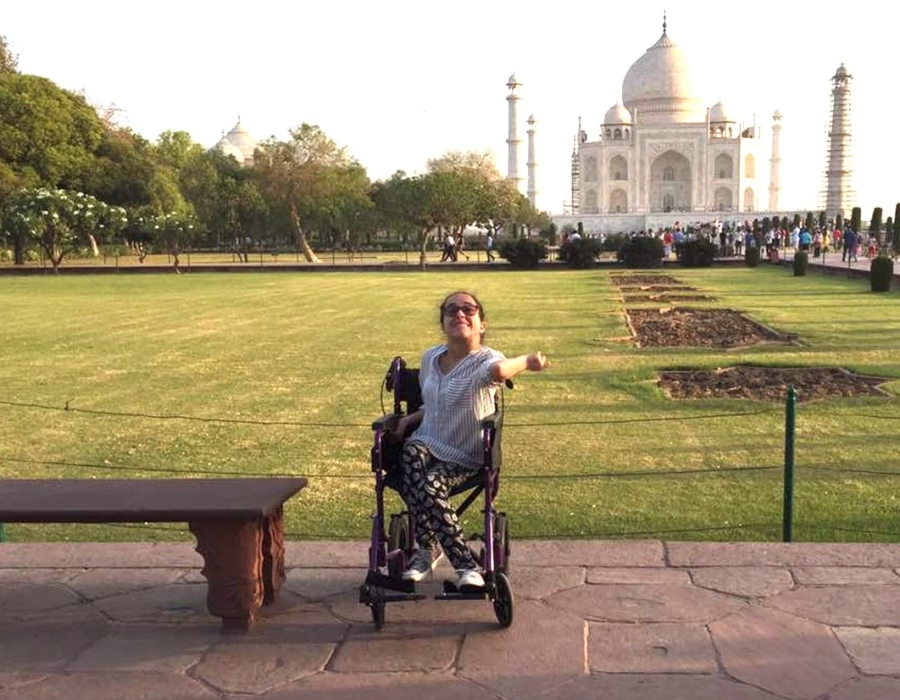
What sparked your collaboration with Richard and Inclu Group?
Richard and I met through the UK travel trade and very quickly realised we shared a common belief: that travel should not exclude people simply because they move, see, or experience the world differently. At the same time, we saw that India – which is so rich in hospitality – was often perceived as “too difficult” for travellers with access needs.
The idea of creating Accessible Golden Triangle and Inclusive Kerala itineraries came from a simple question: “What would it take to make India genuinely possible for these travellers, not just theoretically available?”
What were the biggest challenges and breakthroughs in designing accessible travel experiences across India’s most iconic routes?
Challenges included:
- The inconsistency of accessible infrastructure – even within the same hotel brand.
- Limited or unreliable information about room layouts, bathrooms, ramps, or lifts.
- The need to train guides, drivers, and local partners to think through accessibility proactively, not as an afterthought.
Breakthroughs came when we found hotels, suppliers, and local teams who were genuinely willing to collaborate – to measure door widths, adjust bathrooms, rethink vehicle access, or modify experiences without diluting the magic of India. Another breakthrough was building robust checklists and processes so that accessibility was documented, not assumed.
How has this work influenced TBi’s broader vision for inclusive tourism?
This collaboration forced us to put an “accessibility lens” on all our product development. Today, when we design or review an itinerary, we are more likely to ask: Who might be excluded by this design?
Can we create an alternative that is just as rich?
We are gradually embedding accessibility questions into our contracting, inspections, and staff training. It is a journey, but it has already broadened our understanding of what “good service” really means.
What excites you most about the next chapter with IncluTour?
IncluTour is about inclusive global travel, and that excites me because it connects India to a much wider movement. I am particularly excited about:
- Scaling accessible itineraries beyond the first few routes.
- Combining IncluTour’s deep understanding of lived experience with TBi’s on-ground network and knowledge of South Asia.
- Using better data and, over time, technology to give travellers with access needs more certainty before they travel.
Where in India do you see the most potential for future accessible routes?
Realistically, the greatest potential lies in:
- The Golden Triangle and extended Rajasthan circuits (because of infrastructure and route familiarity).
- Kerala – especially backwaters, coastal stays, and wellness resorts where adaptations are possible.
- Major metros like Delhi, Mumbai, Bengaluru, and Chennai, which can act as accessible gateways with curated day experiences.
- Over time, I would love to see responsible wildlife and spiritual circuits become more accessible as well.
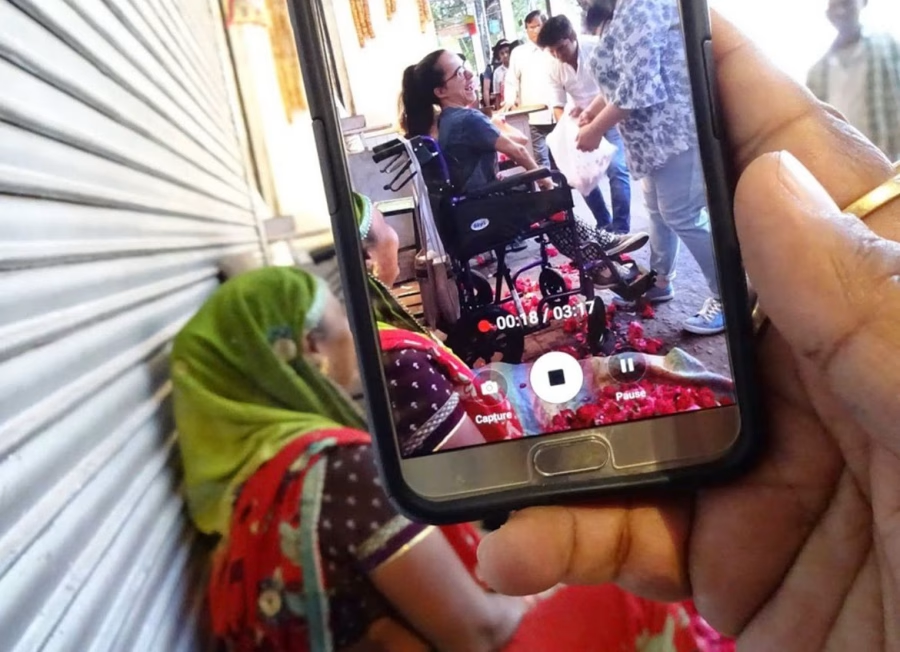
Responsible, Regenerative & Inclusive Tourism
How is India progressing in responsible and regenerative tourism?
Progress is uneven but encouraging. We see:
- Stronger focus on wildlife conservation and better park management in many reserves.
- Community-based tourism models in several states, where local communities benefit more directly.
- Growing awareness among high-end travellers and operators about waste, water use, and cultural sensitivity.
At the same time, challenges like over tourism in certain hotspots, waste management, and climate vulnerability remain. The key will be to align policy, private sector, and local communities around long-term carrying capacity, not just short-term numbers.
Are you seeing increased demand; both domestically and internationally, for inclusive luxury travel?
Yes, the demand is noticeably increasing. Many luxury travellers now ask not only “Is it beautiful?” but also “Is it responsible?” and “Is it accessible to my parents, my children, or my friend who uses a wheelchair?”
We are also seeing a rise in multi-generational trips where one family member may have specific access needs. For them, inclusivity and dignity are non-negotiable, not a niche add-on.
What would you like India’s accessible tourism landscape to look like in five years?
In five years, I would like to see:
- Clear national guidelines and standards on accessibility for tourism infrastructure.
- A critical mass of genuinely accessible hotels and experiences in every major region.
- Better training for frontline staff across airlines, airports, hotels, and attractions.
- Accessible information – accurate, verified, and easy to find – so travellers can make confident choices.
If we achieve that, India could become one of the most inspiring accessible tourism success stories in the world.
Cross-Market Expertise: UK, India & Beyond
What can the UK and Indian markets learn from each other?
From the UK, India can learn the value of robust regulation, health and safety culture, clear terms and conditions, and transparent communication when things go wrong.
From India, the UK can be reminded of the power of warmth, flexibility, and “jugaad” in a positive sense – the ability to find creative solutions, personalise experiences at scale, and treat guests as family rather than transactions.
What traveller behaviours or expectations most differentiate UK visitors from regional Asian travellers?
Broadly speaking:
- UK visitors tend to value storytelling, slower exploration, and time to absorb a place. They often book further in advance and are very focused on safety, hygiene, and ethical experiences.
- Regional Asian travellers, especially from emerging markets, may prefer more intensive itineraries, group travel, international brands, shopping, and family-oriented experiences, often with shorter lead times.
- Both segments are evolving, but understanding these nuances helps us design better journeys for each.
Crisis, Resilience & Reinvention
The pandemic brought immense challenges across India and South Asia.
How did you and your team navigate this period, and what innovations emerged as a result?
The pandemic was the toughest period our industry has ever faced. For TBi, our priorities were clear:
- Look after our people – as far as possible, protect jobs, provide support, and maintain morale.
- Honour commitments to partners – process refunds or credits fairly and communicate transparently.
- Use the downtime wisely – invest in training, product development, and digital tools.
We emerged with a sharper focus on smaller groups, more outdoor and nature-based itineraries, stronger risk management, and better internal collaboration across our India, Nepal, Bhutan, and Sri Lanka teams.
What does a resilient tourism landscape look like for India in the next decade?
Resilience will mean:
- Diversified source markets and regions, so we are not over-dependent on a few gateways or seasons.
- Stronger domestic tourism to cushion external shocks.
- Investment in climate adaptation and disaster preparedness.
- Robust, trusted DMCs and local partners who can respond quickly and responsibly in a crisis.
If we can achieve that, India will not only recover from shocks but also use them to innovate.
Personal Reflections & Vision
Which moment in your career has been most defining for you – and why?
One defining moment was being appointed Director for UK & Ireland with the Ministry of Tourism. Standing in front of British and Irish trade partners to represent an entire country, not just a company, was both humbling and empowering. It shaped how I see my role even today: as a bridge-builder and custodian of trust, not just a salesperson.
Another, more recent defining moment has been launching the first Accessible Golden Triangle and Inclusive Kerala itineraries with Richard and IncluTour. It reminded me that there is always more we can do to open doors for people.
What is your personal favourite place in India, and what makes it special to you?
It is very hard to choose, but the Indian Himalaya holds a special place in my heart – especially the quieter valleys of Uttarakhand and Himachal. There is a combination of landscape, spirituality, and simple village life that I find deeply grounding.
What excites you most about the future of Indian tourism?
Three things:
- The creativity of the new generation of Indian hosts, hoteliers, guides, and entrepreneurs.
- The shift from volume to value – more focus on quality, experiences, and impact.
- The chance to position India as a global leader in inclusive, responsible, and experience-rich travel, not just a big market.
What legacy do you hope to leave in the global travel industry?
I would like to be remembered as someone who helped build long-term bridges between India and the world – based on trust, professionalism, and genuine care for travellers and partners.
If, in the process, we can make India significantly more accessible to people who were previously excluded, and mentor a new generation of tourism professionals who carry that mindset forward, I would consider that a legacy worth having.
Quick-Fire: The Lighter Side of Vivek
Your favourite Indian dish to introduce first-time visitors to?
A good North Indian thali – so they can taste a little bit of everything and understand how diverse Indian food is on one plate.
One place in India everyone should see at least once?
It is rural India in the remote Himalayas. I remember trekking in remote villages many years back and a very poor innocent family who refused to accept money after they fed us with food and water and they didn’t know what a “train” was.
Train, plane, or road trip – your preferred way to explore India?
Train. My roots are in Indian Railways, and there is something magical about watching India unfold outside a train window.
A destination still on your personal bucket list (in India or beyond)?
The Andaman and Nicobar Islands – for their history, marine life, and sheer remoteness.
Tea or coffee – and where in India serves the best version?
Chai! At a local tea shops. A concoction with lots of tea, milk and sugar is hard to beat.
Photo by Zoshua Colah on Unsplash