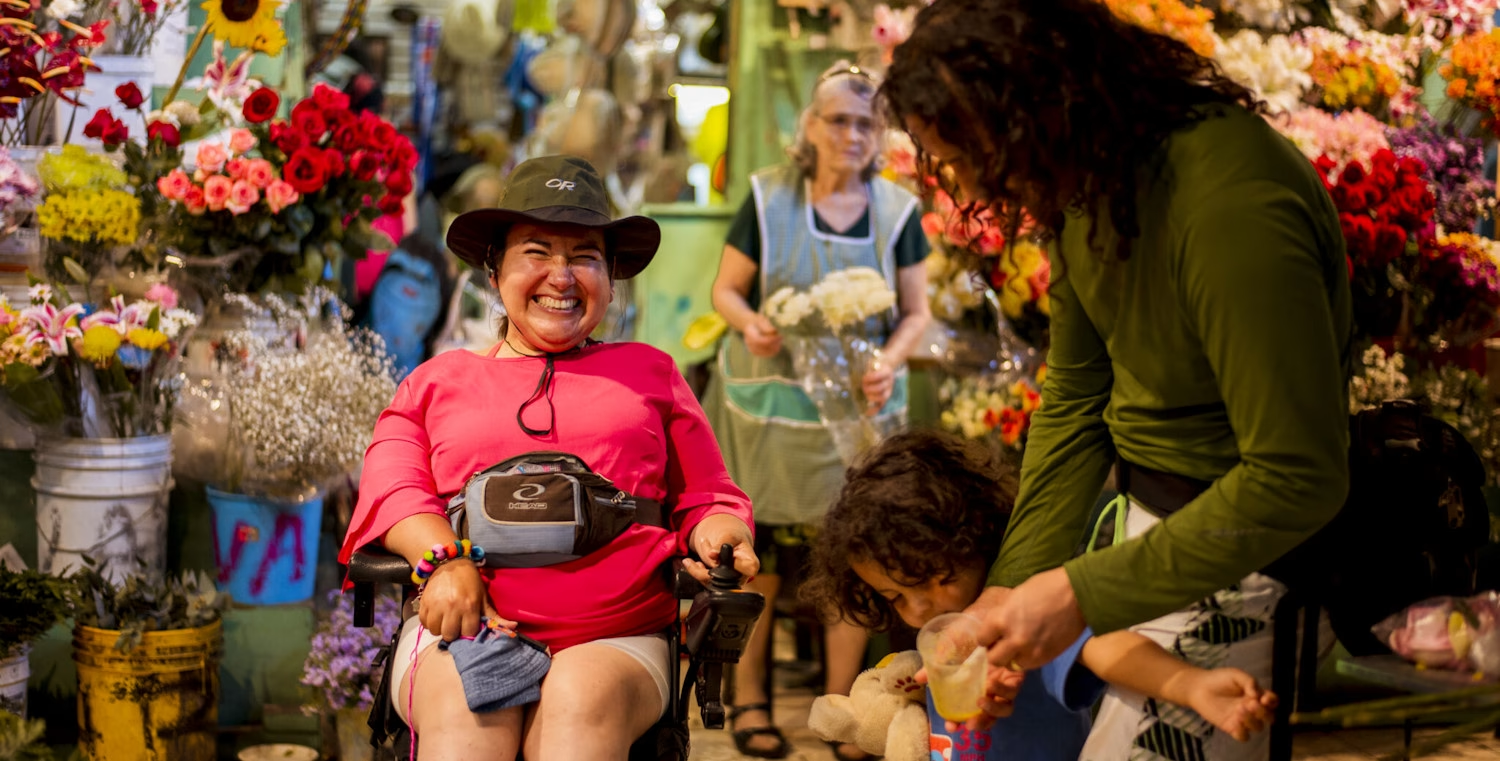
Stephanie Sheehy & Emilio Zúñiga: Co-founders, IL VIAGGIO TRAVEL
This interview explores how personal partnership and shared purpose can drive long-term systems change in accessible tourism, sustainability, and social innovation. Origins – Two Paths, One Purpose Before IL VIAGGIO...
◦ 8 min readThis interview explores how personal partnership and shared purpose can drive long-term systems change in accessible tourism, sustainability, and social innovation.
Origins – Two Paths, One Purpose
Before IL VIAGGIO existed, who were you individually, and what drew you toward tourism as a vehicle for change?
Emilio:
I grew up in Liberia, Guanacaste, deeply connected to land, nature, and people. My first step into tourism wasn’t theoretical—it was hands-on. I created a horseback riding experience on my father’s farm, then certified as a canopy guide. Tourism, for me, was always about connection and experience, not just logistics.
Later, I moved to San José to study Business Administration. That shift—from rural Guanacaste to the capital—gave me perspective: I understood both the local reality and how systems operate. While working at a local ground operator, I met Stephanie.
Stephanie:
I grew up in Escazú, San José, but travel was part of my DNA. My grandfather was a captain for Costa Rica’s national airline, so traveling wasn’t a luxury—it was normal life. I studied interior design, photography, and architecture, driven by a passion for how spaces make people feel.
My first job was also at that same ground operator, working in incentives. Tourism fascinated me because it sits at the intersection of people, culture, design, and emotion.
After a year, Emilio went to work at a yoga retreat, and I moved to another agency to keep learning.
That distance made something clear: we didn’t just want jobs—we wanted to build something different.
A company where people were not numbers.
In 2004, IL VIAGGIO TRAVEL was born, grounded in people, purpose, and sustainability long
before those words became trends.
Do you remember the first moment when accessibility became more than an idea – and started to feel like a responsibility?
Absolutely.
In 2008, I received a call from a man traveling to Costa Rica with his mother, who used a wheelchair.
He was bringing his grandfather’s ashes. We designed their journey carefully – fully accessible, respectful, and meaningful.
They came back the next year. And the next. Every visit, they told us the same thing:
“You’re doing this right. There’s a huge need. You should focus on accessible travel.”
For years, we resisted. Not because we didn’t care—but because we understood the responsibility. In 2012, at FITUR, we placed a wheelchair symbol on our stand. The response was overwhelming. People with disabilities from around the world came to us, stating they did not thought Costa Rica could be accessible for them.
We returned to Costa Rica with one clear goal:
Create a Costa Rica for all.
Not someday. Now.
How did your different backgrounds begin to complement each other?
Emilio brings structure, administration, strategy, and political understanding. He knows how systems work – and how to move them.
I bring design, creativity, and a refusal to accept “this is how it’s always been done.”
It’s balance. Vision meets execution. Creativity meets grounding. Dreaming meets delivery.
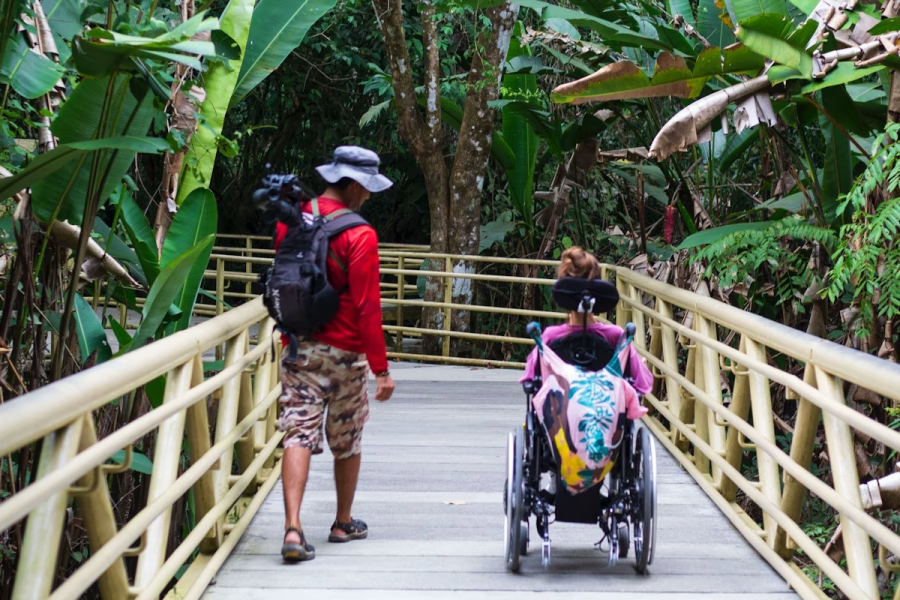
Building Together
What did co-founding a company as partners make easier – and what did it make harder?
The best part is simple: we enjoy life and work together. Wherever we are – airports, meetings, inspections – we’re building something we believe in. It doesn’t feel like work; it feels like purpose.
The hardest part? Learning that business disagreements are just that – business. Not personal. Not marriage. That took maturity.
And yes, it’s true: finding time for conversations that aren’t about work is hard when your work is also your passion.
How do you divide leadership without hierarchy or imbalance?
Vision: A Costa Rica for all.
Execution: Proving it works—bringing travelers, building trust, showing the industry it’s viable.
Advocacy: Educating, sensitizing, and creating real, on-the-ground solutions – not just policies on paper.
Each pillar feeds the other.
When faced with resistance, how did you support each other to keep going?
We always knew this path wouldn’t be easy. Resistance means change is happening.
We work through trial and error—creating, testing, adjusting, improving. What keeps us going are the travelers: their faces, their stories, their testimonials. Seeing our team fulfilled. Seeing dignity restored.
And yes – when others copy us, we smile. It means the impact is spreading.
Has your partnership changed as the work has grown more visible?
IL VIAGGIO impacts travelers directly investing in equipment, adapting vehicles, building experiences.
Our NGO, the Red Costarricense de Turismo Accesible, works at a systemic level – education, projects, public-private collaboration, policy, and visibility.
Partners change. Impact remains.
IL VIAGGIO as a Reflection of Values
What values did you refuse to compromise on – even when it was easier to do so?
We never compromise on dignity, sustainability, autonomy, or real accessibility.
Accessibility is not a checkbox. It’s freedom.
We refuse welfare – the idea that helping means carrying, pushing, or limiting someone. If an experience strips autonomy, we don’t sell it.
If a provider says “accessible” but treats people without respect, safety, or choice, we walk away.
Always.
How do you ensure dignity, not just access?
Dignity means everyone does the same experience – with autonomy and safety.
It means training staff, changing language, and shifting mindset. Accessibility without human sensitivity is not inclusion.
What does “luxury” mean to you?
Accessibility, safety, autonomy, and respect are not luxury add-ons.
Luxury is optional.
Dignity is not.
How do you hold space for both international travelers and the local community?
IL VIAGGIO works internationally. Every three months, we donate a full trip to a Costa Rican person with a disability—our ambassadors—so suppliers experience accessibility firsthand. They also help us test new products before our travelers.
The RED works locally: beaches, education, employment, rights, and awareness.
Both models serve people.
From Enterprise to Ecosystem
Was creating the Red Costarricense de Turismo Accesible inevitable?
Yes.
We needed systems change.
Education. Information. Verification. Action.
The RED doesn’t create paperwork – it creates impact.
What does DONATAPA symbolize for you?
DONATAPA proves that circular economy can create access.
250+ tons of plastic transformed
17 accessible beaches
Schools, universities, communities involved
It’s environmental, social, and economic impact – tangible, national, and replicable.
What did launching LA INSPIRACIÓN during the pandemic reveal?
It revealed resilience.
We identified a real problem: clothing that removed autonomy and comfort for people with disabilities.
We designed solutions. We showed collections locally and internationally.
Then we adapted again – realizing awareness had to come first.
That’s how Rompiendo Barreras was born: a social movement that turns a t-shirt into education, uniforms, dignity, and future employment.
Transformation requires metamorphosis.
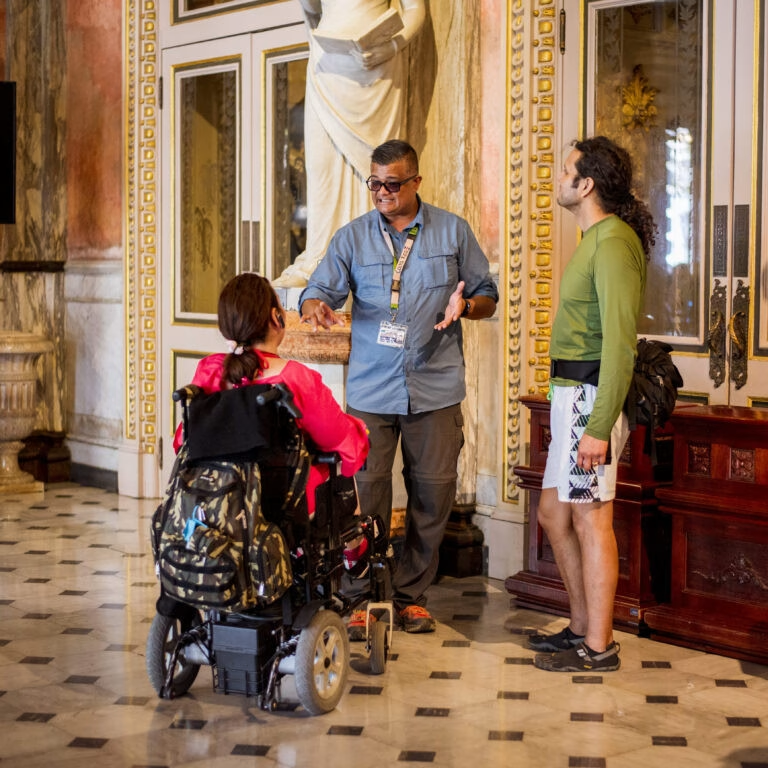
Leadership, Power & Policy
How do you stay grounded while operating at high policy levels?
Because titles don’t change people – we’re all equal.
I stay grounded because I work for people whose reality is very different from mine. And because I know we’re just getting started.
What responsibility comes with recognition?
Recognition confirms impact.
Seeing accessibility embedded in national tourism policies – that fills my heart. That’s real change.
How do you ensure accessibility remains community-owned?
By working at every level: education, law, verification, and practice.
If international actors demand accessibility, that helps us. Influence grows with repetition. What matters is that accessibility is real, not greenwashing.
Every accessible beach, hotel, or platform, whoever leads it, is a shared victory.
Looking Forward – Together
Why build a global verification process now?
Because information empowers choice.
Our verification focuses on universal accessibility and continuous improvement, paired with training, roadmaps, and a public directory.
People deserve to decide where to go – based on their own needs.
What does ethical growth look like in accessible tourism?
Ethics must exist across all tourism.
Accessibility is one factor that simply makes ethics visible.
One misconception you’d erase overnight?
That accessibility is expensive, niche, unwanted, or limiting.
It’s none of those.
What do you hope the next generation inherits?
A country – and a world – where everyone belongs.
Where inclusion is normal.
And where no one is left behind.
Joint Quick-Fire
- A moment that made you pause: Watching someone enter the ocean independently for the first time.
- Inclusivity taught us: Humanity thrives when barriers fall.
- A word for your partnership: Balance.
- A destination that surprised you: Costa Rica – again and again…
- The invisible detail guests always feel: Respect.
- Pool, spa, or long lunch? Long lunch.
- A trend you’re over: Performative inclusion.