Destination Guide to Poland
Historic cities, lakes and mountains, and an emerging culture of refined, inclusive travel.
◦ 4 min readHistoric cities, lakes and mountains, and an emerging culture of refined, inclusive travel.
Getting There
Poland is well connected across Europe and beyond, with Warsaw Chopin Airport as the primary international gateway. It is modern, step-free, and equipped with tactile paving, accessible lounges, and pre-bookable assistance for seamless arrivals and transfers. Kraków, Gdańsk, Wrocław, and Poznań airports also offer adapted facilities, making regional access convenient for travellers drawn to Poland’s cultural cities, Baltic coastline, or mountain retreats. International rail routes from Berlin, Prague, Vienna, and Budapest provide alternative accessible travel options with wheelchair spaces and assistance on most services.
Getting Around
Poland’s urban centres are increasingly designed with accessibility in mind. Warsaw’s Metro is fully accessible, with lifts, level boarding, and clear visual and audio guidance. Kraków, Wrocław, and Gdańsk offer modern, low-floor trams and adapted buses, making it easy to explore historic quarters without compromise. Accessible taxis and private chauffeurs can be arranged throughout major cities, ideal for curated, comfortable itineraries. For journeys beyond the cities, Polish State Railways offer assistance and wheelchair spaces on key intercity routes, though advance booking is recommended. Rural attractions are becoming more accessible each year, supported by national investment in inclusive tourism.
Attitudes
Polish hospitality blends pride, warmth, and attentiveness. Service culture in hotels, museums, and restaurants is professional and increasingly attuned to diverse needs. Disability awareness is strongest in major cities, cultural institutions, and luxury hotels, where staff are highly supportive. Inclusivity for LGBTQ+ visitors continues to grow, particularly in Warsaw, Kraków, Gdańsk, and Poznań, which offer open, creative, and progressive social scenes.
The Rules
Poland’s accessibility standards align with EU regulations, ensuring legal protection for disabled travellers across accommodation, transport, and public services. Implementation is strongest in urban and cultural centres, with ongoing development focused on heritage sites, museums, and national parks. Anti-discrimination laws protect travellers on the basis of disability, gender, and sexual orientation, contributing to a more open and inclusive environment.
Destination Highlights
Poland’s cultural cities offer a tapestry of history, art, and architectural beauty, much of which is now accessible.
Warsaw harmonises modern design with restored heritage. The POLIN Museum, Royal Castle, and Łazienki Park are fully step-free, with immersive, sensory-rich exhibitions and tranquil outdoor routes.
Kraków enchants with its medieval Old Town and royal past, with adapted routes through the Wawel Royal Castle complex, accessible galleries at the National Museum, and atmospheric, level streets around the Main Square.
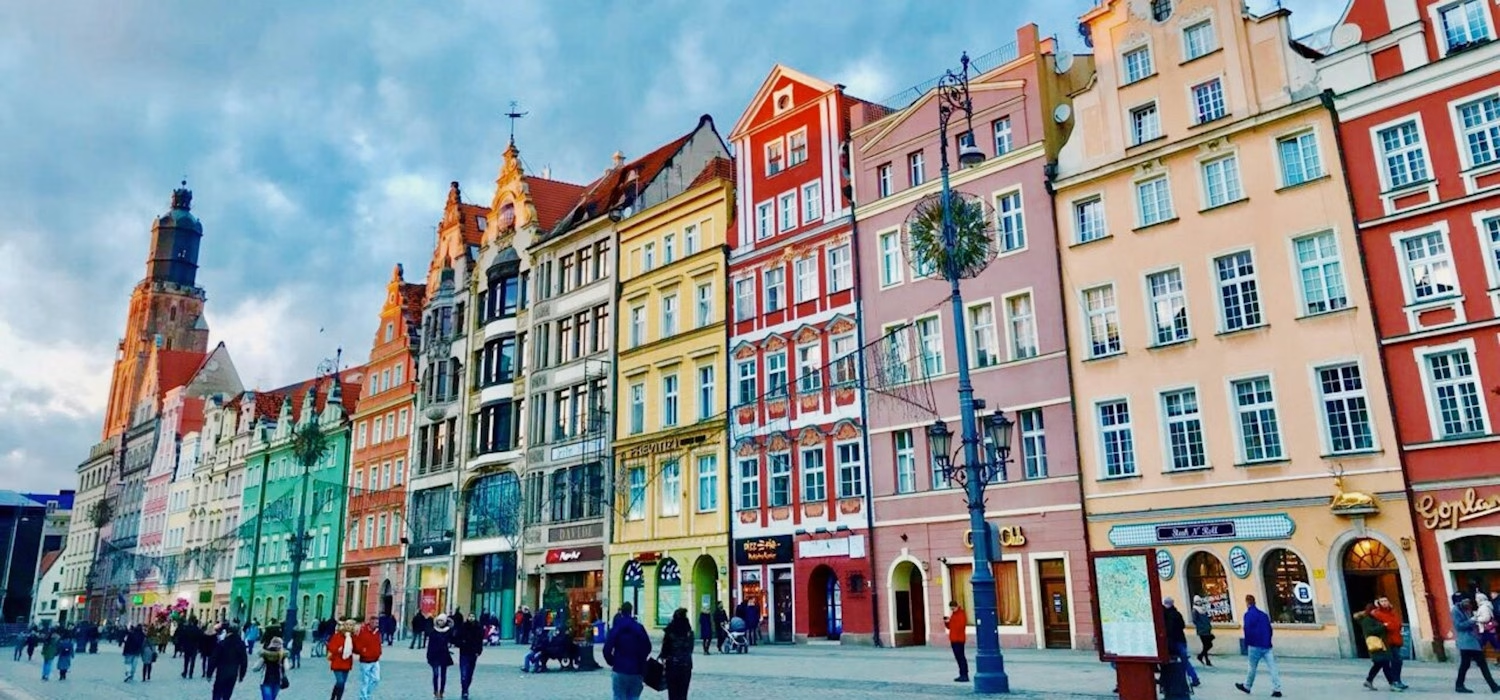
Wrocław, known for its bridges and islands, offers scenic, step-free riverfront paths and accessible cultural venues, while Gdańsk presents maritime history through inclusive museums and barrier-free harbourside promenades.
Nature lovers will find accessible lakeside routes in Masuria and inclusive trails in the Tatra foothills, with thoughtful adaptations opening Poland’s landscapes to all.
Luxury Perspective
Poland’s luxury offering is elegant, design-forward, and increasingly inclusive.
In Warsaw, Raffles Europejski, Hotel Bristol, and the Ritz-Carlton-style Nobu Hotel provide adapted suites, refined dining, and sophisticated wellness spaces. Kraków’s Copernicus Hotel and Bachleda Luxury Hotel offer boutique charm and adapted facilities, while the Tricity coast features spa-led luxury retreats with accessible suites and sea-view wellness.
Polish gastronomy has risen to global attention, with Michelin stars and inventive chefs elevating traditional flavours with modern finesse. Restaurants in Warsaw, Kraków, and Gdańsk are highly accommodating of dietary requirements and accessibility needs. Private luxury touring, chauffeured journeys, and curated cultural experiences add depth and ease to bespoke itineraries.
Resources & Support
Poland.travel and regional tourism boards provide accessibility listings and tailored itineraries. Polish State Railways (PKP) offer mobility assistance for train travel. Accessible Poland, specialist tour companies, and local city apps share reliable venue accessibility information. LGBTQ+ visitors can find community support through organisations and cultural spaces in Warsaw, Kraków, and other key cities.
Final Tips
Poland is a year-round destination, though spring and autumn offer the most comfortable conditions for immersive city and nature travel. Book adapted rooms and curated experiences in advance, particularly during summer and festive seasons. Distances between cities are manageable and best enjoyed as a multi-city journey, weaving together culture, cuisine, and landscape. Expect a sense of discovery — Poland offers a growing, spirited, and rewarding space for inclusive luxury travel, with warmth and cultural richness at its core.
Read more about Warsaw
Photo by Reiseuhu on Unsplash