Nadia Clarke: A life of adventure, advocacy, and inclusion
Speaking without limits: a life of adventure, advocacy, and inclusion.
◦ 14 min readSpeaking without limits: a life of adventure, advocacy, and inclusion.
Family & Beginnings
Nadia, can you start by telling us a little about yourself — where you grew up and what life was like in your family of five?
I was born in Northumberland. When I was 15 months old I was diagnosed with Cerebral Palsy and when I was 2 years old my parents were told I was profoundly deaf. I moved to Halifax in West Yorkshire with my family when I was 6 years old because my parents wanted me to go to a mainstream school with my siblings. At the time Calderdale Council were the only ones offering mainstream education to all children. I have a big family, with 5 siblings, crazy life! We had lots of energy and were very active. We travelled, went dancing, got involved in sports and walking. We had a busy social life, my parents both worked and we enjoyed meals with the whole family.
You’ve often spoken about how your parents’ belief in inclusion shaped your journey. What did their fight for your mainstream education mean to you then — and now?
My parents believed in Human rights for disabled people, equal opportunities for everyone, and the importance of having the same access to education, activities and jobs. I strongly believe in this. I can think of a few examples where access has been an issue. When I was younger I wanted to go to a camp in America but they could not meet my needs and it was impossible for me stay there for 2 months with my PA. I also wanted to travel to Asia but it was not possible as poorer countries did not have accessible hotels, transport etc. I know that some cities in Asia have improved their accessibility now.
How did your family’s approach to travel and adventure influence your independence and confidence?
When my parents were young they did a lot of travelling and listening to their stories made me want travel myself with my PA’s. I can do this independently but sometimes I make mistakes and not everything is perfect. But I have experienced many amazing things. This is the same for my siblings, they have travelled a lot without my parents. We are the same. Travelling independently is not easy and it takes a lot of time to organise everything with support from my PA’s, but it has given me lots of self-confidence. I am excited to visit new places and experience new things.
Growing Up Global
Your parents literally put you in a backpack and travelled the world! What are some of your strongest memories from those early adventures?
I have the best memories of summer camping trips in France with my family. I loved it. We also went to Thailand at Christmas once, it was an amazing experience. I loved the culture and the food. I’ll never forget seeing a chocolate Christmas Tree in the hotel in Bangkok. It was so funny we couldn’t stop looking at it, yum!
How did those experiences change the way you saw the world — and yourself?
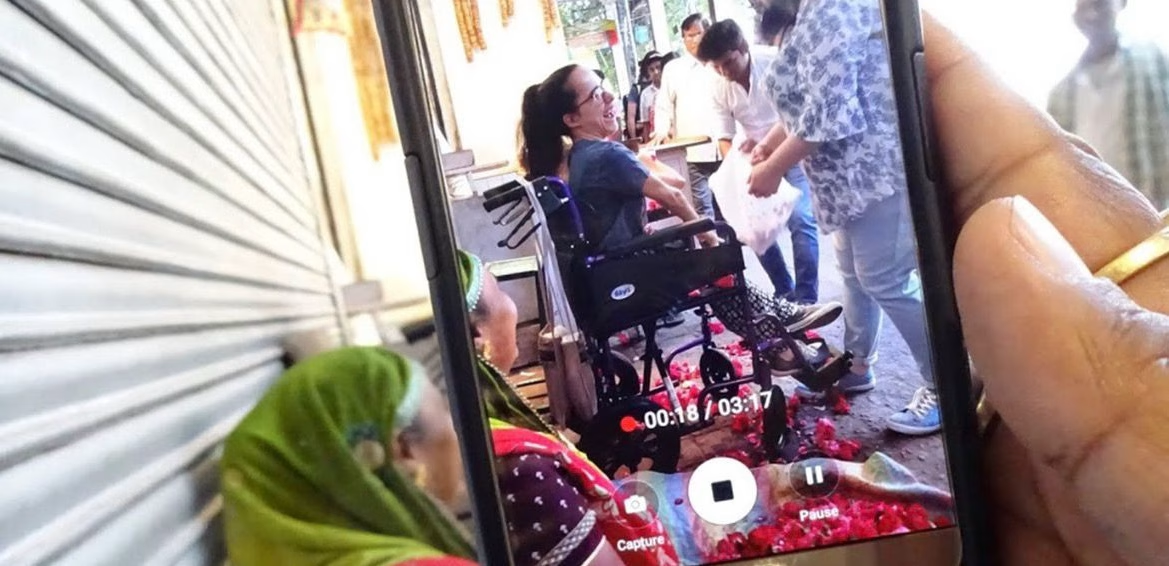
It was interesting to see different countries, it made me feel really lucky to live where I live. Disabled people in other countries often live in poverty and don’t have the same access to health insurance, equipment, funding and education. This is disability discrimination. I know in some countries disabled people have to live in hospitals. When I visited India and Morocco, I saw lots of disabled people living on the streets and begging. I felt sad to see them but the Government does not understand about disability rights. I have done a lot campaigning in the UK around these issues.
Is there a particular trip that stands out as a turning point for you?
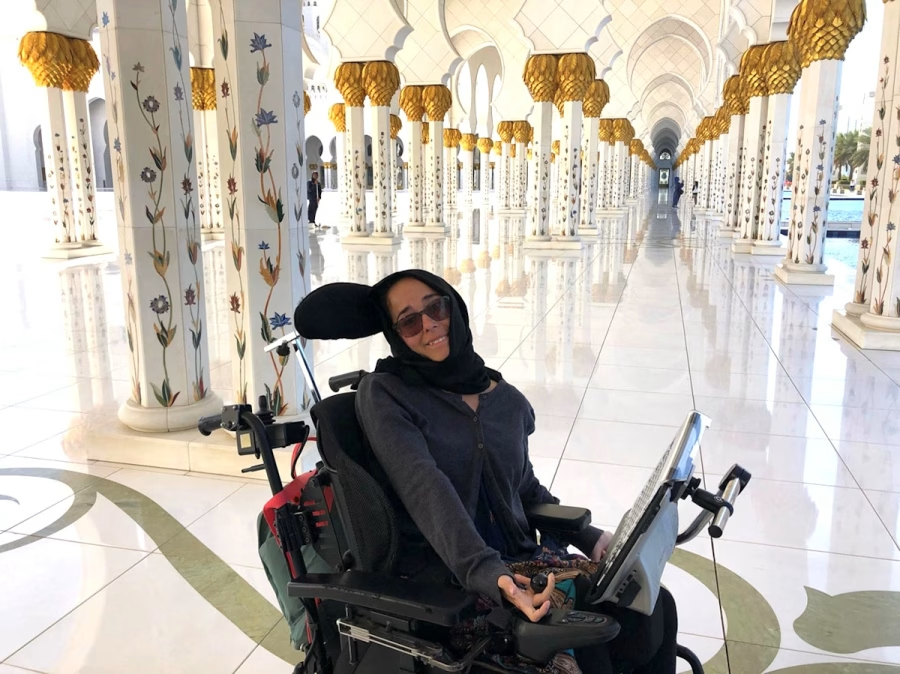
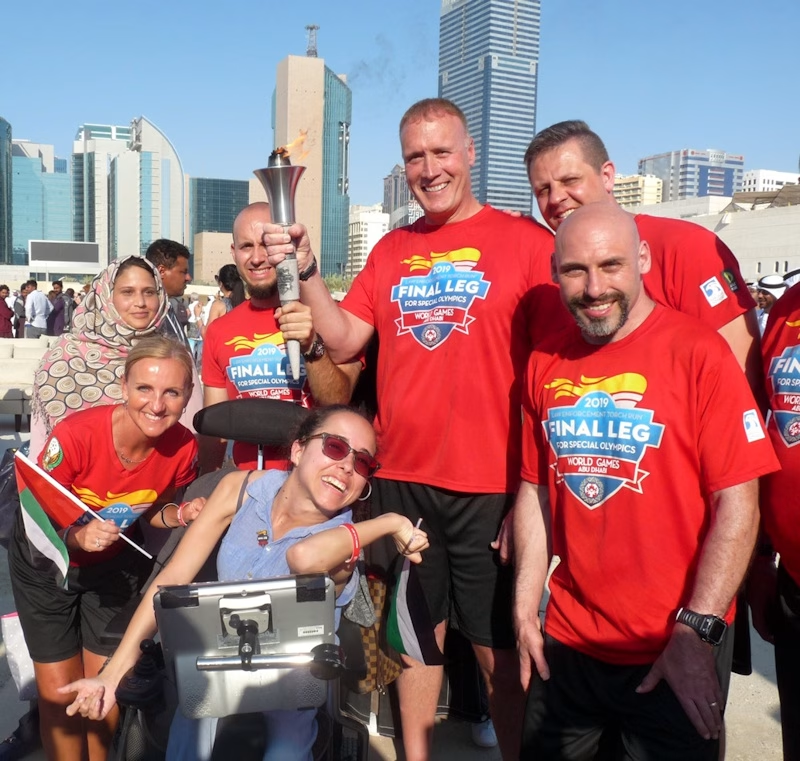
I went to Dubai, this was the most accessible place I have visited in the World. It was an amazing place. The people were so friendly and welcoming. They understood about disability.
Communication & Connection
You use an augmented communication device and are fluent in British Sign Language. How have these shaped your ability to connect, express, and lead?
It is hugely important for me to have a Voice, without my communication device I would not be able to communicate my needs, wishes, feelings and opinions. This would have an impact on my mental health and emotional wellbeing. As I am Deaf I need everything interpreting into British Sign Language or Sign Supported English so I can understand what is going on around me. I have a Cochlear Implant which helps me with some hearing. I am good at lip-reading, as well as watching body language and facial expressions.
What would you like people to better understand about communication — and the power of listening?
It is important that people have a voice, sometimes this is taken away from Disabled people. Decisions are often made for a Disabled person without asking them what they want or think. We need to listen to Disabled people and help to empower them to have choices and make their own decisions.
How has technology helped open doors and possibilities in your life?
My communication aid is so important to me, I use it to give presentations at various Universities, conferences and workshops. About 9 years ago I did a presentation at the Travellers Counsellors conference in Manchester. I been to a special school in India to give a presentation. I also did the same in Dubia, but this was just to the parents of disabled students. Last year I gave a presentation at the Women in Travel Conference in London and through this I was invited to visited Boston USA and look at the cities accessibility by Meet Boston. This was a fantastic opportunity and I saw some wonderful things. This year I gave a presentation at the Amsterdam International School, the students were brilliant but for some of them it was the first time they had met a disable person. So they had lots of interesting questions for me. Without my Communication Aid and BSL Interpreter I would not be able to do these things.
Education & Empowerment
You’re a passionate advocate for mainstream education. What does inclusive education mean to you in practice?
I went to a special school in Newcastle when I was 5 years old. I was there for 1 year but it wasn’t right for me. I remember we did the same thing everyday and it was so boring. I am so grateful that my parents wanted me to go into mainstream education. I loved it because I learnt so many different subjects in mainstream schools. My favourite subjects were media, geography and RE.
What were some of the challenges you faced growing up in mainstream schools, and how did you overcome them?
Mainstream school was a challenge because English is not my first language and also nobody understood about my communication aid. I remember when I sat my GCSE’s, the examiners thought I was using my communication aid to cheat. I went to Calderdale College but this wasn’t great as the teachers didn’t understand about disability. I think because I was the first disabled person to do their Health and Social care course. I didn’t enjoy the course but I did love meeting the other Deaf students. I also went to Bradford college, it was fantastic and open minded about disabilities. I really enjoyed the English course.
How can schools, teachers, and classmates help create a culture where everyone belongs?
My primary school had a good mixture of pupils from different cultures and religions, as well as deaf pupils and hidden disabilities. However I was the first physically disabled pupil to attend. I learned a lot from the other pupils backgrounds. In High school the mixture was not as much and I was the first Deaf and disabled pupil to attend. Both colleges were a real mix of cultures, it was amazing to see people from different cultures. One bit of advice would be, is to make the classroom as inclusive as possible and promote a positive environment for all the students
Advocacy & Leadership
You’ve become a powerful voice for disability rights and social change. What inspired you to turn your experiences into advocacy?
I wanted to show other disabled people that they could have the same opportunities as non-disabled people. I believe I can do everything, for example travelling, living independently, education and work and I wanted others to feel the same.
How did your work with People First Keighley and Craven and Bringing Us Together C.I.C. begin, and what kind of projects excite you most?
I met the manager at People First Keighley and Craven and she offered me the opportunity to volunteer. I love my work there, I work with members and staff who have various disabilities. They have all achieve so much and they are amazing. I have done so many different projects. I gave a presentation at the Death Matters conference. This was amazing event. I have also been involved in developing a Story Book, which tells the life stories of the members. I really enjoyed this project. I have interviewed Amy Kavanagh, she is a blind disability rights activist and campaigner and such an interesting, brilliant person. I’ve just started a new project around good support and poor support, focusing on Personal Assistants. My Mum set up Bringing us Together C.I.C in 2014 with some Disabled activist and other Parents of disabled children. I got involved after the Covid Pandemic. I’ve done various Workshops and Training Sessions around Direct Payments, Accessibility and Inclusion.
What does being an advocate really look like day-to-day — and what keeps you motivated?
A lot of advocacy is about supporting and listening to people. There are lots of things happening at the moment that are impacting the everyday lives of disabled people. The Government are trying to cut budgets for benefits and services. Horrible times! The Government needs to understand more about disabled people and what it means to live a full and equal life.
Travel & Representation
You also work as a Travel Ambassador. What inspired you to share your love of travel with others?
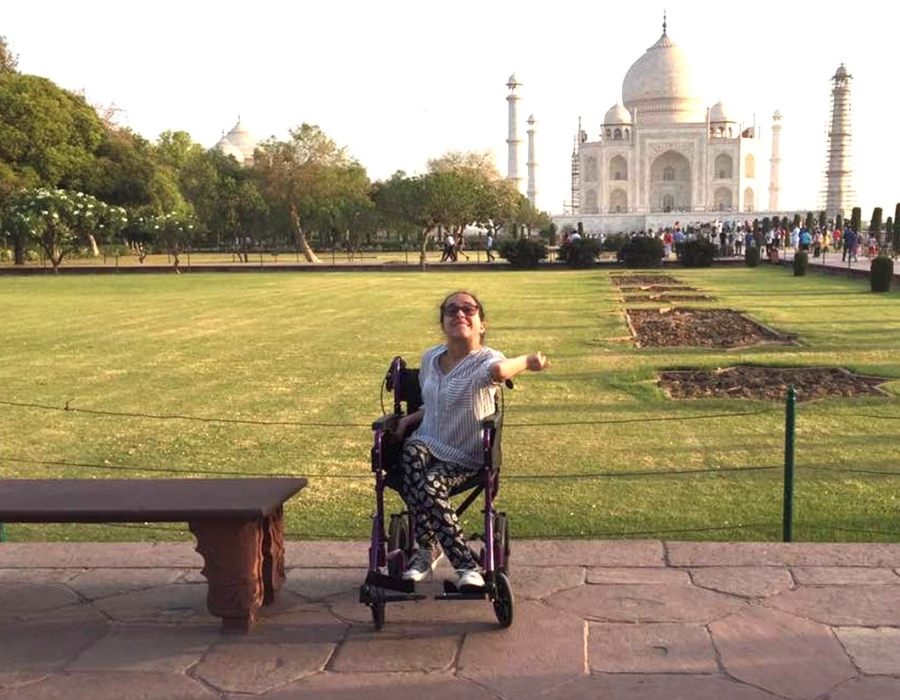
I loved working as a Travel Ambassador because I enjoyed posting my travels on social media and writing Blogs about my accessible travels. I wanted to show disabled people and families with disabled children that they can travel, like me. I wanted them to see how to overcome the barriers and challenges when travelling.
What does accessible travel mean to you beyond ramps and facilities?
Having good accessibility means I can relax, but I don’t worry if things are not accessible. If there are barriers I try to stay positive.
What would your dream inclusive journey look like — if you could go anywhere, with no limits?
I would love to drive around America and Europe in a Motorhome. I would also like to volunteer in Africa or Asia.
How do you think travel can change people’s understanding of disability and possibility?
When I travel, lots of people are surprised to see me because they don’t realise disabled people can travel. They think it is impossible for a disabled person to travel. But there shouldn’t be a difference between disabled people and non disabled people. People view disability different in different countries. When I visited Thailand, India and Morocco, they didn’t care about Risk Assessments. They just saw a person who wanted to do the same as everyone else.
Recognition & Resilience
You’ve received awards including the Alan Martin Inspirational Award and Best Individual Employer recognition. How did it feel to have your work and independence celebrated in that way?
I was sick the evening of the awards so I can’t really remember how I felt. It was a long time ago in 2016. When I was 8 years old I started receiving Direct Payments so I could employ Personal Assistants. I’ve had many different PA teams and they have been really important in me becoming independent from my family. My PA’s support me to go shopping, gigs, festivals and the theatre. With their support I have a social life with my friends, go away for weekends and travel. I have more choice to do what I want. For the last 2 years I have lived in my own bungalow. I feel free and independent.
What has resilience meant to you — in education, travel, and everyday life?
I’ve always had hopes and dreams but now I am waiting to see what happens next in my life. For example I wanted to move to a city but it is impossible because of funding and PA’s. I wanted to travel around Asia for 6 months but again this impossible because of accessibility and the expense of PA’s. However I still have hope.
How do you stay positive and keep your sense of humour on tougher days?
I just keep going, I know I will be okay.
Creativity & Communication
You also work as a social media designer, helping share powerful stories. What do you love most about creative communication?
I can use social media to raise awareness about Disability rights and accessible travel. People from all around the World can access this, its brilliant.
How do you choose which stories or messages you want to amplify?
I like to pick stories about issues I’ve faced personally or that other disabled people have had, I do this to help raise awareness.
What role does social media play in disability awareness and representation today?
Social media is more accessible for disabled people, and it is easier for people to share their own stories or life journeys.
Looking Forward
What are your hopes for the next few years — personally, professionally, and for inclusion more broadly?
I have no idea what will be happening in the next few years ha ha. I am still volunteering at People First Keighley and Craven. In the last 18 months I have been working as an Expert by Experience with Bradford University. I help to interview potential Social Work students. I am hoping to give more presentation at universities, schools, conferences and workshops. Next year I am going skiing again in Austria and I am really looking forward to my sister’s wedding in Portugal. I am hoping to visit my brother in China in 2027, but I need to save up first.
If you could change one thing about how society sees disability, what would it be?
Society needs to be more understanding, supportive and respectful of disabled people.
What message do you most want young disabled people to hear?
Be open minded about your future life and what you want from it.
Human Details
What’s something people might be surprised to learn about you?
I like to learn new things about the World and different societies.
What always makes you laugh or lifts your mood?
Me, I always make myself laugh ha ha.
Which book, film, or song best reflects your outlook on life?
I think Martin Lutha King’s, I have dream speech reflects my outlook on life.
What’s your definition of freedom?
Being independent to make my own choices.
Quick-Fire
- Favourite travel destination so far: Dubia and Thailand.
- Dream destination next: Iceland and Japan.
- Accessibility innovation you love: My communication aid, powered wheelchair and Cochlear Implant.
- Your go-to phrase or quote: Equality, respect and peace.
- A moment that made you feel unstoppable: When I became free and independent, living in my own Bungalow.
- Definition of inclusive luxury: Not having to worry about anything, if there’s a mistake it’s fine.
Closing
What’s one question you wish people asked about inclusion — but rarely do?
I don’t have one question, anyone can ask me anything. I don’t mind, I am open minded. I wish people would be more confident to ask questions and have conversations.
What would you tell your younger self about courage, communication, and belonging?
Be strong, stay positive and be brave.