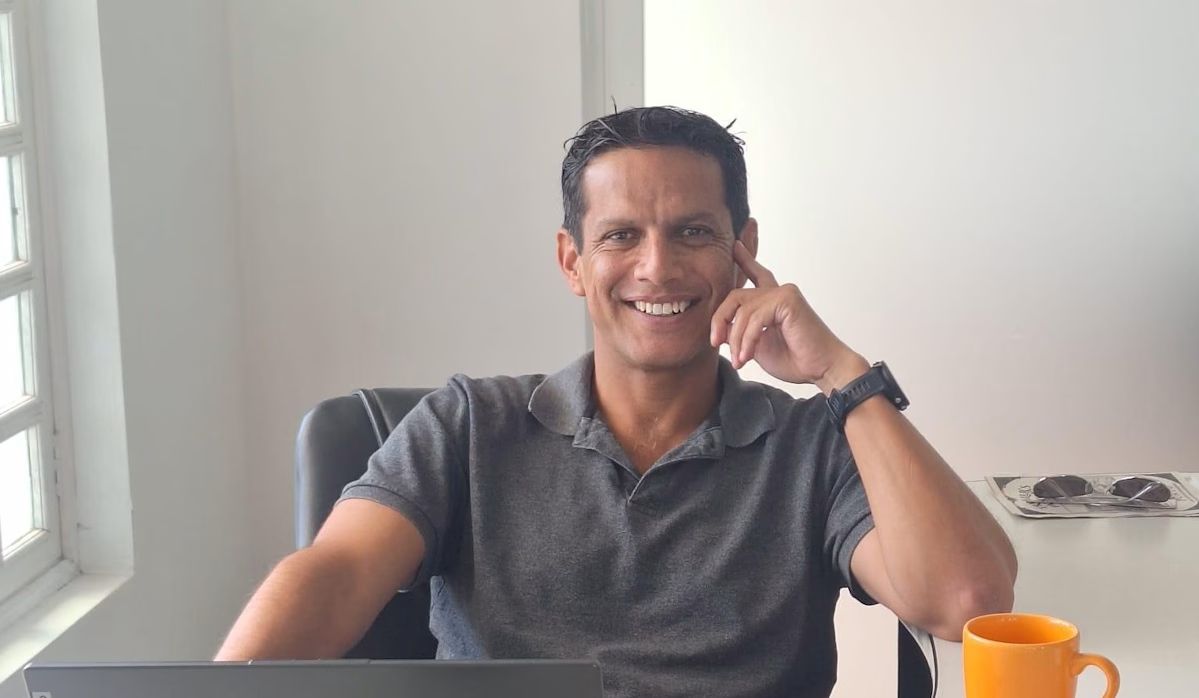
Juan Francisco Marañón: Founder, Latin America For All
Building bridges between accessibility, sustainability, and authentic travel in Latin America.
◦ 14 min readBuilding bridges between accessibility, sustainability, and authentic travel in Latin America.
Background & Identity
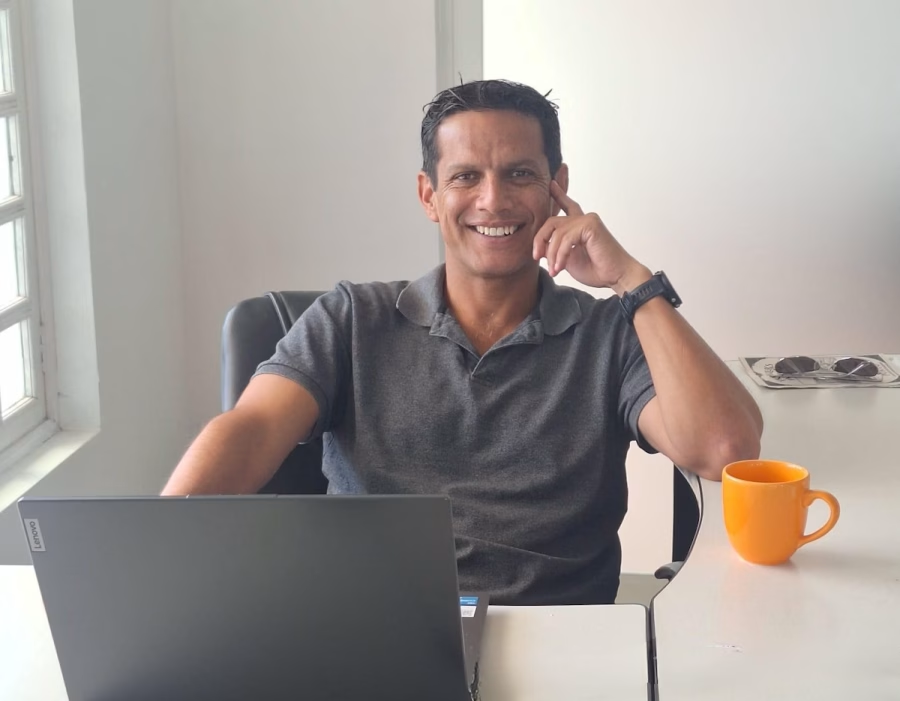
Juan Francisco, could you start by sharing a little about yourself and how your journey in tourism first began?
I am passionate about conservation and sustainable development. I enjoy being around people, sharing knowledge and of course learning from everybody. Latin America for All (LAT4ALL) started in 2009, as my brother and associate, Pablo Maranon and I had the opportunity to show downtown Quito to a person with multiple sclerosis. Neither one of us had accessible tourism experience, so you can imagine the challenges we had.
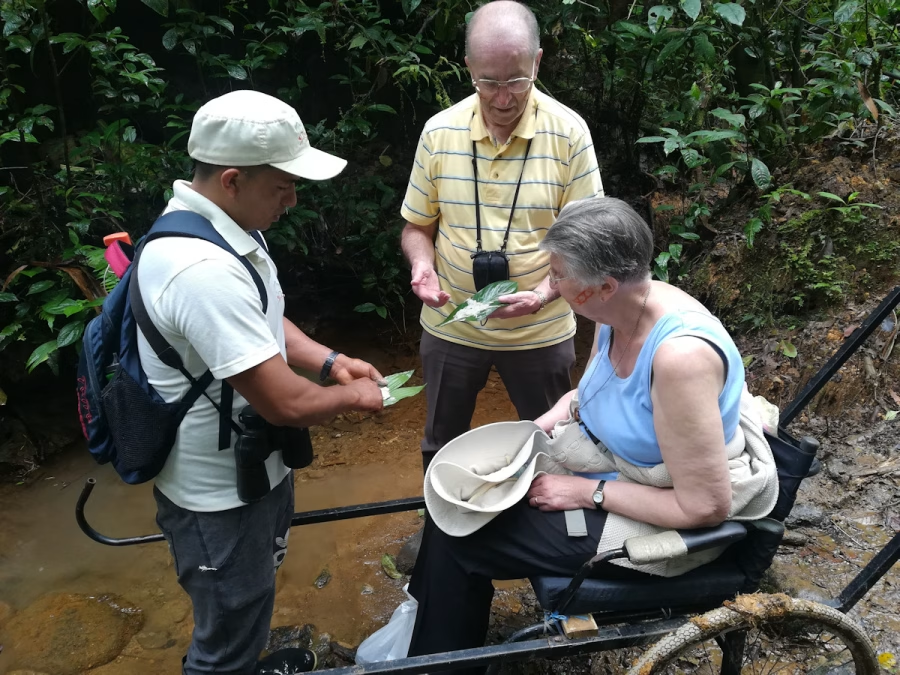
After that experience we decided to provide a solution and alternative for people with disabilities, their families and friend, who would like to travel to Ecuador. We started with Huasquila Amazon Lodge, which is a lodge located at the Amazon basin, and as Pablo is co-founder of the lodge, we put in practice all the “solutions” we were learning (ramps, roll in showers, etc). This was the beginning of years of opening more destinations, associated with more hotels, tour suppliers, boat companies, etc. Destinations grew, and now we proudly offer accessible tours in Ecuador (Amazon, Andes and Galapagos), Colombia and Peru. We also not only operate tours for people with physical disabilities but also tours for people with visual impairments as well as hearing disability.
What early experiences or influences shaped your passion for community development and inclusion?
Heidi Paliz, who is Pablo´s mother-in-law, had a horseback riding center called Fundación AM-EN. This was our first encounter working with people with disabilities. Then sustainable tourism had always been a passion for us. So it was only natural to be able to provide sustainable tour experiences. We love to discover a destination, talk to local suppliers, make a team of people committed to accessibility and with a sustainable heart come together with unique tour experiences for our guest.
How did living and working across Latin America — from Ecuador to Honduras — shape your worldview and approach to sustainability?
My background is not in tourism. I actually studied agriculture for the tropics in Zamorano University in Honduras. At school I learned about sustainable agriculture and the importance to produce in a sustainable way. Then as I started to work, still not related to tourism, I worked across Honduras and Ecuador in projects of conservation and sustainable development. This is when tourism showed up as a way to generate income and preserve nature. I believe firmly in the involvement of local communities as key players in the sustainable development of protected areas.
Founding Latin America for All
What inspired you to create Latin America for All (LAT4ALL) back in 2007?
Pure coincidence. We visited Fundacion AM-EN (horse back riding center) in Quito. The owner asked us to take a client (Gary), who was diagnosed with multiple sclerosis and wanted to get to explore old town Quito. So, we agreed to take him, and then it hit us, how hard it was for a person with a disability to move around places that are not prepared to host people with disabilities. We did not give in in our efforts to show Gary the city but certainly learned there was a big gap to be filled and decided to create a tour agency dedicated to provide consistent solutions for people with disabilities, their families and friends to enjoy their holidays.
What was the landscape of accessible tourism like at that time, and what challenges did you face in trying to change perceptions?
Back in 2007 things were not as they are now. At the beginning people crossed the street to avoid bumping into us in the sidewalk. However, as years went by, Ecuador had a big change, especially in the way people looked to people with disabilities. We noticed this after several years of working people were interested on how we can provide this service and how can they contribute.
We took special care with hotels suppliers who were more innovative and decided to adapt their locations, with short- and long-time solutions to receive our guest.
How has the organisation evolved over the years — from small beginnings to a regional reference point for inclusive travel?
I think the key is always to be aware that it is an on-going learning process. We learn with every client that comes. We can improve accessibility at each destination, with small solutions, but it is always a dynamic process of learning and improving. Then word mouth works exceptionally well in the industry.
We also think it is key to continuously trained our staff (guides, assistants, drivers) to how to work in accessible tourism. They are the faces for our tours and in my opinion 70% of the tour experience comes from the knowledge and interaction with our staff.
It is also important to participate in travel shows, international organizations that support accessible tourism and/or sustainable tourism. In this regards I think there is an opportunity to generate projects to improve accessibility of destinations.
Vision & Purpose
What does “accessible tourism” mean to you beyond infrastructure — in terms of dignity, experience, and equality?
Accessible tourism for me involves all members of the family, group of friends can enjoy equally a tour experience. It involves inclusion, universal design, empathy and happiness.
How do you balance business growth with social purpose in your work?
I think they go hand in hand. If you have a positive social purpose the business grows. They are complementary of each other. When you provide a purpose, the business only grows.
What keeps you motivated after nearly two decades of leading change in this space?
Clients. Traveling with our guest for more than 10 days, and connecting with them it is really inspiring. I have had clients who life wish was to visit Galapagos islands or Machu Picchu, and to be able to be part of this dream it certainly generates motivation for us. And on top of that you get paid to do it, that is the definition of finding something you enjoy, you are good at it and you can get paid for it!
Design & Implementation
LAT4ALL operates across Ecuador, the Galápagos, Peru, Colombia, and Argentina. How do you adapt your programmes to different cultural and environmental contexts?
We do not work alone. We have excellent tour partners at each destinations, with whom we work hand in hand. Train their staff, inspect their locations, but at the end they are the experts at each destination. So our role is more of making sure the concept behind accessibility and sustainability prevails, but the expert of the destinations are our partners. We also think that unlike other industries, in tourism the more you share, the more you win.
What are the key principles that guide the design of your inclusive tour circuits and accessibility standards?
- Safety is first.
- Not to create parallel tours, it is one tour for all the family/friends.
- Explore ways to make it happen. Adaptation, innovation.
Can you share an example of a destination or project that best represents your philosophy in action?
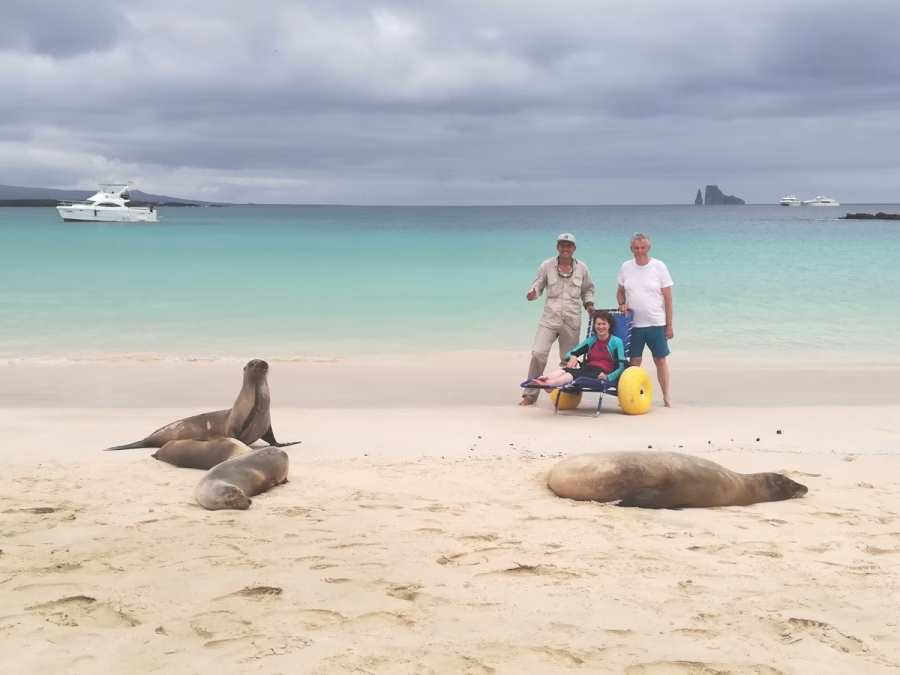
When we first opened Galapagos islands. We visited several hotels, at different islands. We designed a tour literally using a manual wheelchair to realize the do’s and don’ts of the tour. Interview local guides and finally explore day to day activities to determine each route for each day. Our tours are mostly active, meaning rafting, kayaking, snorkeling, hiking so we need to identify suppliers that work in this way. Also manufacture local equipment that we have access to on a daily basis and are not cost restrictive. So once we take all of these factors into account, we are ready to create the tour circuit. Once we have the tour designed, we ask a third party to experience the tour, go get feedback and what can be done better. This is an on-going process for our tours.
Collaboration & Impact
How do you approach training teams and building awareness among hospitality partners on accessibility and inclusion?
It is key to identify stakeholders who are committed to sustainability and also want to explore different niches. These are key factors in order to provide training and awareness that will have an impact.
What’s been one of the most moving or memorable guest experiences you’ve witnessed through LAT4ALL?
- Lifetime wish coming to a reality when they visit Galapagos islands and swim with playful sealions.
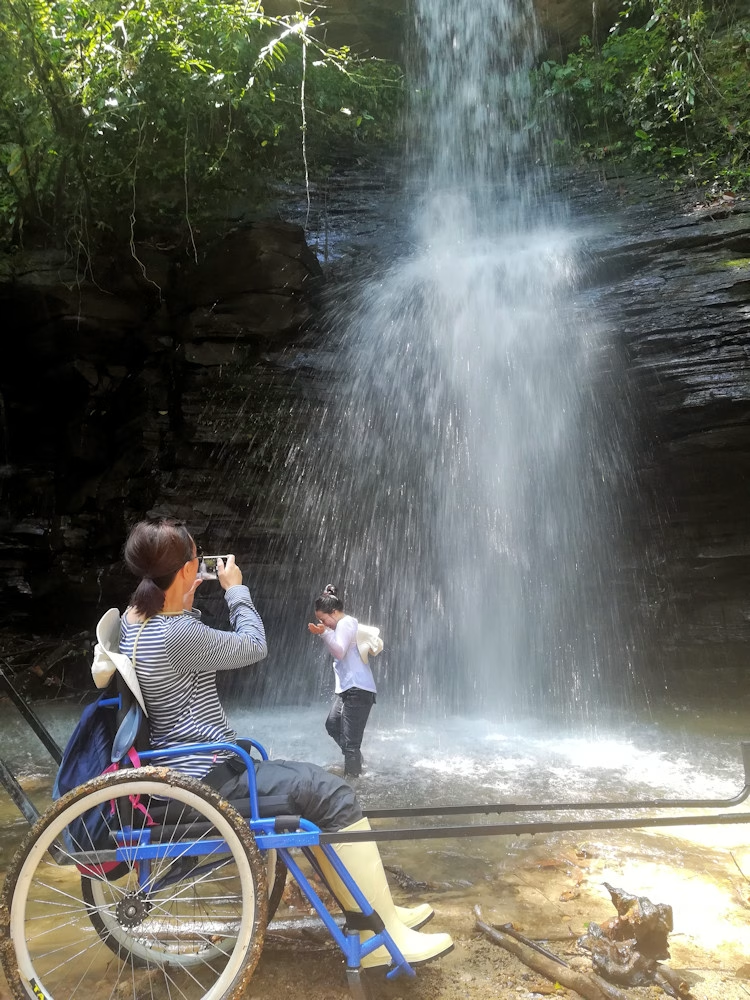
- People being under waterfalls in the middle of Amazon hike, with tears on their eyes absorbing nature and energy
Sustainable Development & Equity
Your background includes work with GIZ, USAID, WWF, and CORPEI on agricultural and environmental sustainability projects. How has that experience informed your approach to tourism?
Tremendously. All of these NGOs work in sustainable development and local community tourism is one of the best ways to generate sustainable development. I have managed conservation projects at the Ecuadorian Amazon, where I have been in contact with more than 5 indigenous nationalities understanding their way of looking at conservation and how tourism is probably one of the few effective ways to achieve it. I believe sustainability is a bigger umbrella where accessibility is a transversal element of all of our tours.
How can accessible tourism contribute to broader goals such as environmental stewardship and social equity?
Community tourism is much easier to adapt to short and long term accessible solutions. In most cases also goes hand in hand with lesser environmental impact as well as to promote gender equity and minority income.
If it is not community tourism, then using small scale suppliers also generates social equity and environmental stewardship.
It is also important to work with bigger players (suppliers) as now these days they have high environment standards and the industry follows their initiatives.
So my suggestion is to have a balance between big suppliers and small suppliers, trying to involve community tourism as much as possible into the programs.
What lessons have you learned about aligning sustainability with real human stories?
I believe this is the best way to go in tourism. Not only do clients appreciate a lot sustainable practices but also it directly relates to the experience they have on site. Tourism is also a way to educate our guest in the best sustainable practices, not only for the tours, but also for every day activities. It relates conservation with real life examples that the client can identify with. Clients remember that using plastic bottles on a regular basis, increases chances of plastic bottles ending in the ocean, where it can affect the sealions pubs and turtles that they swam with on their tour….so it generates a direct connection between their tour and sustainable practices.
Regional and Global Perspectives
What progress have you seen in accessible tourism across Latin America in recent years?
A lot of progress. When we first started there were probably 3 more agencies doing accessible tourism. Now there are more than 15 tour operators. Same with destinations as they are improving their accessibility, not only for people with physical disabilities but also for people with visual impairments or hearing disability. I believe the next 5 years will bring a great increase in the offer for accessible tourism in Latin America.
Where does the region still need to go – in policy, design, or mindset?
- It still needs to work on education (mindset).It has a long road in terms of policy, but rather than creating, I think it is more about making sure it is implemented.
- Universal design solutions and equipment I believe it is also a field that has a lot of potential for the next 5 years.
- Finally AI is creating solutions that provide access to devices and information that otherwise would have taken years. Now I believe in a matter of months we will experience accessible solutions, specially for people with visual and hearing impairments.
How can international travellers and tour operators better support inclusive tourism development in Latin America?
Simply by traveling more to the destinations. I believe now each country has 1 or 2 accessible tour operator specialists. So it is a matter of increasing the numbers of travelers to motivate more suppliers to adapt their products and services to be accessible.
Leadership & Legacy
How do you stay inspired as both an entrepreneur and an advocate?
Providing memorable experiences to people is a challenge. Now think about providing this memorable experience to families that thought they will never be able to experience them with loved ones with a disability, and that thought is what keeps us inspired. If you find something you are good at it, and you can get paid for it, then you are in the right path to create impact.
What does success look like for you – personally and professionally?
Success to me looks like you have created a solution or a product or a service that is useful to society. It is about creating value that people can enjoy and benefit from it. Professionally if you can scale it to national or regional level then that is a professional success to me.
When you imagine the next chapter for LAT4ALL, what are your hopes for its impact and growth?
I imagine that we operate amazing tours for people with physical disabilities, their families and friends. I envision that we are experts in providing tours for people with visual impairments. I envision that our tours fit as excellent holidays for families with kids or adults with autism. I see us operating these tours at Ecuador, Peru and Colombia.
Human Details
What’s something people would be surprised to learn about you?
I think most people don’t think my background is from agriculture. That I am also actively involved in projects about sustainable production and environmental conservation.
Which destination or moment in nature always reminds you why you do what you do?
I would say the Amazon in Ecuador. As we have worked since the beginning with Huasquila Amazon Lodge, I have seen it how it adapts to be accessible and since it is such a beautiful and calm place it brings me peace and joy every time I go there with our groups.
Another destination is Galapagos, as I see now how a destination that is was so challenging to explore is becoming more popular to explore for someone with a disability. The changes of attitude of people motivate me to continue working.
Describe a recent experience that filled you with gratitude or wonder.
To be honest every tour experience fills me with gratitude. The reason is the mindset of our clients. They enjoy and appreciate every single thing we do. Of course we have barriers, of course we encounter moments of adversity on the tour, but our clients face this with the best positive attitude which motivates us to provide the most accessible experience possible. The last tour I operated it finished 3 days ago, which is a group of blind people who explore entire Ecuador (Andes, Amazon and Galapagos). We had such a variety of experiences, going from 4000 meters in the Andes to sea level at Galapagos, tubing at the Amazon rivers and hiking at secondary rain forest. All the experiences were filled with unique authentic moments that make every single tour a memorable experience for our guest.
Quick-Fire
- Favourite Latin American destination: ECUADOR (Amazon)
- Most underrated travel experience: The Amazon basin. Includes cloud forest, secondary forest, nature, culture, water.
- A sustainability habit you live by: Re-use as much as possible.
- Your definition of “inclusive luxury”: It’s a luxury that goes beyond the material – celebrating experience, authenticity, and well-being, allowing anyone to feel special without the need for extravagance.
- A quote or belief that guides your work: Every day is a new opportunity
- The next adventure on your personal list: Full Iron Man competition 2026
Closing
What’s one question you wish people asked about accessible tourism – but rarely do?
Does it cost more to arrange an accessible tour? the answer is YES. The challenge is that it will not cost more.
What would you tell your younger self about courage, patience, and purpose?
Focus is key to grow. The right purpose, with courage and patience are required for success, but you need “focus” to be able to make things grow. So my advice to my younger self will be focus and you will get there faster.