Lisa Franks: Paralympian and van-life adventurer
Travel has always been part of my life, but I could never have imagined it would look the way it does today. Some mornings I wake up to the sound of waves crashing outside my door. Other days, it’s the stillness of a mountain forest. These days, my home has four wheels, a view that changes with the seasons, and more stories packed inside than any house I’ve ever lived in.
◦ 7 min readTravel has always been part of my life, but I could never have imagined it would look the way it does today. Some mornings I wake up to the sound of waves crashing outside my door. Other days, it’s the stillness of a mountain forest. These days, my home has four wheels, a view that changes with the seasons, and more stories packed inside than any house I’ve ever lived in.
But I’m getting ahead of myself — allow me to introduce myself.
My name is Lisa Franks, and my story begins in the small Canadian city of Moose Jaw, SK. I grew up under wide-open prairie skies, with a childhood that meant camping trips, ski trips to the mountains, and endless attempts to keep up with my three older brothers in every sport imaginable.
By middle school, I was an athlete through and through. I played baseball, volleyball, ran track, ski-raced, and did karate — but my heart belonged to basketball. I spent every spare minute on the driveway practicing my shot, pretending I was Michael Jordan sinking the game-winning basket. I dreamed of competing against the best athletes in the world. Maybe even at the Olympics.
And then, in the blink of an eye, everything changed.
On a spring day in 1996, I woke up unable to move my legs. Within hours, the paralysis spread to my arms and hands. I was rushed to the hospital, where doctors discovered I had an Arteriovenous Malformation — a rare tangle of blood vessels that had burst and was damaging my spinal cord. I was told I needed emergency surgery. I was fourteen years old.
When I woke up from surgery, I was paralyzed from the neck down and unsure what life would look like. I didn’t have any examples of disability in my world. I didn’t know life on wheels could be fulfilling — until two Paralympians visited me in the hospital. Seeing them changed everything. As I watched them compete at the 1996 Paralympics from my hospital bed, I began to dream of returning to sport again.
It took months of intense therapy, but I slowly regained the use of my arms and began to push a manual wheelchair. Independence was on the horizon. Before I left the hospital, I suited up in spandex and tried pushing a racing wheelchair for the first time. It turns out I had a bit of a talent for pushing a wheelchair in circles.
In just a few years, I went from wheeling up and down the streets of Moose Jaw to competing in races all over the world. Just four years after watching the Paralympics from my hospital bed, I was representing Canada at the Sydney Paralympics, where I came home with four gold and one silver medal.
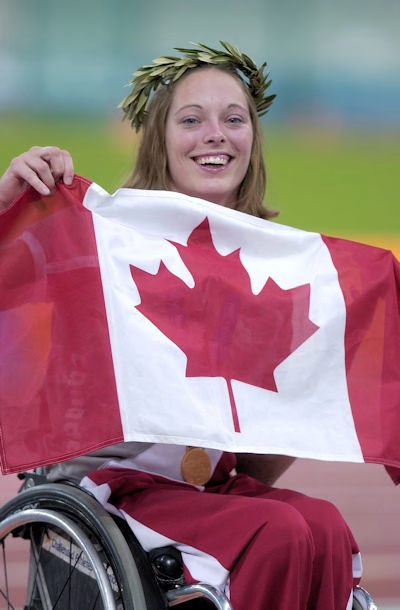
Sport became my passport to the world. By the time I was 25, I had traveled to more than 25 countries — from the beaches of Australia to the favelas of Brazil and countless stops across Europe. It was an incredible way to see the world, even if it was a different kind of travel. Our team manager usually organized everything — flights, hotels, meals, transportation. Sometimes we even had a translator with us. Most days were spent inside competition venues chasing records and medals, but at the end of each competition, we’d get a free day to explore. Those whirlwind adventures — racing through landmarks, trying local food, snapping selfies to prove we were there — gave me a taste of how big and beautiful the world really is. Little did I know then that one day, I’d explore it again — this time with more freedom than I’d ever known.
After years of dominating the track, I found myself craving a new challenge. I switched to wheelchair basketball, earned a spot on the Canadian national team, and kept filling my passport. Life was busy, fulfilling, and full of purpose — until another plot twist hit.
A severe shoulder injury ended my athletic career. For the next seven years, I lived in severe pain — cycling through surgeries, sleepless nights, and the heavy fog of depression. I kept most of it to myself, pretending I was fine when I wasn’t. There were times I truly wondered if I’d ever feel like me again.
But resilience has a quiet way of showing up when you least expect it. After my fourth shoulder surgery, I discovered books on chronic pain and neuroplasticity — the brain’s ability to rewire itself. It sounded like magic, but it gave me a path forward. Meditation and gentle movement became my new medicine, and slowly, the fog lifted.
I started spending more time outdoors — camping, reconnecting with nature, and rediscovering what my body could do through adaptive sports like skiing, kayaking, mountain biking, and surfing. It felt good to be back to living, not just surviving. I was burning through my vacation days chasing adventure, so in 2020, I took a leave of absence from my engineering job. The goal was simple: escape the cold Canadian winter and head for sunny California.
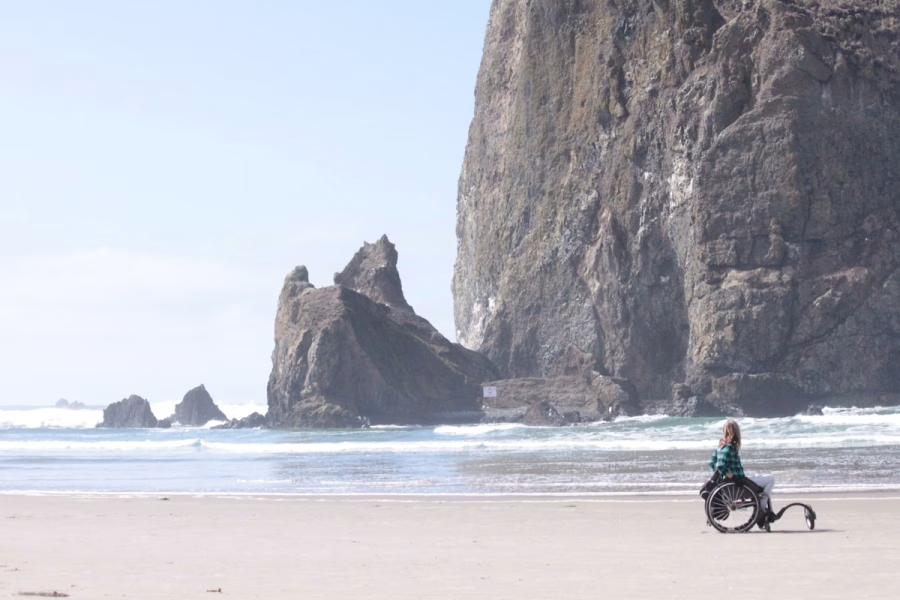
But when I started researching accessible accommodations and vehicle rentals, I quickly realized how few options truly fit my accessibility needs or my budget. That’s when the idea hit me: what if I turned my SUV into a tiny home on wheels? It would give me the freedom to travel when and where I wanted, without worrying about accessibility barriers or hotel logistics. So that’s exactly what I did.
Equipped with a platform bed, a cooler, and a camp stove, I spent three incredible months along the California coast, waking up to ocean views and chasing the kind of freedom I hadn’t felt in years. Well, really, I had never felt that kind of freedom in travel. Then Covid hit. Campgrounds shut down, and I had no choice but to return to Canada. As I drove north, I couldn’t stop thinking about that feeling — the simplicity, the independence, the adventure. I started dreaming of a life built around that freedom, just with a little more comfort and permanence.
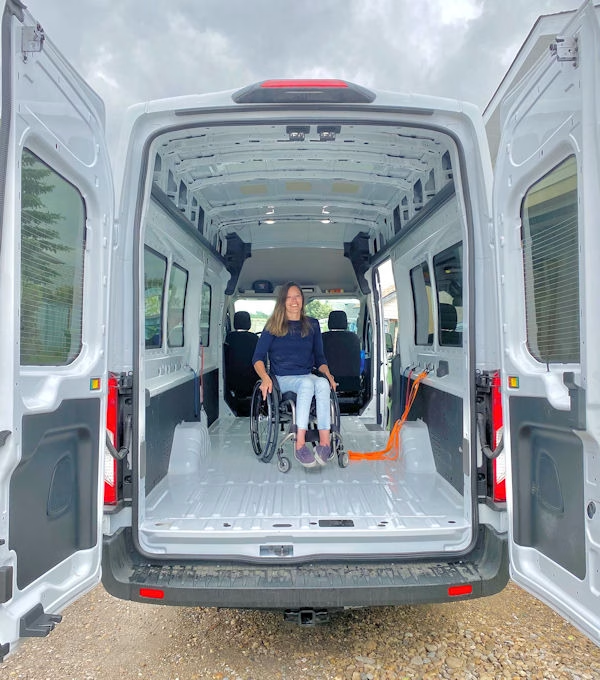
Then came 2021 — another life shift. Like many during the pandemic, I was laid off from my job. I took it as a nudge toward my dream lifestyle. I used my severance to buy an empty cargo van and built it into a fully wheelchair-accessible home on wheels. I designed every detail so I could live independently — cook, sleep, and move around with ease. It carries my adaptive mountain bike, my surfboard, and all the tools I need to explore.
Vanlife rekindled something I thought I’d lost long ago — that fearless, dirt-smeared, adventure-loving kid who followed her brothers down double black diamond ski runs returned. It gave me a new purpose, too: to show others that the outdoors can be accessible, and that adventure truly belongs to everyone. So I started my YouTube channel, KeepinItWheel306, where I share my vanlife adventures and accessible travel experiences.
Since then, I’ve put more than 120,000 kilometers on my van, Mojo, and I’m still chasing the horizon — always on the lookout for the next accessible destination. In the months ahead, I’ll be sharing more about life on the road: the challenges and unexpected wins of vanlife, my favorite accessible places to explore, and how I navigate medical realities while living as a full-time nomad. I hope these stories give you a glimpse into the beauty — and the grit — behind this unique lifestyle.
Until next time, keep it wheel!