Inclusive Airport Guide: London Heathrow (LHR)
Overview London Heathrow Airport (LHR) is the UK’s largest international hub with four passenger terminals (T2, T3, T4, T5). It offers extensive accessibility features, including step-free routes, tactile paving in...
◦ 7 min readOverview
London Heathrow Airport (LHR) is the UK’s largest international hub with four passenger terminals (T2, T3, T4, T5). It offers extensive accessibility features, including step-free routes, tactile paving in key areas, Changing Places facilities, Sunflower recognition, and comprehensive PRM (Passengers with Reduced Mobility) services operated by Wilson James.
Go to:
- Wheelchair users and travellers with reduced mobility;
- Visually impaired travellers;
- Deaf and hearing impaired travellers;
- Neurodivergent travellers;
- Anxious travellers.
Key stats
- Terminals: 4
- Passengers: ~80M annually (typical pre-pandemic)
- Rail: Heathrow Express, Elizabeth Line, Piccadilly Line
- Assistance provider: Omniserv (via airline booking)
- Accessibility level: High; most consistent in T2 and T5
Transport to/from Airport
Rail
Heathrow Express
- Step-free boarding from platforms.
- Wide doors; dedicated wheelchair spaces.
- Accessible toilets onboard.
Elizabeth Line
- Step-free at Heathrow stations.
- Level access varies across central London stops.
London Underground (Piccadilly Line)
- All Heathrow stations are step-free.
- Many central stations are not.
- Peak-hour congestion high.
Bus/Coach
- All TfL buses low-floor with ramps.
- Wheelchair spaces standard.
- Coaches offer boarded assistance on request.
Taxi
- All London black cabs wheelchair-accessible.
- Dedicated ranks at every terminal.
Parking & Drop-Off
- Blue Badge priority spaces close to terminal entrances.
- Step-free kerbs and marked wheelchair routes.
Crowding & Sensory Notes
- High congestion at T3 and T5 during long-haul peaks.
- Departures halls bright with high ambient noise.
Assistance Services (PRM & Hidden Disabilities)
Pre-booking
- Assistance pre-booked via airline min. 48 hours before travel.
- Onsite delivery by Omniserv.
Scope of Support
- Wheelchair support (kerb → gate).
- Buggies in some terminals.
- Assistance for blind/low-vision travellers.
- Communication support for d/Deaf travellers.
- Neurodivergent support incl. quiet routing.
- Arrival support including baggage reclaim.
Sunflower Programme
- Fully recognised across all terminals.
- Staff trained in hidden disability assistance.
Meeting Points
- Located at all terminal entrances, check-in halls, security entrances, and arrivals exits.
Security Experience
Mobility
- Passengers may remain in their wheelchairs
- Mobility equipment inspected by swab.
- Priority security lanes available.
Neurodivergent
- Quiet-route available through PRM.
- Clear, step-by-step explanations offered.
Medication
- Medication and cooling packs >100 ml permitted if declared.
- Sharps allowed with supporting documentation.
Sensory Considerations
- Bright lighting and high noise levels.
- Private screening available on request.
Terminal-by-Terminal Breakdown
Terminal 2 (The Queen’s Terminal)
- Most modern and intuitive layout.
- Wide, bright concourses; excellent signage.
- Changing Places facility available.
- Quietest zone is near Gate A18.
- Moderate peak crowding.
Terminal 3
- Older areas but modernised.
- Narrower corridors at legacy sections.
- Busy during long-haul waves.
- Quiet zone: Lounge corridor.
- Changing Places facility available.
Terminal 4
- Consistently quieter than T3/T5.
- Long concourse distances.
- Clear signage; good lift distribution.
- Quiet zones at far-end gates.
- Changing Places facility available.
Terminal 5
- Largest terminal; long walking distances.
- Excellent wayfinding; busy at peaks.
- Two assistance lounges.
- Quiet zone: Gate A12.
- Changing Places facility available.
Facilities
- Accessible toilets: Everywhere; consistent layout across terminals.
- Changing Places: Available in T2, T3, T4, T5.
- Mobility Equipment: Wheelchairs, buggies, and aisle chairs via PRM.
Lounges
- Step-free access.
- Accessible toilets available in most.
Family Facilities
- Baby-change rooms, multi-height sinks.
- Family lanes at security.
Lighting & Acoustics
- Bright lighting; moderate-high noise during peaks.
- Quieter near remote gates.
Emergency Procedures
- PRM-trained staff across terminals.
- Clear visual evacuation guidance.
Navigation & Signage
- Consistent yellow/black wayfinding signage.
- Clear gate-numbering system.
- Heathrow App provides maps & queue times.
- Tactile paving in some areas (inconsistent airport-wide).
- Assistance staff stationed at major junctions.
TILT Tips for Travellers
- Pre-book PRM 48 hours ahead.
- Allow extra time in T3 & T5.
- Use the Heathrow App for navigation.
- Request bypass for Duty Free if needed.
- Use quieter remote gate seating for sensory relief.
Verdict
Heathrow provides robust accessibility and reliable PRM support. Strengths include consistent signage, Changing Places facilities across all terminals, and strong mobility support. Areas for improvement include variable tactile paving and congested peak periods in T3 and T5.
Wheelchair / Reduced Mobility
Overview
Heathrow is fully step-free with reliable wheelchair support.
Key Supports
- Wheelchair assistance kerb → gate.
- Buggies in T5 and some areas.
- Boarding chairs available.
- Priority security lanes.
Terminals
- T2: Most intuitive.
- T3: Busy but accessible.
- T4: Spacious.
- T5: Longest walking distances.
Security
- Stay seated; mobility aids swabbed.
- Private screening available.
Facilities
- Accessible toilets in all terminals.
- Changing Places in T2–T5.
TILT Tips
- Pre-book PRM.
- Request buggies for T5.
- Avoid peak hours in T3
Visually impaired
Overview
Heathrow offers predictable layouts and strong guided support.
Key Supports
- Sighted guiding kerb → gate.
- High-contrast signage.
- Staff trained in description-based support.
Terminals
- T2/T5: Most intuitive.
- T3: Narrow areas in older sections.
- T4: Less crowded.
Security
- Verbal instructions.
- Longer preparation time.
Facilities
- Accessible toilets.
- Tactile paving limited but present in key transitions.
TILT Tips
- Ask for escorting around Duty Free.
- Use guided support for long T5 walks
Deaf & Hard-of-Hearing
Overview
Heathrow supports d/Deaf travellers with clear visuals & loops.
Key Supports
- Hearing loops at assistance desks & counters.
- Visual boarding screens.
- Staff able to use written communication.
Terminals
- T2/T5: Strongest visual layout.
- T3: Stand near screens.
Security
- Written/visual instructions.
- Staff face passenger for lipreading.
Facilities
Accessible toilets with visual indicators.
TILT Tips
- Use the Heathrow App for alerts.
- Stay within sight of Flight Information Display Screen.
Neurodivergent
Overview
Predictable layouts, Sunflower recognition, and quiet routes available.
Key Supports
- Quiet-lane security.
- Step-by-step communication.
- Sunflower trained staff.
Terminals
- T2: Most predictable.
- T3: Noisy at peaks.
- T4: Calmer.
- T5: Busy central zone.
Security
- Quiet route; extra time available.
Facilities
- Quiet areas at Gates A18 (T2) & A12 (T5).
Flight Ready Programme – Autism
Heathrow operates the Flight Ready Programme – Autism, a structured airport familiarisation initiative designed to help autistic passengers and their families build confidence before flying.
The programme offers free, guided familiarisation tours that replicate the complete airport experience in a calm, supportive environment. Participants are taken step by step through the passenger journey so that future travel is more predictable and less overwhelming.
Programme features include:
- Guided walkthrough of check-in, bag drop, security screening, and departure gates
- Demonstration of the arrivals process, including immigration and baggage reclaim
- Conducted at Terminal 5
- Delivered in collaboration with British Airways
Following the airport visit, participants travel to British Airways’ Global Learning Academy, where they take part in a cabin mock-up exercise designed to simulate the onboard aircraft environment.
Duration
- Up to 4 hours at Heathrow Terminal 5
- Approximately 1 hour at the Global Learning Academy
- Complimentary lunch provided (Pret a Manger)
Eligibility
- Designed for autistic individuals aged 5 years and over
- Each participant must be accompanied by one parent, guardian, or carer
Scheduling
- Sessions run up to four times per year
- Upcoming dates: 21 February, 9 May, 8 August, 14 November
- Places are limited and allocated via a ballot system
How to request a place
Applicants should email the following details for all participants to:
Required information:
- Full name
- Age
- Contact number
- Confirmation that all attendees hold a valid, in-date passport or driver’s licence
TILT Tips
- Avoid central Duty Free during peaks.
- Use quieter remote gates.
Anxious Travellers
Overview
Clear layouts and assistance routes help reduce stress.
Key Supports
- Sunflower recognition.
- Priority boarding if booked.
- Quiet waiting areas.
Terminals
- T4: Least crowded.
- T2: Predictable.
- T3/T5: Busy at peaks.
Security
- Step-by-step guidance.
- Private screening available.
Facilities
- Quiet seating at remote gates.
TILT Tips
- Arrive slightly before/after peak times.
- Use Heathrow App for timing.
Overview
Clear layouts and assistance routes help reduce stress.
Key Supports
- Sunflower recognition.
- Priority boarding if booked.
- Quiet waiting areas.
Terminals
- T4: Least crowded.
- T2: Predictable.
- T3/T5: Busy at peaks.
Security
- Step-by-step guidance.
- Private screening available.
Facilities
- Quiet seating at remote gates.
TILT Tips
- Arrive slightly before/after peak times.
- Use Heathrow App for timing.
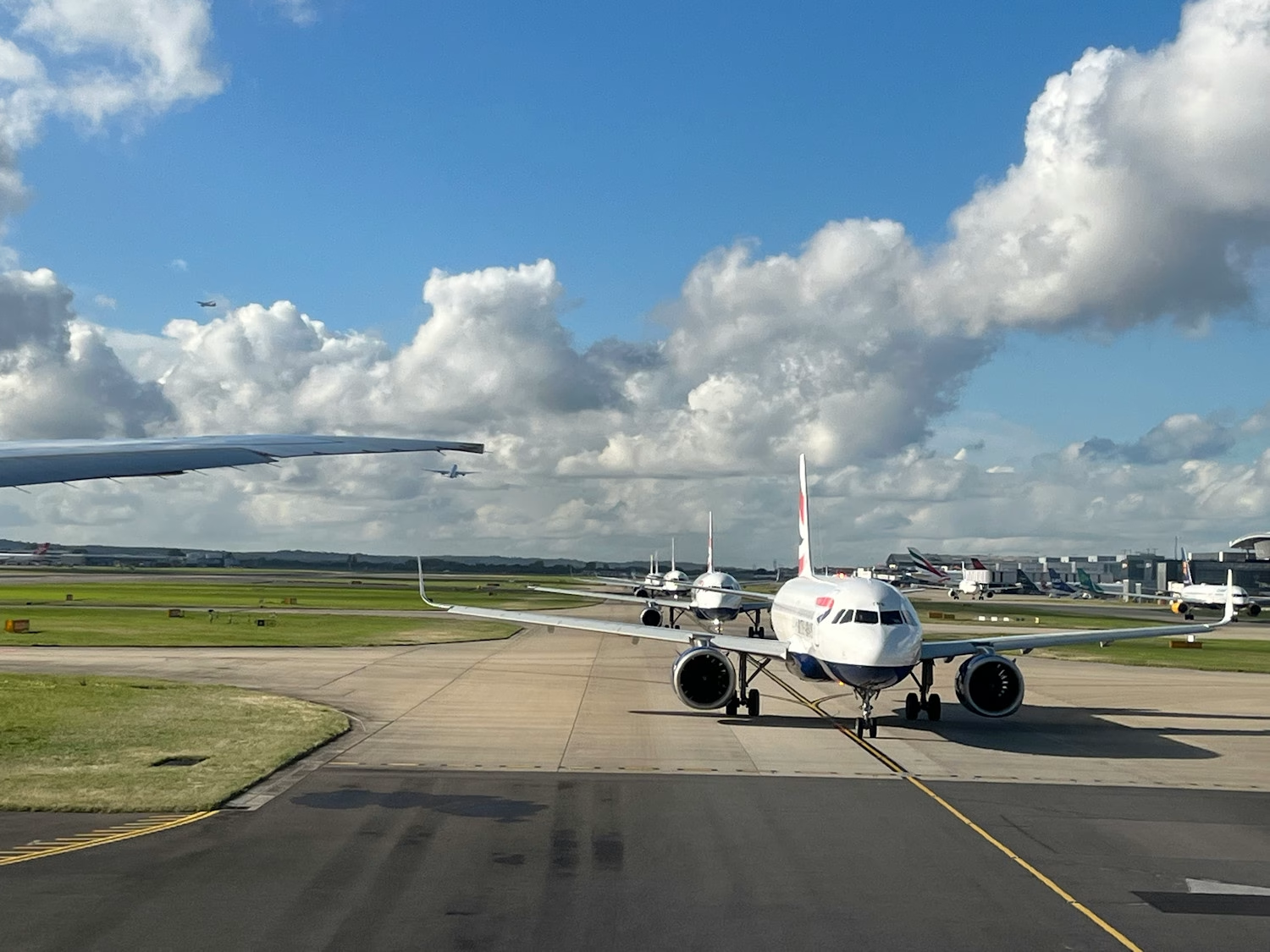
Photo by Harrison Lugard on Unsplash