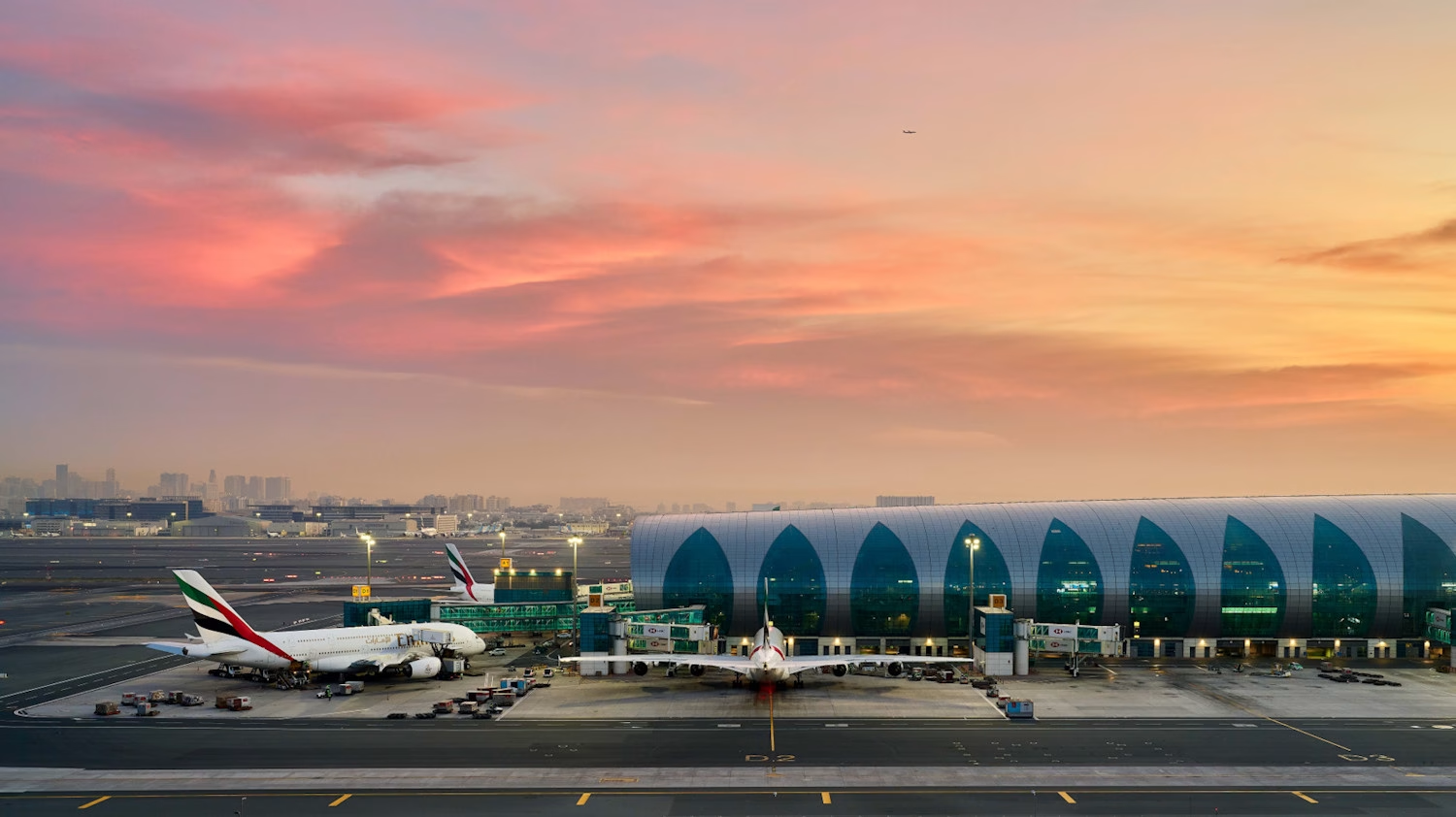
Inclusive Airport Guide: Dubai International Airport / DXB
Dubai International Airport (DXB) is one of the world’s busiest international hubs and the primary airport serving Dubai, United Arab Emirates.
◦ 7 min readOverview
Dubai International Airport (DXB) is one of the world’s busiest international hubs and the primary airport serving Dubai, United Arab Emirates. It operates three passenger terminals (T1, T2, T3), with Terminal 3 dedicated primarily to Emirates (EK) long-haul operations. DXB offers strong physical accessibility, comprehensive PRM (Passengers with Reduced Mobility) services, and airport-wide recognition of hidden disabilities. However, travellers should plan carefully for very long walking distances, intense peak crowding, high sensory load, and strict UAE medication and substance laws, which apply even during airside transfers.
Go to:
- Wheelchair users and travellers with reduced mobility
- Visually impaired travellers
- Deaf and hearing-impaired travellers
- Neurodivergent travellers
- Anxious travellers
Key stats
- Terminals: 3
- Passengers: ~85–90M annually (typical pre-pandemic)
- Metro: Dubai Metro Red Line (T1 & T3)
- Assistance provider: Dubai Airports PRM Services (via airline booking)
- Accessibility level: High; most consistent in T1 and newer areas of T3
Transport to/from Airport
Metro (Dubai Metro – Red Line)
- Step-free access at Terminal 1 and Terminal 3 stations.
- Level boarding with platform screen doors.
- Dedicated wheelchair spaces in each carriage.
- Can be crowded during commuter peaks and late evenings.
Bus
- All RTA buses are low-floor with ramps.
- Wheelchair spaces standard.
- Best for local travel; less intuitive for first-time visitors.
Taxi
- Wheelchair-accessible taxis available (requestable).
- Clearly signed ranks at all terminals.
- Drivers generally assist with luggage.
Parking & Drop-Off
- Designated accessible parking close to entrances.
- Step-free kerbs and wide drop-off lanes.
- Valet services available at T1 and T3.
Emirates (EK) Long-Haul Transfers – Terminal 3
Overview
All Emirates long-haul arrivals and departures operate from Terminal 3 (Concourses A, B, C). Most connections are airside, with no immigration required when travelling on a single ticket.
Transfer Flow
- Arrival at gate (A/B/C)
- Follow “Connections” signage
- Transfer security screening
- Proceed to departure concourse
- Gate / lounge → boarding
Key Considerations
- Walking distances can exceed 20–30 minutes unaided.
- Electric buggies are common and essential for many travellers.
- Peak EK transfer waves: 23:00–04:00.
Assistance for Transfers
- PRM assistance must be pre-booked via Emirates (min. 48 hours).
- Support includes gate-to-gate wheelchair assistance, buggies, and escort through security.
- Sunflower lanyards recognised throughout Terminal 3.
TILT Tips
- Always pre-book PRM, even for moderate mobility or fatigue.
- Request buggies immediately on arrival.
- Ask staff to bypass central duty-free if overwhelmed.
- Build in extra buffer time during late-night waves.
Crowding & Sensory Notes
- Very high congestion in Terminal 3, especially central duty-free areas.
- Bright lighting, strong scents, constant announcements.
- Quieter areas found at far-end B and C gates and inside lounges outside peak entry times.
Assistance Services (PRM & Hidden Disabilities)
Pre-booking
- Assistance should be booked via airline at least 48 hours before travel.
- Delivered airport-side by Dubai Airports PRM teams.
Scope of Support
- Wheelchair support (kerb → gate / aircraft).
- Electric buggies for long distances.
- Assistance for blind and low-vision travellers.
- Communication support for d/Deaf travellers.
- Support for neurodivergent and anxious passengers.
- Arrival assistance including baggage reclaim.
Sunflower Programme
- Fully recognised across DXB.
- Staff trained to assist passengers with hidden disabilities.
Meeting Points
- Clearly signed at terminal entrances, check-in halls, security, and arrivals exits.
Security Experience
Mobility
- Passengers may remain in their own wheelchairs.
- Mobility aids swabbed rather than X-rayed.
- Priority lanes generally available with PRM.
Neurodivergent
- Calm, step-by-step explanations available.
- Quiet routing through security on request.
Medication
- Medical liquids over 100 ml permitted if declared.
- Cooling packs and medical equipment allowed with documentation.
Sensory Considerations
- Bright lighting and frequent announcements.
- Private screening rooms available on request.
CRITICAL: Medication & Prohibited Substances (UAE / Dubai)
Dubai and the UAE enforce strict medication and substance laws, which apply even during airside transfers.
Key Points
- Some medications legal elsewhere are restricted or prohibited, including certain:
- Opioid painkillers
- Codeine-based medicines
- ADHD medications
- Anti-anxiety and sleep medications
- Small quantities, residue, or undeclared medicines can cause serious issues.
What You Must Do
- Check UAE controlled and prohibited medicine lists before travel.
- Carry medication in original packaging.
- Bring a doctor’s letter or prescription (preferably in English).
- Declare medications if unsure.
Strictly Prohibited Substances
- Recreational drugs (zero tolerance).
- Cannabis products (including oils, gummies, many CBD products).
- Poppy seeds and related products.
- Vapes and e-liquids are regulated and closely scrutinised.
TILT Warning: Do not assume “I’m only transiting” exempts you. UAE law applies airside.
Terminal-by-Terminal Breakdown
Terminal 1
- International airlines (non-Emirates).
- Clear layout with good lift coverage.
- Moderate walking distances.
- Generally calmer than T3.
Terminal 2
- Regional and low-cost carriers.
- Smaller, simpler, and often quieter.
- Older infrastructure but manageable accessibility.
Terminal 3 (Emirates)
- Extremely large with very long walking distances.
- Excellent signage; very busy at peaks.
- Quietest areas near far-end B and C gates.
Facilities
- Accessible toilets: Available throughout all terminals.
- Changing Places: Limited compared with UK hubs; larger accessible restrooms available.
- Mobility equipment: Wheelchairs, aisle chairs, and electric buggies via PRM.
Lounges
- Step-free access across major lounges.
- Accessible toilets available in premium lounges.
- Emirates lounges spacious but crowded at peak times.
Family Facilities
- Baby-change rooms widely available.
- Family lanes at security during busy periods.
- Dedicated family seating zones in some concourses.
Lighting & Acoustics
- Very bright lighting airport-wide.
- High ambient noise in retail cores.
- Quieter near remote gates and late-night boarding areas.
Emergency Procedures
- PRM-trained staff across terminals.
- Clear visual and verbal evacuation guidance.
Navigation & Signage
- Consistent bilingual signage (Arabic/English).
- Clear gate numbering and concourse separation.
- Frequent, well-staffed information desks.
TILT Tips for Travellers
- Pre-book PRM at least 48 hours ahead.
- Allow extra time in Terminal 3.
- Request buggies early.
- Use far-end gates for sensory relief.
- Check medication legality for UAE well in advance.
Verdict
Dubai International Airport provides strong physical accessibility, high staffing levels, and comprehensive PRM support, particularly for Emirates long-haul travellers. Its main challenges are extreme scale, intense peak crowding, high sensory load, and strict medication laws. With careful planning, pre-booked assistance, and medication checks, DXB can be navigated confidently by most disabled, neurodivergent, and anxious travellers.
Wheelchair / Reduced Mobility
Overview
DXB is fully step-free with reliable mobility support, though distances – especially in T3, are significant.
Key Supports
- Wheelchair assistance kerb to gate.
- Electric buggies throughout.
- Boarding chairs available.
- Priority security lanes.
Terminals
- T1: Manageable distances.
- T2: Compact and calmer.
- T3: Long distances; buggies essential.
Security
- Remain seated during screening.
- Private screening available.
Facilities
- Accessible toilets throughout.
TILT Tips
- Always request buggies in T3.
- Build in extra transfer time.
Visually Impaired
Overview
DXB offers strong guided assistance but limited tactile paving.
Key Supports
- Sighted guiding kerb to gate.
- High-contrast signage.
- Verbal wayfinding support.
Terminals
- T1/T3: Clear layouts.
- T2: Simpler but fewer staff points.
Security
- Verbal instructions provided.
Facilities
- Accessible toilets; limited tactile paving.
TILT Tips
- Request escort through duty-free zones.
Deaf & Hard-of-Hearing
Overview
DXB relies heavily on visual information systems.
Key Supports
- Large, frequent flight-information screens.
- Staff comfortable with written communication.
Terminals
- T3: Best screen coverage.
Security
- Visual and written instructions.
Facilities
- Accessible toilets with visual indicators.
TILT Tips
- Stay within sight of departure boards.
Neurodivergent Travellers
Overview
Supportive staff and Sunflower recognition help, but sensory load can be high.
Key Supports
- Sunflower-trained staff.
- Quiet routing on request.
- Step-by-step explanations.
Terminals
- T2: Calmest.
- T1: Moderate.
- T3: Very stimulating.
Security
- Quiet lane available via PRM.
Facilities
- Quieter seating near remote gates.
TILT Tips
- Avoid midnight–3am peaks.
- Use far-end concourses.
Anxious Travellers
Overview
Clear signage and high staffing levels help reduce stress.
Key Supports
- Sunflower recognition.
- Assistance escorts.
- Quiet seating away from retail cores.
Terminals
- T2: Least overwhelming.
- T1: Predictable.
- T3: Busy at peaks.
Security
- Step-by-step guidance available.
Facilities
- Quiet seating at remote gates.
TILT Tips
- Arrive early but move quickly past duty-free.
- Keep documents and prescriptions accessible.
Image courtesy of Dubai International Airport (DXB)