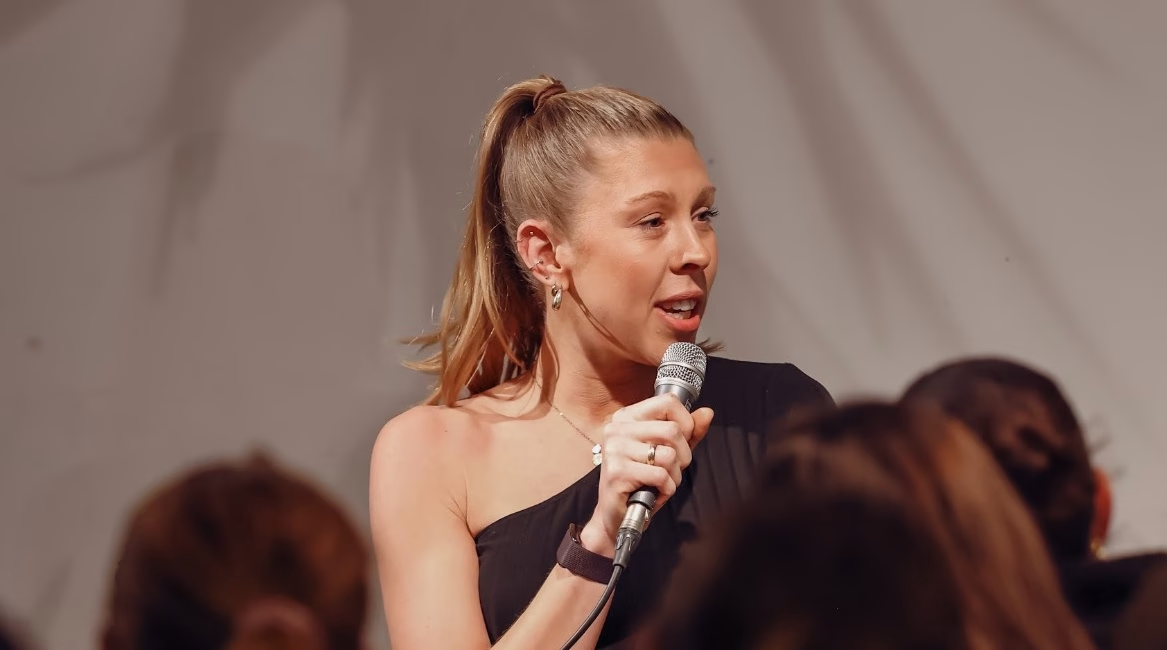
Giselle Moor: Drag racer, Speaker and Storyteller
I’m a drag racer, and it was race day. On the start line, I did the same thing I’d done hundreds of times before: instinct, muscle memory, speed. But the bike snapped back very suddenly and violently, and then I hit the tarmac.
◦ 6 min readThe moment everything changed
You were 24 when everything changed in 14 seconds. Can you take us back to that moment?
Sadly, I remember everything. Before, during, and after, right up until they put me to sleep for surgery.
I’m a drag racer, and it was race day. On the start line, I did the same thing I’d done hundreds of times before: instinct, muscle memory, speed. But the bike snapped back very suddenly and violently, and then I hit the tarmac.
There was a knowing that something fundamental had shifted, that something serious had happened because I couldn’t feel my legs, and then the pain started.
What were the biggest internal battles in those early months?
I’m an overachiever by nature, so I turned recovery into a project. Rehab became a tick- list, and my progress was measured in milestones. And for a while, that mindset served me — it gave me momentum and a focus when everything else felt out of control.
But when you’re told there’s a chance you might make a full recovery, there was always a feeling of ‘I could be, should be, doing something more’.
I put enormous pressure on myself to keep going, to keep trying in the hopes of a “good” outcome.
What was the hardest part of navigating a world not built for disabled women?
For me, it was the systems, the stares, and the assumptions.
And the way people decide who you are before you speak. Being underestimated and overexposed at the same time.
Rebuilding — identity, resilience & the unfiltered truth
How did the woman you were evolve into who you are now?
Before the accident, I was fast-paced, social, and chaotic in the best way. A hot mess. Afterwards, I didn’t become someone new. I fought to return to myself. Clinging tightly to the identities I knew because losing them felt like losing proof of who I was. But over time, with a lot of work, I’ve realised I’m simply not her anymore.
What does resilience actually mean to you now?
Resilience gets romanticised.
Mine wasn’t built in a single catastrophic moment. It was built slowly in the aftermath. Through broken lifts, inaccessible buildings, invasive questions, constant “no’s”, and the quiet erosion of self-worth that comes with being repeatedly overlooked.
My resilience lives in the everyday friction. Not my big comeback story.
How did your identity shift? What feels reclaimed and what feels newly powerful?
During trauma and recovery, the goal was survival. Holding onto every version of myself so none of them disappeared.
That was seven years ago.
Since then, I’ve had the space to let some identities fall away and allow new ones to emerge.
Reclaimed: The music lover and festival-goer. Places where I still choose to take up space.
Newly powerful: The speaker, the backpacker, the marathon runner, and the sober version of me.
Why do people respond so strongly to your honesty?
Because I tell the truth without trying to make it comfortable — and I don’t hide parts of myself.
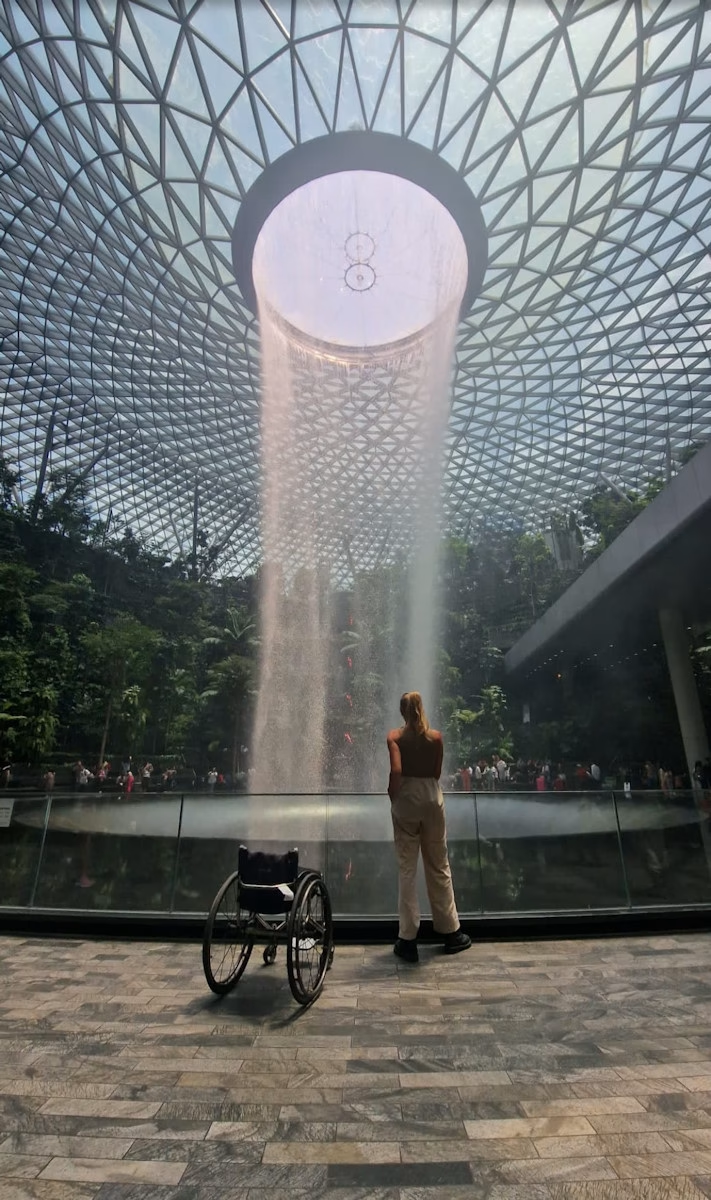
Travel as transformation
What did the world teach you that home never could?
That almost everything can be fixed.
Even in tiny towns on the other side of the world, with no language and no plan. You can almost always figure things out because people are kind and willing to help. That changed how I approach problems, life, and supporting others myself.
What did travelling reveal about global narratives around disability?
The beautiful: Human kindness is universal.
The brutal: The world is fundamentally flawed & by nature, inaccessible for wheelchair users.
I wouldn’t have experienced one without the other.
A moment that rewired your sense of possibility?
Getting back on a motorbike to complete the Hà Giang Loop in Vietnam. Pinch-me moments riding around the vast countryside, me, a small speck in a big, wide world. Trusting a stranger with my safety and another with my wheelchair strapped on the back of their bike. If I get myself there and overcome those fears, my possibilities feel endless.
That moment really reminded me that whilst boundaries exist, they are rarely where we think they are.
How do you prepare emotionally, not just practically?
I go in knowing I can’t do everything.
I do know I have a limit, but often I just don’t know where it is. So, preparing for the fact that maybe I won’t get to do the thing, or reach the goal, or stay in the hostel up 600 stairs on the sacred Isla del Sol.
I meet each place as it comes. And my body where it is. Acceptance is preparation.
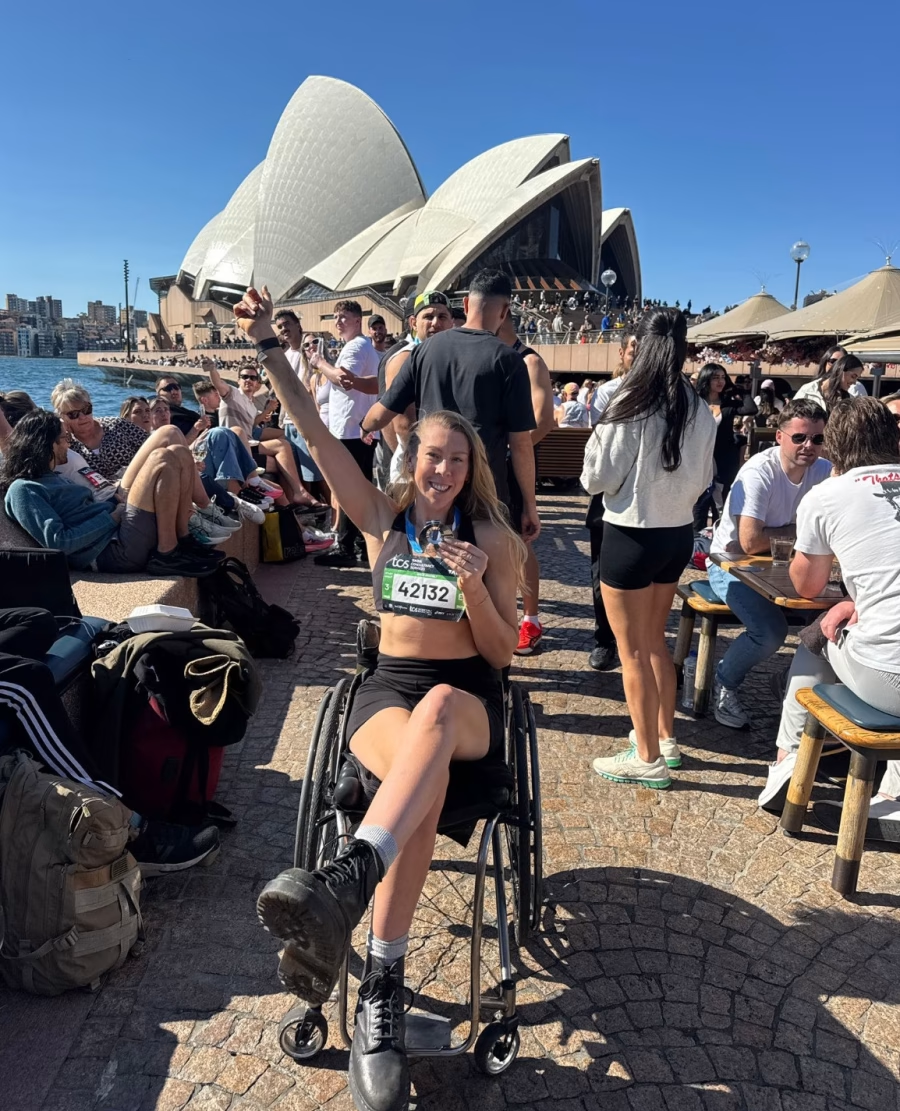
Disability isn’t broken – the narrative is
What systemic behaviours frustrate you most?
That, sadly, disability is often ignored in broader DEI conversations, even when inclusion is the stated goal.
What assumptions do you wish leaders would retire?
That disabled people are a burden, a cost, or a charity hire. More broadly, that difference is dangerous.
Difference isn’t a threat to culture — it’s how culture is built.
What does genuine inclusion feel like?
It feels calm. Unremarkable. Natural.
If you have to announce it, it’s probably performative.
Speaking, culture and changing the room
What disrupts traditional DEI narratives?
Stories that challenge how we think — about disability, identity, and what we assume is possible.
How does storytelling shift belief systems?
Stories bypass defensiveness. They make people feel first, and rethink later.
What does a people-first culture actually require?
Action. Accountability. And the courage to do the uncomfortable things without waiting for permission.
Womanhood, leadership and living out loud
Leading unapologetically means?
Not asking for permission to exist as I am.
How do you protect your energy?
Choosing where I show up – and where I don’t.
What do you want young disabled women to know?
You don’t need to earn your worth.
You don’t need to be exceptional to be powerful.
You already belong, wherever you choose to take up space.
Looking forward
What are you building next?
Conversations that lead to action, not just reflection.
What change do you hope to see?
Less waiting. More doing.
Legacy?
That people stopped shrinking themselves because they heard me speak.
Quick fire
A stereotype you’re done with: Inspiring just by being.
A country that surprised you: Bolivia. So much to offer, so underrated.
Three words on stage: Energised. Honest. Bold.
A song that makes you unstoppable: Inner Smile, Texas
Travel chaos you laugh at now: My wheelchair breaking and running out of catheters in
a 48-hour window.
Travel beauty you still think about: Scenes straight out of fairytales in the Amazon.
Boldest thing this year: Learning boundaries.
Softest thing you allow: To be scared.
To 24-year-old you (quietly): This will break you, then make you.
To the world (loudly): Stop waiting. Just do the thing.