Costa Rica’s Jungles and Rivers: An Inclusive Luxury Journey Through Nature
As a nature lover, Costa Rica is one of my favorite destinations. I have visited four times; in varying stages of mobility- with a brace, canes, and this, my fourth...
◦ 8 min read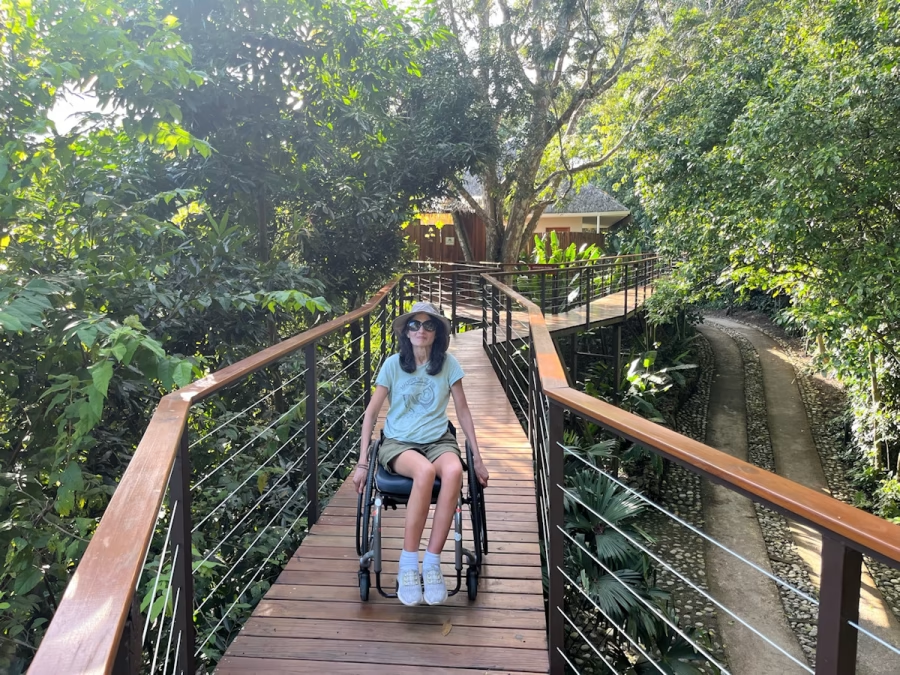
As a nature lover, Costa Rica is one of my favorite destinations. I have visited four times; in varying stages of mobility- with a brace, canes, and this, my fourth trip, in a wheelchair. While many accessible-travel recommendations steer travelers toward big cities, I long for the opposite: silence, canopy, wildlife, water, sky. Costa Rica, with its extraordinary rainforests, cloud forest, beaches, and a culture of warmth, inclusion and openness, has always been a good fit for me.
This time, I decided to focus on some of its wildest corners – pure jungle, tangled waterways, forests that breathe – partly because I love them, and partly because I wanted to test how far I could go in my wheelchair.
There’s a storm of assumptions that follows you the moment you begin using a wheelchair. People imagine your world shrinks overnight – especially your world of nature, adventure, and travel. Unless you’re a Paralympian, the myth goes, the outdoors, and especially the wild outdoors, is no longer for you.
I don’t believe that for a minute.
Some of my best travel moments have happened because of my wheelchair, not in spite of it. Nature, after all, is experienced not just on foot but with the eyes, ears, smells, and spirit. And those senses – the rustle of palm fronds, the layered calls of tropical birds, the spice-sweet smell of the jungle after rain – are as vivid as ever.
Yes, logistics are real: airports, vans, boats, uneven ground. But careful planning opens doors that assumptions try to close. And I found this journey to Costa Rica challenged those assumptions full-on.
Boena Wilderness: Making the Journey Part of the Adventure
Boena Wilderness, a collection of five ecolodges scattered across Costa Rica’s most untouched regions, makes accessible wilderness travel possible and comfortable, with their own planes, boats, and small-team support. Anyone who uses a wheelchair knows that travel can feel like a full-contact sport!. But Boena removes layers of stress through thoughtful design and simply… caring.
Their private boats and planes reduce stress dramatically. For wheelchair users, this isn’t a luxury; it’s the difference between traveling with dread and traveling with joy.
The Road Into the Green Heart
After being picked up at our lovely hotel in SJO, (see Finca Rosa Blanca) we climbed into the central highlands – ribbons of shimmering rivers threading through emerald landscapes, waterfalls spilling down the hillsides. Most people call this a “four-hour drive.” I call it a moving nature documentary.
As we neared Tortuguero, our first destination on the Northern Caribbean coast, the road slowly and progressively narrowed to wilder and rougher. We wound past banana plantations and tiny villages, the pavement thinning until it didn’t feel like a road so much as a promise. And, as is so often true with travel, the harder the road, the more spectacular the arrival.
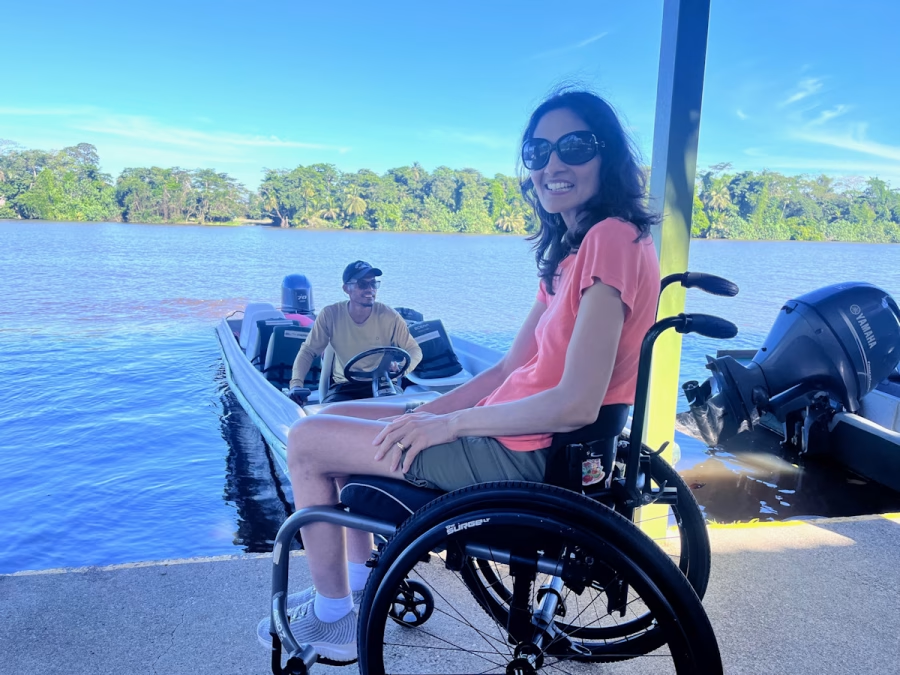
At the small river dock, the adventure deepened. Getting to the lodge was only possible via small boat.
Onto the Boat — Wheels and All
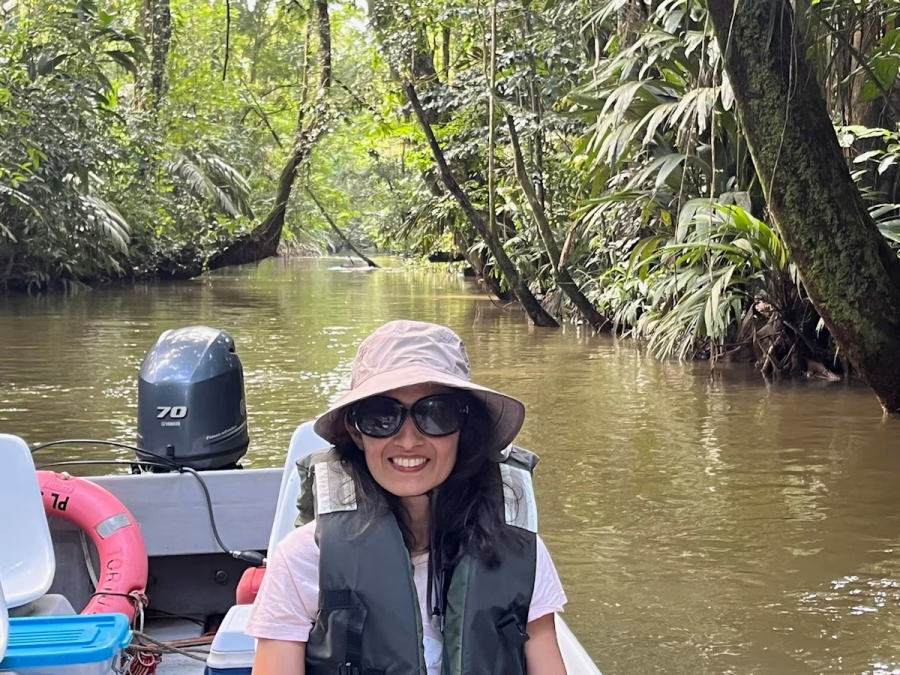
Getting into boats is always a creative exercise when you use a wheelchair. But we made it work – hands steadying wheels, shifting balance, laughter breaking tension. My wheelchair had to be dismantled and I needed a few pairs of steadying arms to help me on. But we made it. Once aboard, the river welcomed us with open arms.
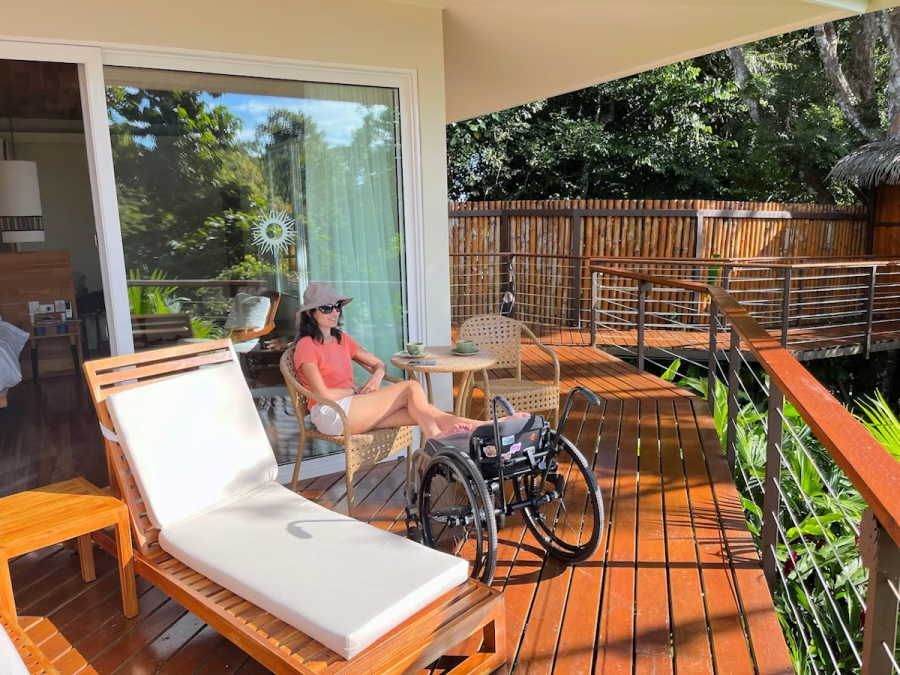
As we glided toward Tortuga lodge, colorful Victorian-style buildings appeared like something out of a children’s storybook: pinks, greens, yellows, rising from the riverside mist. The rooms of the Lodge are named for the founders of this village in the midst of the forest, many of whom are well into their 90’s and alive and well today. My flat, spacious and airy room, was named for one- a Mr. Mishak. It had a bright balcony where iguanas came to sunbathe each morning, eyeing me like a familiar neighbor. The raised walkways in the gardens where we saw toucans and monkeys made it easy for me to get around, wheelchair and all, and very much included and welcome.
Where Rivers Meet the Sea: Tortuguero’s Dreamscape
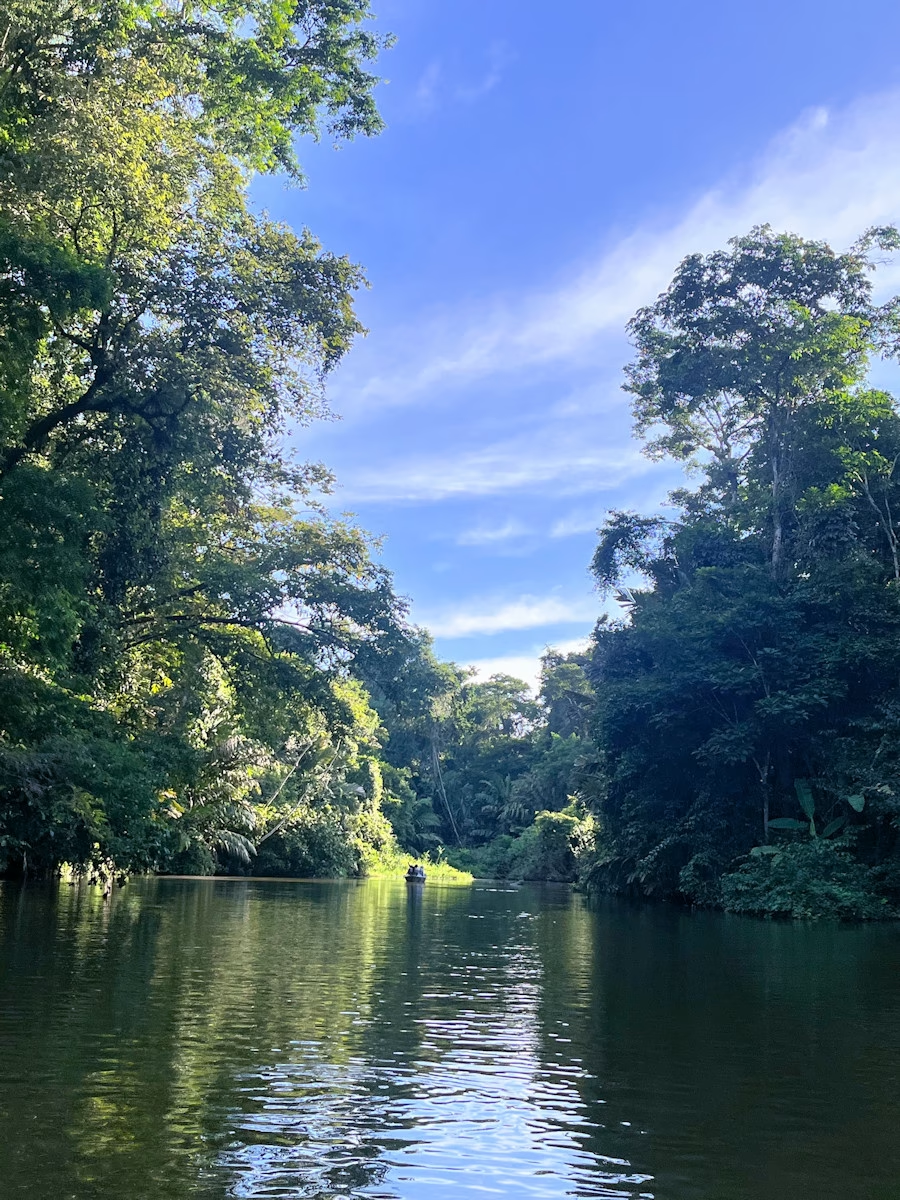
This region is unlike anywhere else – a network of chocolate-colored rivers and canals, fringe of palms, banyans with roots like ancient sculptures, and water so deep and tannin-rich it behaves like a mirror.
We rose with the birds and monkeys. After the excellent Costa Rican coffee, we boarded the boats and then drifted from the main river into narrow canals thick with palms and banyans.
Boena’s guides are magicians. They spot camouflaged herons, lizards, toucans, and even crocodiles in what looks, to the rest of us, like a wall of leaves.
My favorite moments were simply drifting down a bamboo-and-palm-lined canal, the water so dark blue it became a perfect mirror, doubling the gnarled tree trunks and glowing slivers of sky. It felt like floating through a world both above and below.
Evenings of Water and Fireflies
Dinners unfolded beside the river, the moon rising through palm silhouettes and shimmering across the water. Occasionally a water taxi would glide by, barely rippling the surface. Caribbean spices drifted from the kitchen; the banyan roots knotted into the water like living sculptures.
Accessible travel doesn’t eliminate magic – sometimes it heightens it.
Crossing Costa Rica by Air – Wheelchair Included
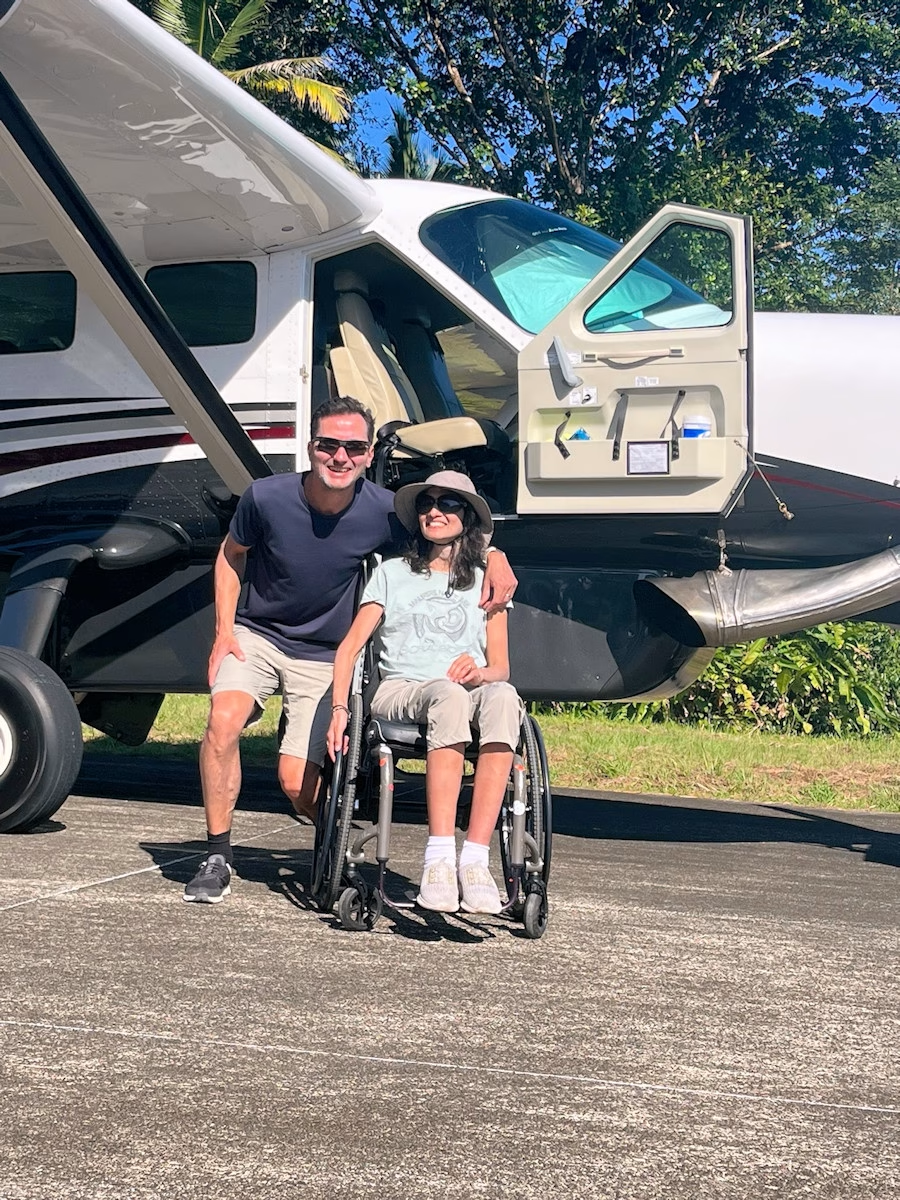
Leaving Tortuguero, Boena arranged a seamless boarding onto their small plane. For once, I could see my chair – intact, respected – just a few feet away.
We soared west over Costa Rica’s mountains, the dark tapestry of forest giving way to the electric turquoise of the South Pacific. A cross-country flight in under an hour – and one of the most beautiful I’ve ever taken.
Landing in the charming town of Puerto Jiménez, I was greeted with cold coconut water before bumping up a steep ridge in a jeep to the next Boena lodge – Lapa Rios, which means “River of Macaws”.
The Osa Peninsula — A Balcony Over the Edge of the Wild
The balcony of our room hung above a living green amphitheater – palms, ginger plants, matapalo trees – all framing a sea so intensely blue it looked painted. Scarlet macaws flew past in pairs, their calls echoing off the canopy. A blue, luminescent butterfly drifted by like a creature escaped from Neverland. Without leaving my room, I saw scarlet macaws flying in pairs, Blue, luminescent butterflies drifting by, monkeys, toucans and numerous birds.
At night, the howler monkeys awakened us – their ghostlike roars echoing across the valley. It was surreal, primal, and unforgettable.
The Joy of Just Sitting Still
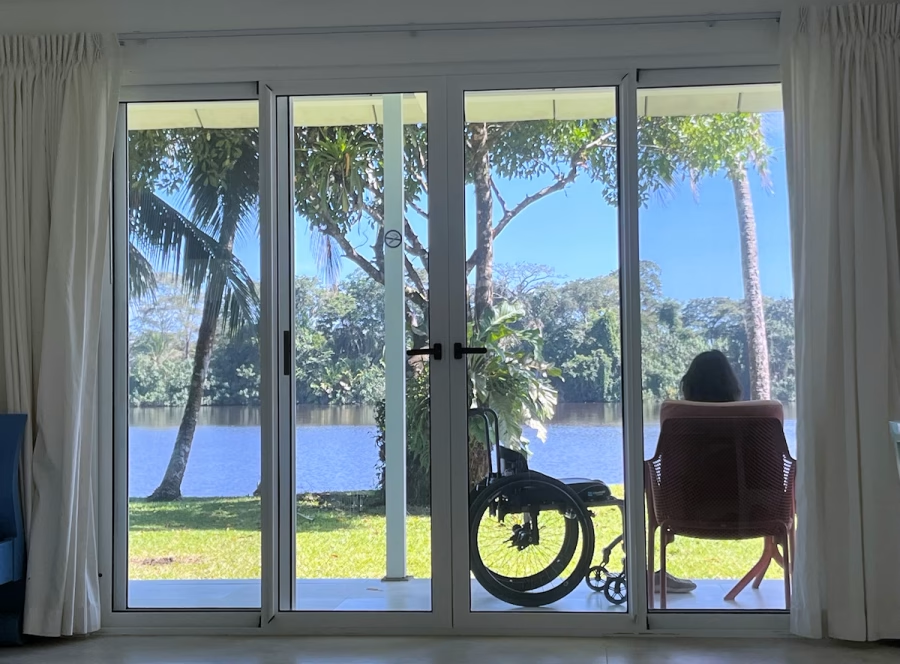
One of the great lessons of the rainforest: you don’t always need to move. Sometimes the best thing is to sit, quiet, and let the jungle reveal itself. For that, I have an advantage!
Through the full-length windows of the room, I saw flashes of red, green, cobalt – birds fussing, monkeys leaping, leaves trembling with secrets. Outside at the main entrance of the lodge, guides brought telescopes to my level so I could see sloths, macaws, toucans.
Inclusion is not about sameness; it’s about being fully part of the experience and feeling welcome and cared for, which I did in abundance.
Into the Jungle, Wheels First
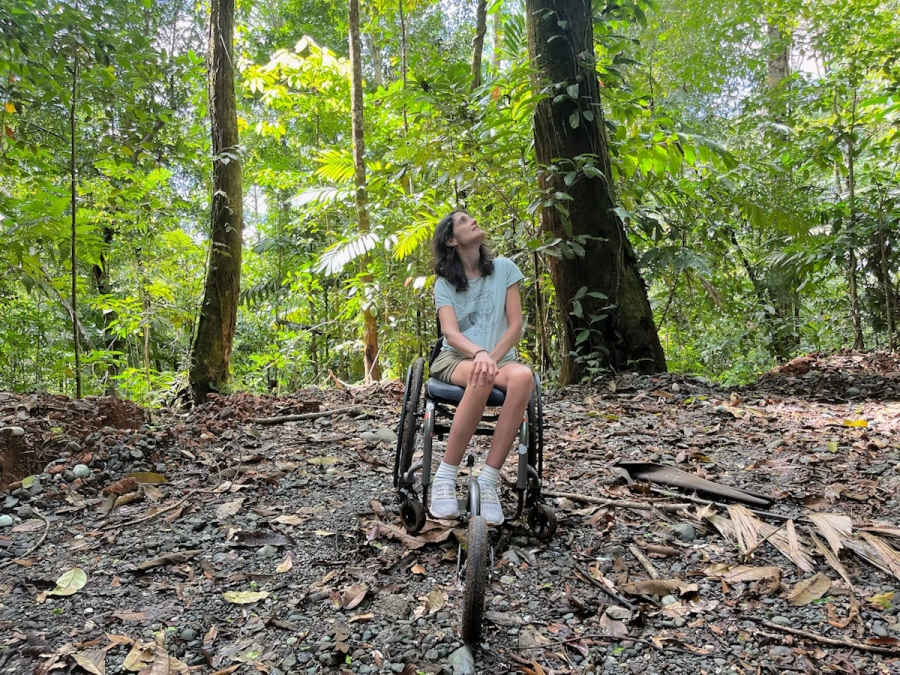
I won’t pretend it’s easy. There are numerous ridge and waterfall hikes I could not do. But “hard” is not the same as “impossible.” Boena’s team helped me get into an open-roof jeep and took me to a relatively flat patch of jungle. With my wheelchair and freewheel, and help of my husband and the guide, I could roll close to towering trees while our guide explained traditional medicinal plants and the history of the region.
I may no longer hike, but that doesn’t mean I can’t experience the rainforest — intimately, fully, with awe.
A Final Reflection: Nature Belongs to All of Us
I returned home with a deeper appreciation for the world – and for Costa Rica’s fierce, generous biodiversity.
Boena understands how to strike that delicate balance: luxury without pretense, immersion without discomfort, accessibility without sterility. Their accessible rooms prove a fundamental truth: A high-quality hotel room does not need to look like a hospital to be accessible. My rooms both at Tortuga Lodge and Lapa Rios while not perfect, were spacious, had low beds, and accessible bathrooms- and were reachable via flat, smooth walkways. This is what inclusive design should look like — thoughtful, respectful, seamless.
Travel – real, wild, heart-stirring travel – does not disappear when you use a wheelchair. If anything, my senses have grown sharper, my appreciation deeper- and my desire to push boundaries wider.
Because nature is not something you give up, but something you must find new ways to reach.