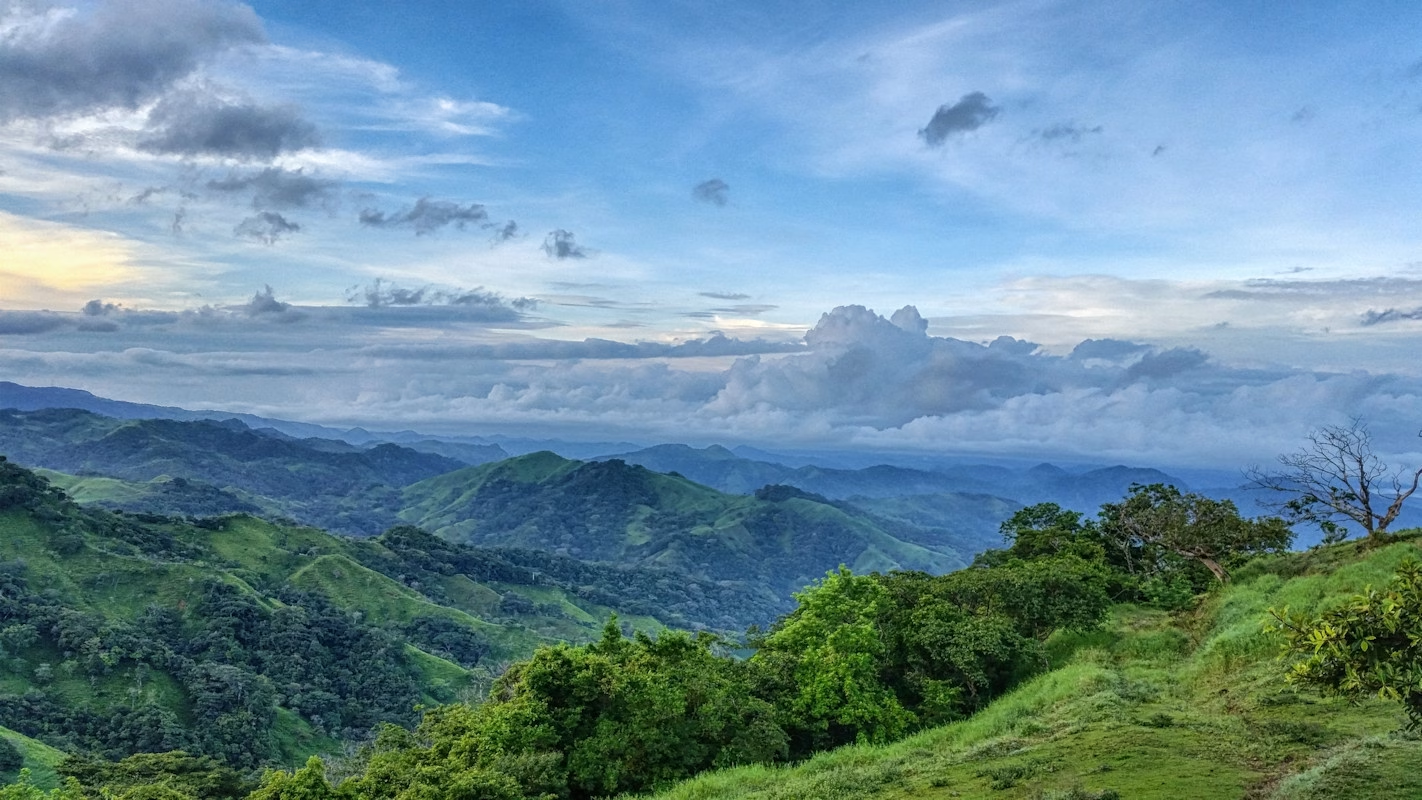
Destination Guide to Costa Rica
Lush rainforest landscapes, wildlife-rich coastlines, eco-luxury retreats and gentle adventure adapted for comfort and accessibility.
◦ 4 min readLush rainforest landscapes, wildlife-rich coastlines, eco-luxury retreats and gentle adventure adapted for comfort and accessibility.
Getting There
Most visitors arrive via San José (SJO – Juan Santamaría) or Liberia (LIR – Daniel Oduber Quirós). Both offer step-free access, pre-bookable mobility assistance, accessible restrooms and efficient arrivals. Provide airlines with mobility-aid dimensions and battery details if using powered equipment. Domestic flights connect key regions, though small aircraft have restricted mobility-aid capacity — check ahead.
Getting Around
Costa Rica’s most comfortable accessibility comes from private road transfers and carefully chosen eco-luxury lodges.
- Private vehicles: Best way to explore; WAVs are available via specialist partners and select tour operators.
- Road conditions: Roads vary; newer highways are smooth, while rural routes can be bumpy — pacing and planning matter.
- Domestic flights: Useful for Pacific/Northwest regions; some restrictions apply for powered wheelchairs.
- Boats: River and mangrove tours use larger, stabilised vessels with assisted boarding; small boats vary widely.
- Urban transport: San José’s accessibility is improving; rely on private vehicles for comfort.
Destination Highlights
Themes
- Rainforest & Wildlife: Accessible elevated walkways, canopy viewpoints, river cruises, birdwatching and wildlife centres offering level paths and calm, guided viewing.
- Volcano & Geothermal Landscapes: Scenic drives, step-free lookouts, and hot-spring resorts with ramps, transfer bars and accessible soaking pools.
- Coastlines & Calm Beaches: Pacific beaches, mangrove channels and coastal reserves with accessible boardwalks, shaded terraces and adapted marine excursions.
Regional Snapshot
- Arenal & La Fortuna – Volcano views, hot-spring resorts, accessible rainforest trails, waterfall viewpoints via scenic drives.
- Monteverde – Cloud forest with partial access; choose reserves with accessible hanging-bridge segments and paved forest paths.
- Manuel Antonio – One of Costa Rica’s most accessible national parks with boardwalks, lookout points and calm beaches; luxury hotels with buggy mobility.
- Guanacaste – Beach resorts with adapted rooms, accessible pools, oceanfront dining and gentle marine tours from larger boats.
- Tortuguero – Best experienced by larger wildlife boats offering shaded, seated river cruises through canals; lodges vary in access.
- Osa Peninsula – Biodiversity hotspot; choose high-end eco-lodges with boardwalks and guided, low-exertion nature routes.
- San José – Museums, galleries, coffee estates and cultural districts with improving step-free options.
Cuisine & Culinary Exploration
Costa Rican cuisine is fresh, coastal and comfortingly simple — ideal for travellers who prefer nutritious, gently seasoned dishes.
- Signature flavours: gallo pinto, grilled fish, ceviche, plantains, Casado plates, tropical fruits, cloud-forest coffee and chocolate.
- Inclusive dining: Eco-lodges and high-end hotels offer step-free dining decks, accessible washrooms and calm, open-air restaurants with companion seating.
- Curated tastings: Coffee plantation tastings, chocolate workshops, seated cooking classes, fruit-tasting picnics and chef’s forest-to-table menus.
- Dietary needs: Many kitchens adapt for allergies, gluten-free, vegan and low-spice preferences.
Luxury Perspective
Costa Rica’s luxury focuses on immersive nature + comfort-first design. Expect:
- Adapted suites with roll-in showers, wide entryways, level decking and forest or ocean views.
- Eco-luxury lodges with boardwalk access, buggy transport, plunge pools with railings and spacious terraces.
- Hot-spring resorts offering zero-entry pools, temperature-controlled soaking and accessible relaxation pavilions.
- Marine experiences with stabilised catamarans, assisted boarding, shaded decks and floatation support for calm-water swims.
- Private touring: Wildlife interpretation, coffee and cacao estates, artisan villages and coastal viewpoints designed around short, gentle circuits.
Attitudes
- Costa Ricans (Ticos) are famously warm, welcoming and eager to help.
- Eco-lodges and luxury hotels are accustomed to supporting accessibility needs and will arrange ramps, buggies and staff assistance when requested.
- LGBTQ+ travellers experience a friendly, laid-back environment, especially in tourist zones and high-end hotels.
The Rules
- Accessibility is strongest in modern hotels, nature reserves with designated trails, national parks with boardwalks and private eco-lodges.
- Rainforest and volcano sites may have uneven surfaces, sloped terrain or limited step-free access — choose properties with adapted cabins, boardwalk sections and vehicle-assisted viewpoints.
- Sun protection, hydration and insect precautions are essential.
Resources & Support
- Specialist accessible-tour providers offer WAVs, mobility equipment hire, carers, shower chairs, ramps and tailored excursions.
- Many national parks publish updated access notes for boardwalks, shuttles and restrooms.
- Luxury lodges often have an accessibility liaison to coordinate mobility support, dining arrangements and environmental adaptations.
Final Tips
- Plan two to three bases (e.g., Arenal + Manuel Antonio + Guanacaste) to reduce road time.
- Pre-book WAVs, adapted rooms and accessible hot-spring facilities early in high season.
- Rainforest humidity and surfaces vary — bring anti-slip aids and protection for mobility devices.
- Choose morning wildlife excursions for cooler conditions and calmer viewing.
- Expect rain any month; pack chair covers and water-resistant gear.
- Clear communication helps lodges tailor support — Costa Rican hospitality is warm, proactive and adaptable.