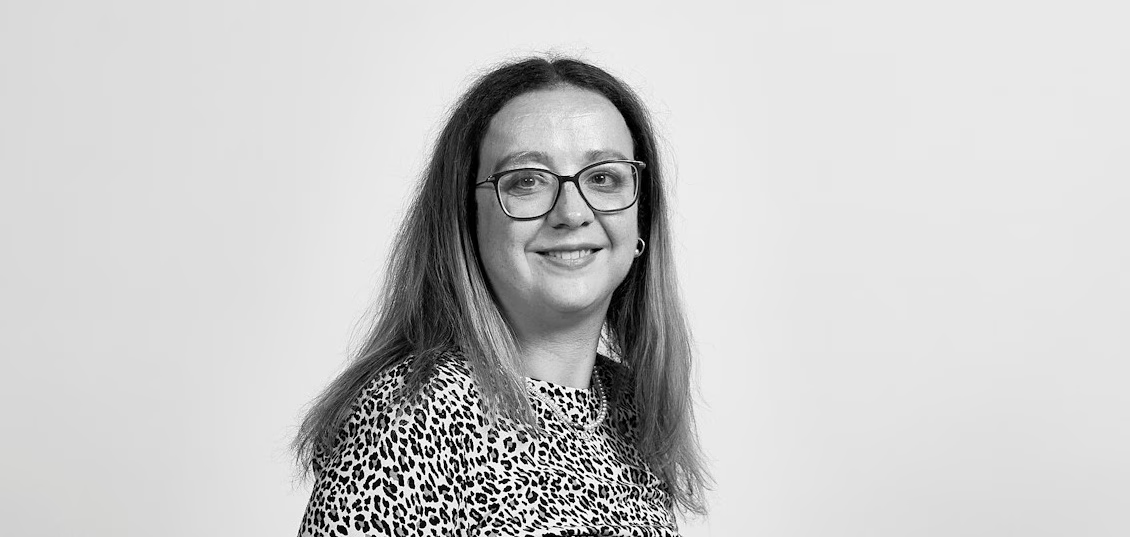
Carrie-Ann Lightley: Travel Writer, Speaker and Storyteller
I did not set out to become a public voice. I started out trying to solve practical problems for myself and for others who were quietly navigating the same barriers.
◦ 7 min readPerspective and Purpose
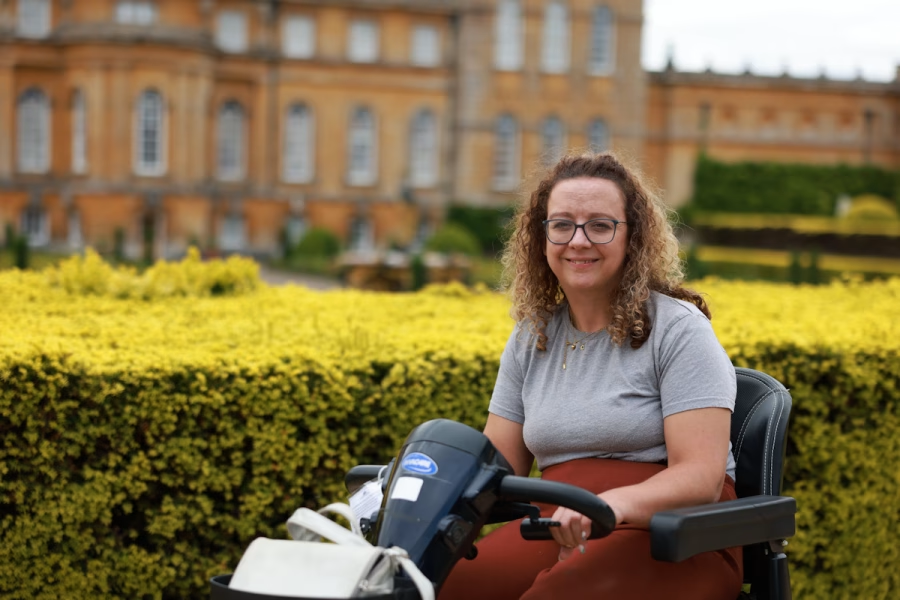
Looking back, what first compelled you to use your voice publicly, not just to travel, but to challenge how travel is designed and communicated?
I did not set out to become a public voice. I started out trying to solve practical problems for myself and for others who were quietly navigating the same barriers. Early on, I realised that many of the challenges people faced were not about individual limitations, but about systems that had never considered disabled people as part of their audience.
What shifted things for me was seeing how powerful shared experience could be. When people read something and recognise their own concerns, it can change what feels possible. Travel stopped being just something I did and became something I could help reshape, by showing where systems were failing and where small, thoughtful changes could open doors.
How has navigating the world as a disabled traveller shaped the way you tell stories and the standards you hold destinations to?
Living with a disability means you notice details other people are never asked to think about. Gradients, door weights, noise levels, staff confidence, signage, communication, and what happens when something goes wrong. That awareness shapes my storytelling because I know that one missing detail can be the difference between a trip feeling empowering or exhausting.
It has also shaped my standards. I am not interested in perfection, but I am interested in honesty, consistency, and effort. I look at how information is presented, whether staff feel supported to problem solve, and whether disabled guests are treated as valued customers rather than exceptions. My stories reflect that reality. They show where things work, where they fall down, and why that matters.
What do you think disabled audiences and the tourism industry still misunderstand most about each other?
Disabled travellers are often assumed to be demanding, difficult, or niche. In reality, most of us are simply trying to reduce uncertainty and manage risk. Clear information and thoughtful design benefit us, but they also benefit families, older travellers, and anyone navigating the world with less margin for error.
On the other side, many disabled people understandably distrust the industry, because they have been let down so many times. That can make collaboration feel risky. What both sides sometimes miss is that progress happens fastest when lived experience and professional expertise work together, not in opposition.
The State of Accessible Travel
What is the difference between performative accessibility and genuine inclusion?
Performative accessibility focuses on optics. A badge, a statement, a single accessible room, or a one off campaign. Genuine inclusion is embedded. It shows up in planning stages, budgets, staff training, crisis management, and ongoing review.
You can feel the difference immediately. Performative accessibility asks, “How do we look?” Genuine inclusion asks, “How does this actually work for people?” One centres reputation. The other centres lived experience.
Where are you seeing meaningful progress, and where is the industry still lagging?
I am seeing progress where organisations are investing in detail and process rather than slogans. That includes destinations publishing detailed access information, transport providers improving consistency, and hospitality teams taking training seriously.
The biggest gap remains at the point of communication. Too many businesses still rely on vague language, outdated pages, or assumptions about what disabled guests need. That uncertainty pushes risk back onto the traveller, and it is one of the most persistent barriers we face.
Why is honest, detailed information so important, and why is vagueness still common?
For disabled travellers, information is not a bonus. It is the foundation of independence. Without it, we cannot assess safety, energy use, or feasibility.
Vagueness persists because people fear getting it wrong. Ironically, saying nothing or saying “fully accessible” without evidence causes far more harm. Clear, specific information builds trust, even when the answer is “this may not work for everyone.”
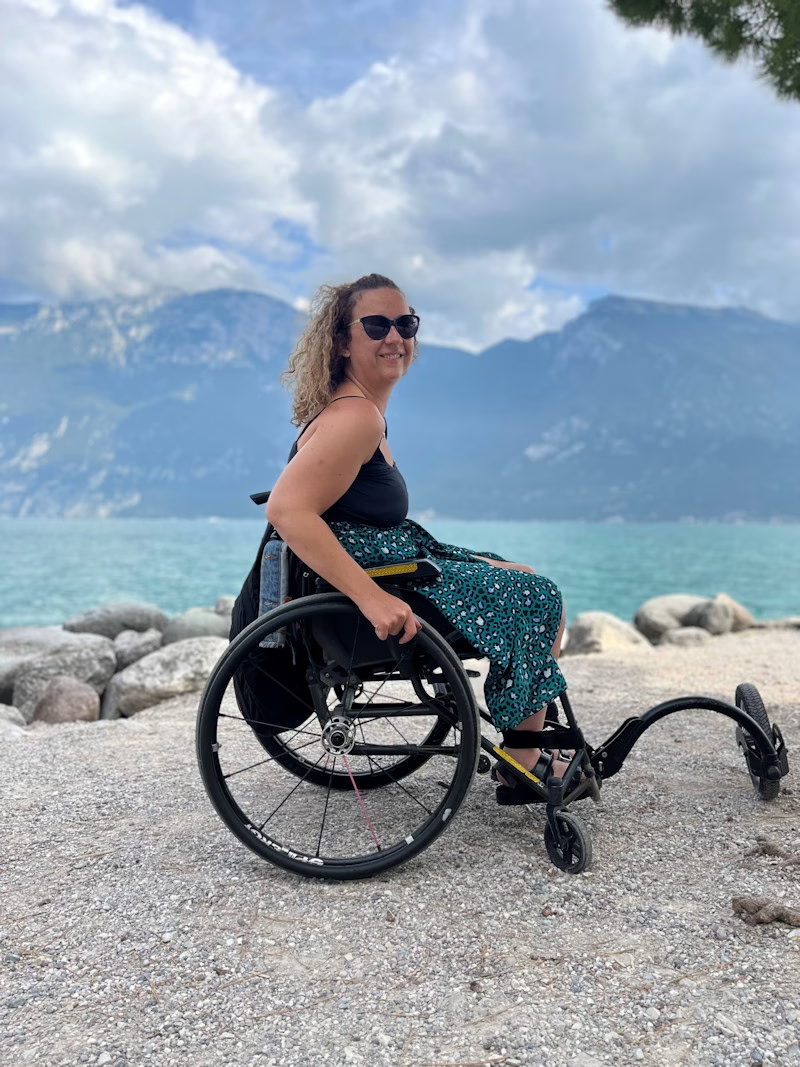
Storytelling, Influence and Responsibility
How do you decide which stories are worth telling, and which narratives do you avoid?
I am drawn to stories that show disabled people as whole, ordinary humans. Curious, tired, joyful, frustrated, and complex. I actively avoid narratives that frame access as charity, inspiration, or exceptionality.
If a story centres pity, heroism, or gratitude for basic rights, it is not one I want to amplify. I am interested in stories that normalise disabled presence and challenge systems rather than individuals.
How do you balance being invited into rooms with pushing for real change?
Being invited into the room is only useful if you are prepared to speak honestly once you are there. That can be uncomfortable, especially when the people listening control budgets or reputations.
I try to balance collaboration with clarity. I will acknowledge progress, but I will also name gaps. Structural change rarely comes from politeness alone. It comes from sustained, informed pressure paired with practical solutions.
What responsibility do content creators have when representing accessible travel?
A significant one. Creators shape expectations. If we gloss over barriers or accept poor practice in exchange for access or payment, we reinforce harmful norms.
That means asking better questions, disclosing limitations, and resisting the urge to oversimplify. It also means knowing when to say no.
Community, Advocacy and Impact
How does community advocacy inform your professional work?
Community keeps me accountable. It grounds my work in reality rather than theory. Listening to other disabled people challenges my own assumptions and reminds me that access is not one size fits all.
Professionally, that perspective strengthens my work. It ensures I am not just speaking from my own experience, but from a broader understanding of how systems affect different bodies and lives.
A moment where travel shifted someone’s sense of possibility?
I have seen people regain confidence simply by realising that travel is not closed to them. Sometimes it is a first independent trip in years. Sometimes it is discovering that a place they assumed was off limits is actually manageable with the right information.
Those moments are often quiet, but they are powerful. They change how someone sees themselves in the world.
If disabled travellers were genuinely centred, what would improve for everyone?
Travel would become clearer, calmer and more human. Better information, more thoughtful design and more flexible systems benefit everyone, not just disabled people. Inclusion raises the standard for all travellers.
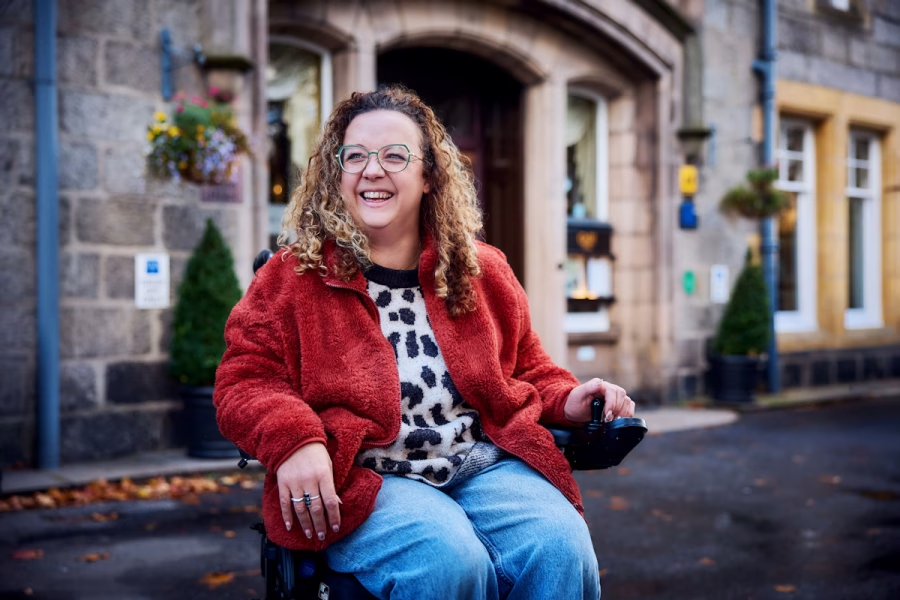
Looking Forward
What do you want accessible travel to look like in five years?
I want accessibility to be standard practice, not a specialist add on. I want detailed information to be expected. I want disabled people involved at every stage, from concept to review.
Most of all, I want travel to feel less like a negotiation and more like an invitation.
Advice for brands that want to do better?
Start by listening. Invest in expertise. Publish honest information. Pay disabled consultants properly. Accept that you will make mistakes, and commit to learning rather than defending.
Accessibility is a process, not a claim.
What gives you hope, and what keeps you pushing?
What gives me hope is the growing number of disabled voices shaping the conversation on their own terms. What keeps me pushing is the knowledge that access still determines who gets to participate fully in the world. That is worth fighting for.
Quick Fire
One destination that surprised you with its accessibility?
Belfast.
A word you would ban from accessibility marketing?
Two words – “Fully Accessible.”
Best travel companion: planner or improviser?
Improviser, always. I’m the planner.
Inclusion done right feels like…
Not having to ask.
Accessible travel is not niche, it is…
Good customer service.
Image credits:
- Allan Myles – Visit Scotland
- Rachel Airey