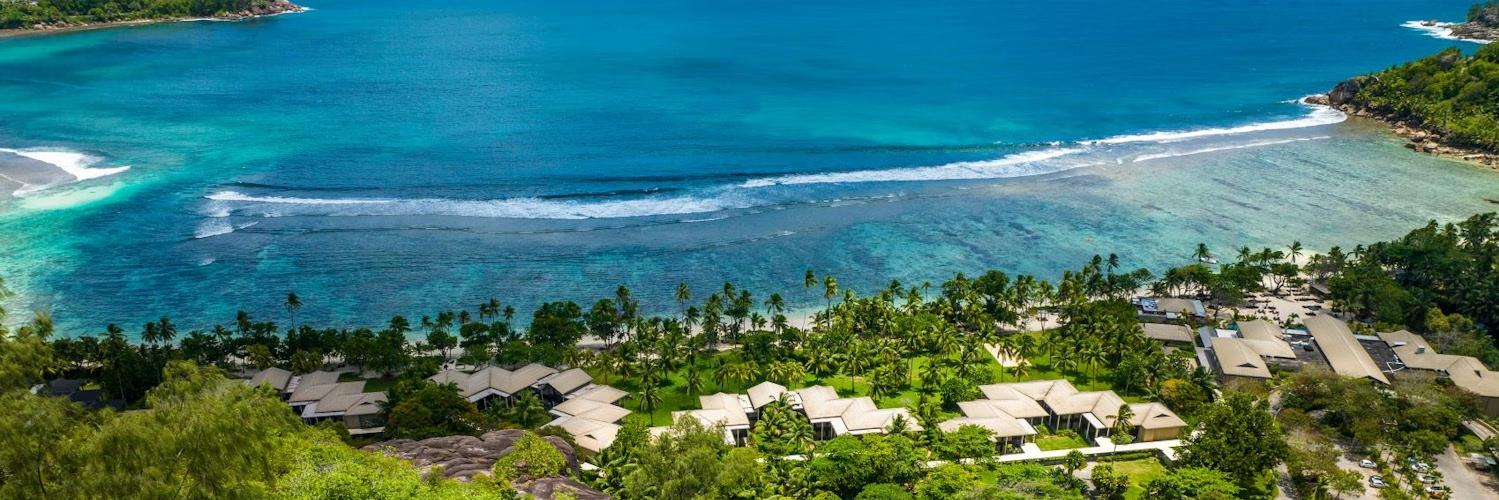
Oliver Kuhn: General Manager, Kempinski Seychelles Resort
Hospitality, at its core, is about human connection—and that is what first drew me in. I was fascinated by the idea that a place, a moment, or a gesture could stay with someone long after they have left.
◦ 9 min readOpening: Leadership Journey
You’ve built a remarkable career across Europe, Asia, the Middle East, and Africa. Looking back over more than two decades in luxury hospitality, what first drew you to this industry?
Hospitality, at its core, is about human connection—and that is what first drew me in. I was fascinated by the idea that a place, a moment, or a gesture could stay with someone long after they have left. Early in my career in Food & Beverage, I discovered the immediacy of that impact. You see, feel, and shape the guest experience in real time. That sense of purpose—creating meaningful, lasting impressions—has defined my journey ever since.
Your career has taken you through very different cultural and operational environments – from Russia and Mongolia to China and now the Seychelles. How have these international experiences shaped your leadership philosophy?
Working across continents has been both humbling and transformative. It teaches you very quickly that there is no universal formula for leadership. True leadership lies in understanding people—their culture, their values, their perspectives—and building trust within that context. It has shaped a philosophy grounded in respect, adaptability, and inclusion. Ultimately, leadership is not about being the loudest voice in the room, but about creating an environment where every voice feels valued.
Hospitality is often described as a “people business.” What qualities do you believe define exceptional leadership in a luxury hotel today?
In today’s world, exceptional leadership is defined by emotional intelligence. It requires clarity of vision, but also empathy and authenticity. Luxury is no longer only about physical product—it is about how people feel. That begins with the team. If you create a culture of trust, respect, and belonging, the guest experience naturally becomes more intuitive, more personal, and ultimately more memorable.
Global Experience & Transformation
You’ve led several hotel openings and transformations across the world. What excites you most about the process of bringing a hotel to life or repositioning a brand?
There is something incredibly powerful about transformation. Whether opening a new property or repositioning an existing one, you are essentially redefining its identity. It is about storytelling—about understanding what the destination offers and translating that into a meaningful guest journey. The most rewarding moment is when that vision becomes tangible, when guests begin to feel it, not just see it.
Having managed properties in such diverse destinations, what lessons have you learned about balancing global brand standards with local culture and identity?
The essence of modern luxury lies in authenticity. Brand standards provide a framework, but they should never overshadow the uniqueness of a destination. In Seychelles, that means embracing nature, pace, and a certain understated elegance. The goal is harmony—where global excellence meets local soul in a seamless, respectful way.
Seychelles is one of the world’s most sought-after luxury destinations. What makes the Kempinski Seychelles Resort unique within the global Kempinski portfolio?
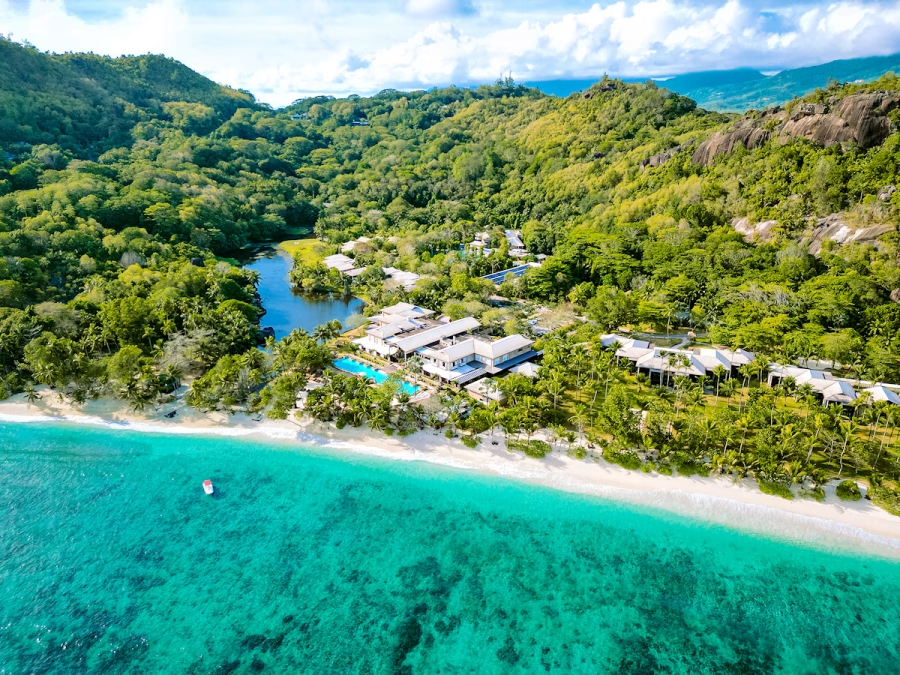
It is the rare combination of space, nature, and tranquility. The resort is not imposed on the landscape—it is part of it. Guests are immersed in lush greenery, the rhythm of the ocean, and a sense of privacy that feels increasingly rare. When you combine that with Kempinski’s heritage of European refinement, you create a luxury experience that is both elevated and deeply grounded in its surroundings.
Sustainability, Culture & Community
Sustainability and responsible tourism are becoming central to luxury hospitality. How does Kempinski Seychelles integrate environmental stewardship with guest experience?
Sustainability today is inseparable from luxury. It is no longer an expectation—it is a responsibility. At Kempinski Seychelles, we approach sustainability in a way that enhances, rather than compromises, the guest journey. From protecting marine ecosystems to sourcing locally and reducing our environmental footprint, every initiative is designed to be both meaningful and visible. Guests increasingly want to feel that their stay contributes positively to the destination—and we ensure that it does.
How important is the relationship between a luxury resort and its surrounding community, and how do you ensure that the hotel contributes positively to Seychelles as a destination?
A resort should never exist in isolation. It must be part of a larger ecosystem—socially, culturally, and economically. Our role is to contribute to Seychelles in a way that is sustainable and respectful: through employment, education, local partnerships, and cultural preservation. When the community thrives, the destination becomes richer—and that is ultimately what guests come to experience.
Inclusive Hospitality & IncluCare Framework
Kempinski Seychelles recently pursued IncluCare Framework Accreditation, a significant step toward improving accessibility and inclusive travel. What first motivated you and your team to explore this initiative?
The motivation was very clear: if we speak about true luxury, it must be inclusive. Travel should not be defined by limitations. As a team, we asked ourselves a simple question—are we genuinely accessible to everyone? IncluCare gave us a structured framework to challenge ourselves, to improve, and to ensure that inclusion is not an aspiration, but a reality.
Luxury hospitality often focuses on personalization and comfort. How does accessibility fit into the broader concept of truly exceptional guest experience?
Accessibility is, in many ways, the purest expression of hospitality. It is about anticipating needs, removing obstacles, and ensuring that every guest feels equally valued and comfortable. In that sense, it is not separate from luxury—it is fundamental to it.
From your perspective, what are the most common barriers travellers with disabilities face when choosing or experiencing luxury destinations?
One of the biggest barriers is uncertainty. Guests often do not know if a destination will truly accommodate their needs beyond basic compliance. Physical infrastructure is one aspect, but equally important are awareness, communication, and genuine understanding. True accessibility goes far beyond design—it lives in service.
What changes – whether physical, operational, or cultural – does the IncluCare Framework help introduce within the resort?
IncluCare brings a holistic transformation. It touches physical design, operational processes, and—most importantly—mindset. It encourages teams to think differently, to anticipate, and to engage with guests in a more thoughtful and inclusive way. It is about embedding accessibility into the culture of the resort.
What impact do you hope this accreditation will have for:
- Guests with disabilities visiting the resort?
Confidence, dignity, and a seamless experience - The wider tourism industry in Seychelles?
Raising the standard of inclusive tourism across the destination - The local community and workforce?
Creating awareness, opportunities, and a more inclusive environment overall.
Do you see accessibility and inclusivity becoming a defining element of the future luxury travel experience?
Without question. The definition of luxury is evolving—it is becoming more human, more conscious, and more inclusive. Accessibility will not be a niche; it will be an expectation.
The Human Dimension of Hospitality
You’ve spoken about developing talent and building high-performing teams. How do you create a culture of empathy and awareness around inclusive hospitality among your staff?
Empathy begins with awareness. We focus on open dialogue, education, and leading by example. When teams understand the impact they can have on someone’s experience—especially for guests who may face additional challenges—they naturally become more attentive, more thoughtful, and more engaged.
What role does training play in ensuring accessibility is not just a design feature, but a genuine service mindset?
Training is essential, but it must go beyond technical knowledge. It is about building confidence, sensitivity, and genuine care. The goal is not only to equip teams with skills, but to inspire a mindset where inclusivity becomes second nature.
In your view, how can hospitality leaders globally become stronger advocates for inclusive travel?
By making it a priority—not a side initiative. Inclusion must be integrated into strategy, design, and daily operations. Leaders have a responsibility to set the tone, to invest in it, and to ensure it is visible at every level of the organization.
Vision for the Future
Looking ahead, what is your vision for Kempinski Seychelles over the next five to ten years?
To continue evolving as a destination that defines modern luxury—where sustainability, authenticity, and inclusivity come together seamlessly. Over the next years, our focus will be on strengthening our identity while continuously enhancing the guest experience in a meaningful and responsible way.
As travellers increasingly seek meaningful, responsible, and inclusive experiences, how do you see luxury hospitality evolving?
Luxury will become more intentional. Guests are increasingly seeking connection—connection to place, to culture, and to purpose. The future of luxury lies in experiences that are not only beautiful, but also meaningful and responsible.
Finally, if a traveller with a disability were considering Seychelles for the first time, what would you want them to know about the experience your resort aims to provide?
Seychelles is a destination of extraordinary beauty—and it should be accessible to all. At Kempinski Seychelles, our commitment is to ensure that every guest feels welcomed, respected, and cared for. Our goal is simple: to create an experience where barriers fade, and the destination can be enjoyed fully and freely.
Quickfire
Island sunrise or sunset?
Sunset – the moment the island slows down
Your perfect Seychelles morning begins with…
Barefoot on the sand, with the ocean just beginning to wake
One hidden gem in Seychelles every visitor should discover?
The quiet southern coastline of Mahé
The scent that best represents the Seychelles to you?
Frangipani carried by a warm sea breeze
If the resort had a soundtrack, what song would open it?
Soft, ambient tones that mirror the rhythm of the ocean
Your favourite place on the island to completely disconnect?
A secluded stretch of Baie Lazare at dusk
A dish every visitor must try in Seychelles?
Freshly grilled local fish with Creole spices or Octopus Curry
Three words that define luxury today
Authentic, conscious, effortless
One small detail that instantly elevates a hotel experience?
Intuitive service – before a word is spoken
A travel destination that still inspires you?
Japan, for its balance of tradition and precision
The best advice you ever received in hospitality?
“Take care of your people – they define everything.”
A leadership habit you never compromise on?
Listening with intention
One thing travellers would be surprised to learn about running a luxury resort?
It is deeply human – it’s about people, not just performance
The future of travel in one word?
Inclusive