Carmen Daniels Jones: Reimagining Equity Through Systems, Strategy & Inclusion
Working across government, corporate, nonprofit, and grassroots communities has shaped me. Moving between those worlds has fueled my curiosity and pushed my personal and professional growth. It has given me the opportunity to sit at the table with leaders across sectors, which has strengthened my confidence and helped me develop transferable skills that have served me in every role I’ve held.
◦ 21 min readOrigins & Personal Journey
You’ve spent more than 25 years shaping inclusive systems across health care, government, corporate America, and nonprofit sectors. Looking back, what early experiences or influences set you on a path toward equity-driven work?
My path toward equity-driven work really began with my family and the environment I grew up in. My father was hired by a corporation in the 1960s, the year after the Civil Rights Act became law. He worked for a global company that was progressive for its time and committed to creating opportunity. Because of that, he built a successful career, and it created a pathway for our family to move into the middle class and for my siblings and me to pursue college.
His promotions meant we moved frequently—seven times while I was growing up. In many of those communities we were often the only minority children in our classes, or among just a few. Those experiences made me very aware, even at a young age, of what it felt like to be an outsider. But they also shaped how I saw the world. I found myself naturally looking for common ground with my peers.
Later in life, when I became disabled, that perspective became even more important. I had already learned how to navigate in spaces where I was different, and I leaned on those experiences as I began navigating the world as a disabled Black woman.
Looking back, I realize those early experiences shaped how I approach leadership and systems today. I’ve always believed that when we intentionally make space for people who might otherwise feel excluded, we build communities and stronger institutions. Even as a kid, I was the one inviting the new student to sit with me at lunch or challenging the status quo to make sure there was room at the table for everyone. That experience has really stayed with me throughout my career.
Long before DEI became a corporate trend, you were already designing people-centered strategies. What kept you committed to this work even in periods when inclusion wasn’t valued or understood?
Early in my career I had the opportunity to work with Evan Kemp, a pioneer in disability rights and a leading advocate behind the passage of the Americans with Disabilities Act. He shared something with me that stayed with me throughout my career. He said companies would truly begin to value the disability community when they understood its impact on their bottom line.
That point of view has shaped how I’ve approached this work ever since. I’ve believed inclusion becomes sustainable when it is aligned with business strategy and growth. When organizations understand that inclusion expands markets and improves outcomes, it stops being viewed as a social initiative that has followed the ‘it’s the right thing to do’ narrative and starts being recognized as smart business.
Throughout my career I’ve served in leadership roles focused on advancing cultural transformation within organizations. What I’ve learned is that meaningful inclusion requires more than programs or statements—it requires shifts in culture, systems, and accountability. For that change to last, it has to be measurable and connected to performance goals and organizational impact. When inclusion is embedded into an organization, it can endure long after individual leaders move on to other roles or companies.
You’ve served as an advisor to government leaders, Fortune 500 companies, disability organisations, and grassroots communities. How has moving between these very different worlds shaped you personally?
Working across government, corporate, nonprofit, and grassroots communities has shaped me. Moving between those worlds has fueled my curiosity and pushed my personal and professional growth. It has given me the opportunity to sit at the table with leaders across sectors, which has strengthened my confidence and helped me develop transferable skills that have served me in every role I’ve held.
At the same time, the work has been very humbling. Much of my career has involved being a voice for people and communities who are often overlooked or underestimated. That responsibility has sharpened my emotional intelligence and deepened my empathy.
What I’ve learned over time is that when you listen closely to people across different sectors and communities, you begin to see how much we share in common. That realization has shaped how I lead and how I approach the work of building systems that serve more people, more effectively.
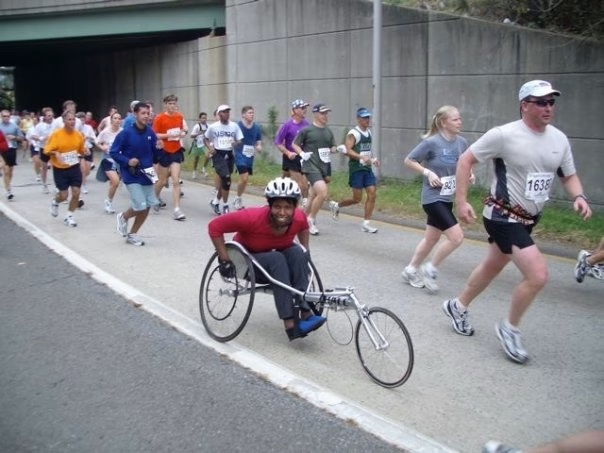
Professional Impact & Systems Change
Much of your work focuses on transforming systems – Medicaid programs, federal departments, corporate engagement models. What is the common thread that makes systemic change succeed?
When I’ve worked to transform systems – whether in Medicaid programs, federal initiatives or corporate engagement models – the common thread that determines success is alignment between the system, the incentives within it, and the lived experience of the people it serves.
In my experience, systemic change succeeds when three things come together: trust, aligned incentives, and execution.
First, there has to be trust. Systems like healthcare and public programs involve many stakeholders – government agencies, providers, community organizations, and the people those systems are meant to serve. If those groups don’t trust one another or feel heard in the process, the best-designed policies struggle to gain traction. Real transformation starts when the right voices are at the table and there is space for honest communication and partnership.
Second, incentives have to be aligned. Institutions ultimately respond to the incentives they face—financial, regulatory, or reputational. If those incentives are not aligned with the outcomes we’re trying to achieve, progress will stall or be limited.
The third piece—and often the most overlooked—is execution and implementation. Many transformation efforts stall because they stop at strategy or policy design. Strategy is important, but systems don’t change because of a plan. They change when organizations begin operating differently day to day. That requires strong partnerships, clear implementation structures/processes, and accountability.
Much of my work sits right there, helping organizations move from a vision for change to the practical structures that allow that change to take hold.
You grew the USDA’s outreach to more than 1,000+ minority-owned farmers and rural enterprises. What did that work teach you about equity, trust, and long-term community empowerment?
That experience reinforced for me that equity and trust are built through consistent presence.
I spent a great deal of time traveling to rural communities, often returning multiple times – to build relationships, demonstrate USDA’s commitment, and bring resources with me. In many cases, I brought USDA staff and external partners so we could collectively share a vision for new market opportunities and outline strategies to help farmers grow their businesses.
One of the most important lessons was that this work could not be done from Washington. In every state, we partnered with historically black colleges and universities, local USDA teams, and nonprofit organizations to create the infrastructure that would support farmers after we left. Local partnerships were essential to turning vision into reality.
I also gained an appreciation for what the ownership family land represented to many minority farmers. For families who have held onto their land for generations, it represents freedom, ancestry, and ownership. These farmers were incredibly dedicated to preserving that legacy. What they often needed was for systemic barriers to be addressed and for someone to demonstrate that the support being offered was genuine—that it wasn’t a bait-and-switch.
Our external partners played a critical role as well. Many farmers were accustomed to selling their products at local farmers’ markets but had not yet had access to larger commercial markets. By bringing in partners who understood how to navigate supply chains, we helped create pathways for their products to reach national retailers.
When the right infrastructure and partnerships were in place, it opened new opportunities. Farmers who had been historically overlooked were able to expand their vision, grow new revenue streams, and build stronger economic futures for their families and communities.
You’ve led market research initiatives that directly influenced multimillion-dollar Medicaid contracts. What does “inclusive market intelligence” look like in practice and why do organisations often overlook it?
Inclusive market intelligence means making sure the people most affected by a system are part of how we understand it.
Too often, people with disabilities are not included in market research. For some clients it is ‘cumbersome’ to include different disability segments (i.e.: people who are wheelchair users, have limited mobility/slow walkers, are neurodivergent, and/or have sensory disabilities). If a healthcare client tracks data, it is usually focused on claims, demographic reports, and traditional surveys. Those tools are important, but they rarely capture the lived experiences of the communities these systems are meant to serve—people with disabilities.
In practice, inclusive market intelligence means going beyond the data. It involves engaging community organizations, listening directly to consumers and and designing research approaches that account for accessibility, disability and cultural context. When you do that, you uncover insights that traditional research often misses—barriers to access, trust gaps, and opportunities to design services that work for people and their families.
For me, inclusive market intelligence is about making sure the voices closest to the problem are informing the solutions.
What is one example of a community-led insight or solution that fundamentally shifted the direction of a program you were leading?
I’ve facilitated many focus groups, in various industries. The objectives of the engagements vary but in almost all the groups we’ve learned one consistent theme: community engagement, and staff training and preparation enhances the customer experience.
After completing focus groups for a healthcare client, the insights laid the foundation for training for customer-facing staff and community health workers, as well as customers who made inbound calls to the call center. The respondents indicated they no longer wanted to have to go through their sometimes-lengthy medical history, which they found frustrating. We advised that additional health history fields were added and to assign the same representative to speak with members so a relationship could be built overtime. The guidance we provided had a direct impact on the customer experience and member retention.
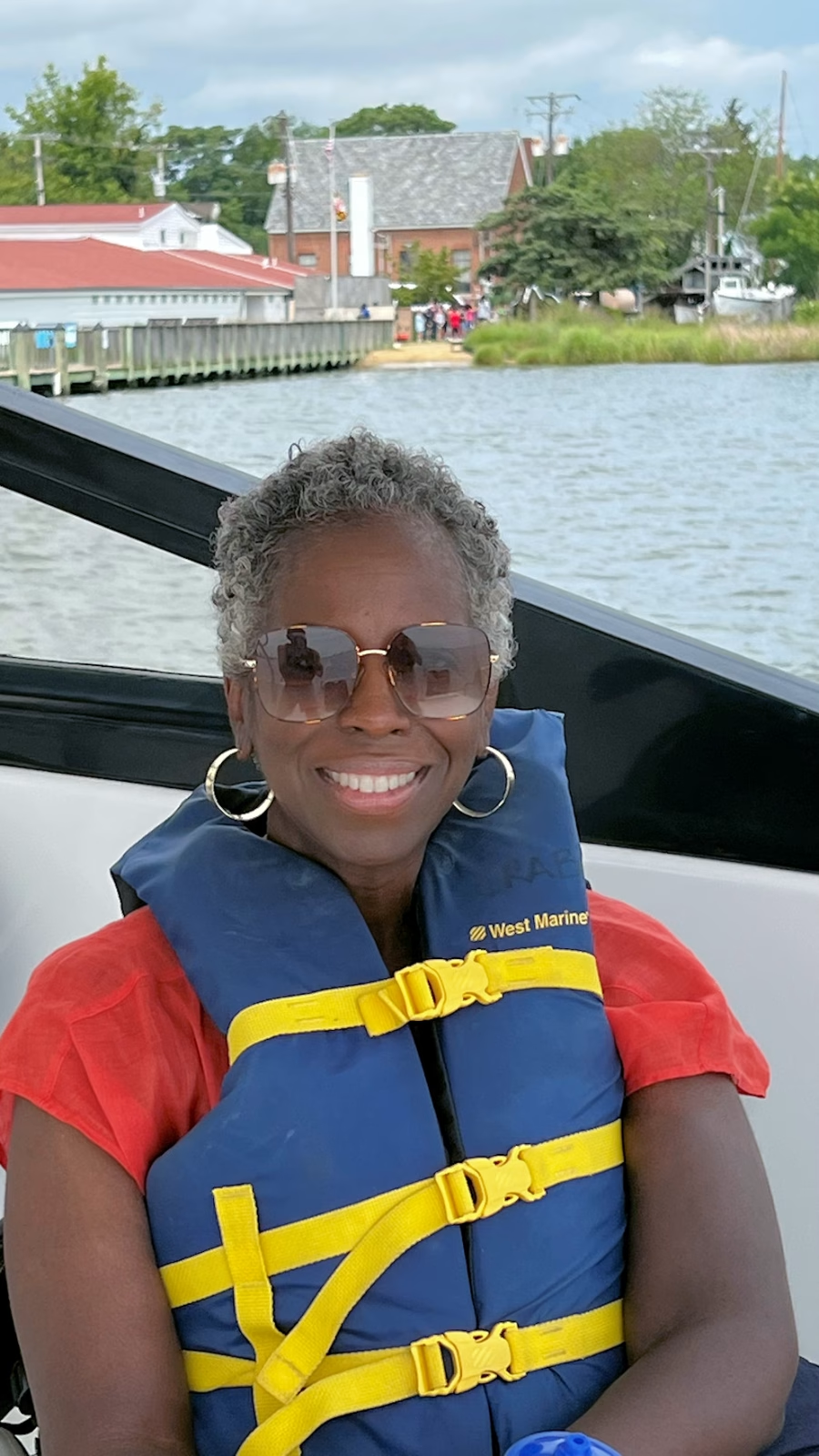
Disability Leadership & Cultural Transformation
As Vice Chair of the United Spinal Association and a Board Member of the World Institute on Disability, you’ve been instrumental in shaping national disability narratives. What changes in disability leadership and representation have been most meaningful to you?
I’ve been disabled for almost 40 years, and for many years the disability leadership included few minorities. I think because in the US many people of color do not view disability rights as a civil rights issue – perhaps this view is for older people like me who became disabled. However, I am seeing a shift, and the table of disability inclusion has more seats at it for people with lived experiences and backgrounds who are unified to advocate for issues that impact our community.
It has been gratifying to more concerted efforts on the part of national organizations become aware that their outreach efforts have to be expanded to provide a platform that embraces the intersectionality of disability.
You’ve worked across healthcare, policy, and business to amplify disabled voices. From your perspective, what is the biggest misconception organisations still hold about disability inclusion?
There are a few misconceptions. First, that people with disabilities are not a viable consumer segment. I maintain that no matter what disability an individual has they need many of the same things their nondisabled peer needs – clothing, food, access to the community, transportation, housing, etc. Organizations and companies need to understand the distinctions of their needs to they can effectively reach them to impact revenue.
Secondly, organizations view disability inclusion with a compliance lens, instead of one that is competitive that provides an advantage. I have found personally, and from market research, that when an individual with a disability has a good, consistent experience with a corporation or organization, they tell their peers and WOM is a credible and indirect way that brands build trust. The data support this:
When an organization gains a customer with a disability, they often gain their entire household and network, because accessibility influences the purchasing decisions of families, caregivers, and friends. Globally, people with disabilities and their friends and families represent about $13 trillion in spending power, making it one of the largest and most overlooked consumer markets in the world.
In your view, what does real disability-inclusive engagement look like – beyond compliance, beyond checkbox DEI?
Real disability-inclusive engagement starts with a mindset shift—from designing for people with disabilities to designing with them.
As I mentioned, too often organizations approach disability inclusion as a compliance exercise—meeting accessibility requirements or adding disability to a DEI checklist.
Real inclusion happens when people with disabilities are involved early in shaping decisions, not just asked for feedback after the strategy is already set. That means bringing disabled leaders, consumers, and community organizations into the process as partners.
In practice, it looks like building genuine relationships with disability communities, designing accessibility into programs and communications from the start, and creating ongoing feedback loops so organizations can continue learning and improving.
When that happens, inclusion stops being about checking a box and becomes what it should be – a way to make systems, services, and decisions work better for everyone.
Inclusive Marketing & Human-Centred Communication
How do you define “inclusive marketing,” and how is it different from traditional marketing or purpose-driven campaigns?
I define inclusive marketing as designing marketing strategies that intentionally consider the full diversity of the people an organization serves—especially those who have historically been overlooked, underestimated, or excluded.
Traditional marketing often focuses on reaching the largest or most profitable audience segments. Purpose-driven campaigns may focus on values or social messaging and impact. Inclusive marketing goes a step further. It asks whether the message, the channels, and the customer experience are accessible and relevant to the full range of consumers, including people with disabilities, older adults, rural communities, and others who are often left out of traditional approaches.
At its core, it’s not just about representation, it’s about making sure opportunity, information, and services are truly reachable for everyone.
For brands seeking to authentically connect with disability and ageing communities, what is the first mindset shift they must make?
The first mindset shift is moving from seeing disability and aging as niche or special populations to recognizing them as part of the mainstream market.
Too often brands approach these communities through a lens of accommodation or compliance. Disability and aging are part of the human experience. Nearly every family is touched by them in some way.
When brands begin to see these communities as consumers, decision-makers, and influencers, not just beneficiaries, their approach changes. They start designing products, services, and communications that are accessible from the start and relevant to real lives. This paradigm shift is transformative for many organizations.
What’s an example of a brand or organisation that has genuinely “got it right,” in your opinion?
Two companies that have consistently gotten disability inclusion right, in my view, are Apple and Microsoft. In my mind, they’re the standard bearers.
What stands out about both organizations is that they don’t treat accessibility as an afterthought or a compliance exercise. They design for it from the beginning. Accessibility is embedded directly into their product development process.
Apple is a great example. Many of their accessibility features—like VoiceOver, AssistiveTouch, and built-in captioning—are integrated into every device they produce. A customer doesn’t need to buy a separate product or request a special version. The accessibility is already there, built into the ecosystem.
Microsoft has also made huge strides, particularly through its Inclusive Design framework. The company has been very intentional about involving people with disabilities in the design process and treating accessibility as a driver of innovation. Their work in areas like adaptive technology, accessible gaming through the Xbox Adaptive Controller, and accessibility tools reflects a broader commitment to designing technology that works for more people.
Designing with accessibility in mind has created better products for everyone. And, they have made investments in our community by partnering with disability organizations. Apple has created ads that showcase the diversity of disability in a way that tell a story while, showcasing product features. Their ads are brilliant.
What both companies understand is that when you design with disability in mind from the start, you often create better products for everyone. That mindset—seeing accessibility as innovation rather than obligation—is what sets them apart in my view.
Leadership, Influence & Legacy
Your career spans coalition building, strategic partnerships, transformational change and executive-level advisory work. What leadership principles have remained constant for you throughout your journey?
There are two principles that remain a constant for me. The first is from author and leadership authority, John Maxwell. He states that ‘everything rises and falls on leadership.’ As I’ve had the honor and privilege of working in various organizations and sectors, I can see how effective leadership undergirds the success of organizations, even when sales or projections stall or fall short. I’ve been intentional to lead with integrity, empathy and clarity. What fuels my purpose in all I do is knowing I’ve had a direct or indirect role in impacting or improving outcomes for a client, or a person’s life. When I develop the strategy for my clients, ultimately making a difference in someone’s life is extremely gratifying, especially when they’ve been overlooked.
Secondly, I’m drawn to leadership approaches like the principles in Blue Ocean Strategy—looking beyond traditional competition to create new value. The disabled, people in rural communities, and older adults have been my focus because I recognize their unmet needs, reach communities that are often overlooked, and aligning organizations around solutions that expand opportunity. Finding the opportunity and value with segments that are overlooked is my superpower.
You’ve received major national recognition, including being honoured by the White House. What accomplishment feels most meaningful to you personally, and why?
Any recognition I’ve received has been humbling. Working in the Obama Administration was an honor and joy. To be a part of a historic administration with a daily mandate to make life better for Americans was a privilege.
I was also very fortunate to be recognized by my university for professional achievement. The journey from being a scared, apprehensive college student with an acquired disability to an executive and leader has required mental fortitude and resilience.
What do you hope future generations of inclusive leaders will learn from your body of work?
I want tomorrow’s inclusive leaders to see the inherent value—both as humans and as business leaders – in casting a wider net that serves the needs of diverse markets that have too often been overlooked.
I hope they take the time to truly understand the experiences and needs of these communities and build authentic relationships with the organizations that serve them. Inclusion happens through listening, trust, and partnership.
For me, inclusion is not just about doing the right thing—it’s about designing better systems, better products, and better strategies. When you intentionally include people who have historically been left out of the conversation, you uncover insights that lead to smarter decisions and stronger outcomes.
Ultimately, I would like future leaders to see inclusion not as an obligation, but as an opportunity. This shift will better serve everyone.
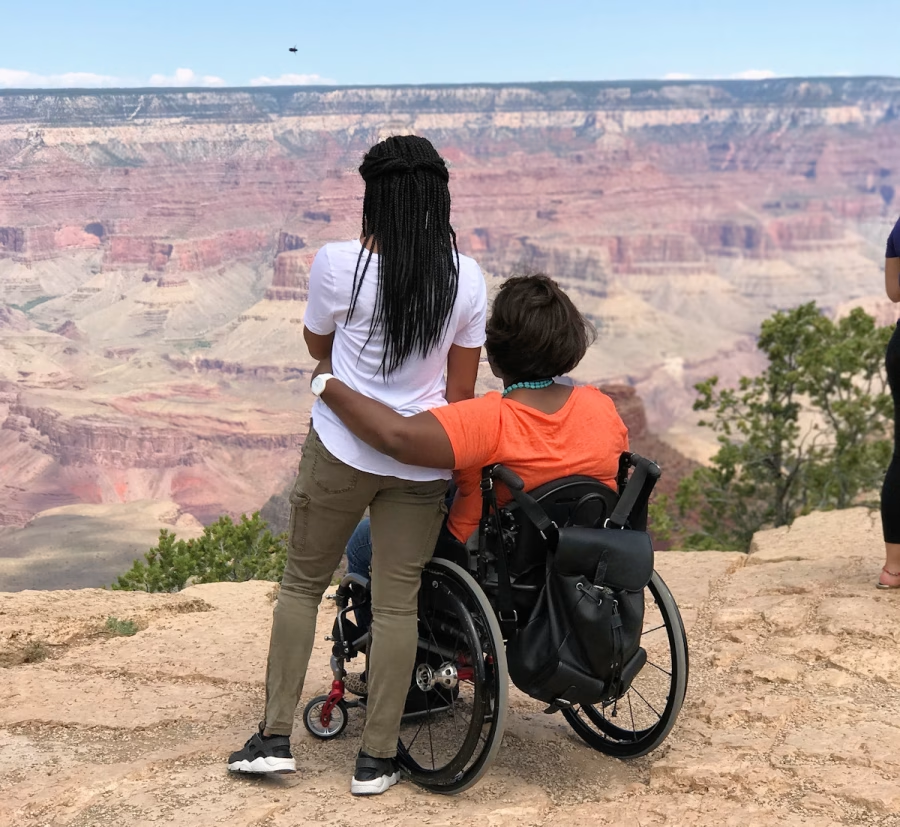
Travel, Culture & Global Perspective
You’ve spent your career serving diverse communities across the U.S. What role does place – urban, rural, cultural, geographic – play in shaping inclusive systems?
Place matters a great deal because systems don’t operate in a vacuum, they operate in communities.
The needs, barriers, and opportunities you see in an urban environment can look very different from what exists in rural communities or in regions with distinct cultural or economic realities. Transportation, access to doctors/healthcare, broadband access, and community infrastructure can all shape whether people are able to access services or participate in opportunities.
Inclusive systems have to be grounded in the realities of a location. That means understanding the cultural context of a community, engaging trusted local partners, and designing solutions that reflect how people actually live and move through their environments. When organizations take location seriously, their strategies become far more effective.
How has travel influenced your worldview, your leadership, or your understanding of community needs?
Most of my travel has been within the United States, with some international travel as well. Experiencing different places – cities, rural communities, and international destinations -has reinforced for me how much the design of systems and environments shapes people’s ability to participate fully in everyday life.
Traveling as a person with a disability brings those realities into focus. It has made me very aware of how transportation systems, public spaces, technology, and customer service either create access or create barriers. Those experiences have deepened my commitment to building systems and experiences that are inclusive and accessible from the start.
If you could redesign one global system; from tourism and hospitality to healthcare access – with full inclusion baked in, which would you choose and why?
If I could redesign one global system with full inclusion built in, it would be healthcare access.
Healthcare touches every part of our lives, and people with disabilities, older adults, and underserved communities encounter barriers to access. Those barriers can show up in many ways—physical access, communication gaps, transportation, technology, or simply medical professionals who don’t have diverse needs in mind.
If inclusion were built into healthcare from the beginning, it would change service delivery. Patients would not have to navigate around barriers just to receive basic care.
The impact would reach far beyond healthcare itself. When people can access care easily and with dignity, it improves quality of life, supports economic participation, and strengthens communities, and for many, travel becomes a vibrant part of their life.
For me, inclusive healthcare is a matter of equity.
The Future of Equity & Inclusive Design
What is one major shift you believe must happen in the next decade for genuine equity to become a reality across business and public systems?
One major shift that needs to happen over the next decade is moving from talking about equity to embedding it in how decisions are made.
For too long, equity has often been framed as a program, an initiative, or a communications strategy. Real change happens when it becomes part of how organizations design systems, allocate resources, and measure success.
What gives you hope right now?
What is giving me hope is finding like-minded people who still believe that equity, belonging and inclusive design are beneficial for our society. In the United States, the voices of those who still believe in these principles have been quieted but not muted. I am hopeful that we will continue to be effective and aid in letting leaders understand that everyone wins when inclusion woven into the fabric of tour systems.
Quick Fire
A book that shaped how you think?
A Hope in the Unseen by Ron Suskind.
The book tells the true story of Cedric Jennings, who was a high-achieving student from an urban, under-resourced school in in Washington, D.C., who earns admission to an Ivy League University. It follows his journey navigating the cultural, academic, and social challenges.
I enjoyed it because I could relate to what it is like to navigate in a world/system that isn’t built for your success. It emphasized how hard an ‘outsider’ has to work to be included and accepted.
A person who expanded your worldview?
India Martin-Gary, a colleague who went to a historically black college in the United States, and who moved to London after graduation. She has shared a lot with me her global travels working with financial institutions, and she’s a staunch advocate for women.
A city or landscape that feels like possibility?
Africa. The continent has maintained its beauty and spirit. And from what I’ve studied is one of the largest untapped business opportunities in the world, because of its demographics, urban growth, and market expansion that has not yet been fully served.
A lesson you’re still learning?
I’ve been blessed that all of my life’s experiences and work have been teachers. I am on a quest to continuously learn about cultures and what drives behavior.
Inclusion in one word?
Opportunity
A change you’d make today if you had a magic wand?
Elimination of racism and discrimination.