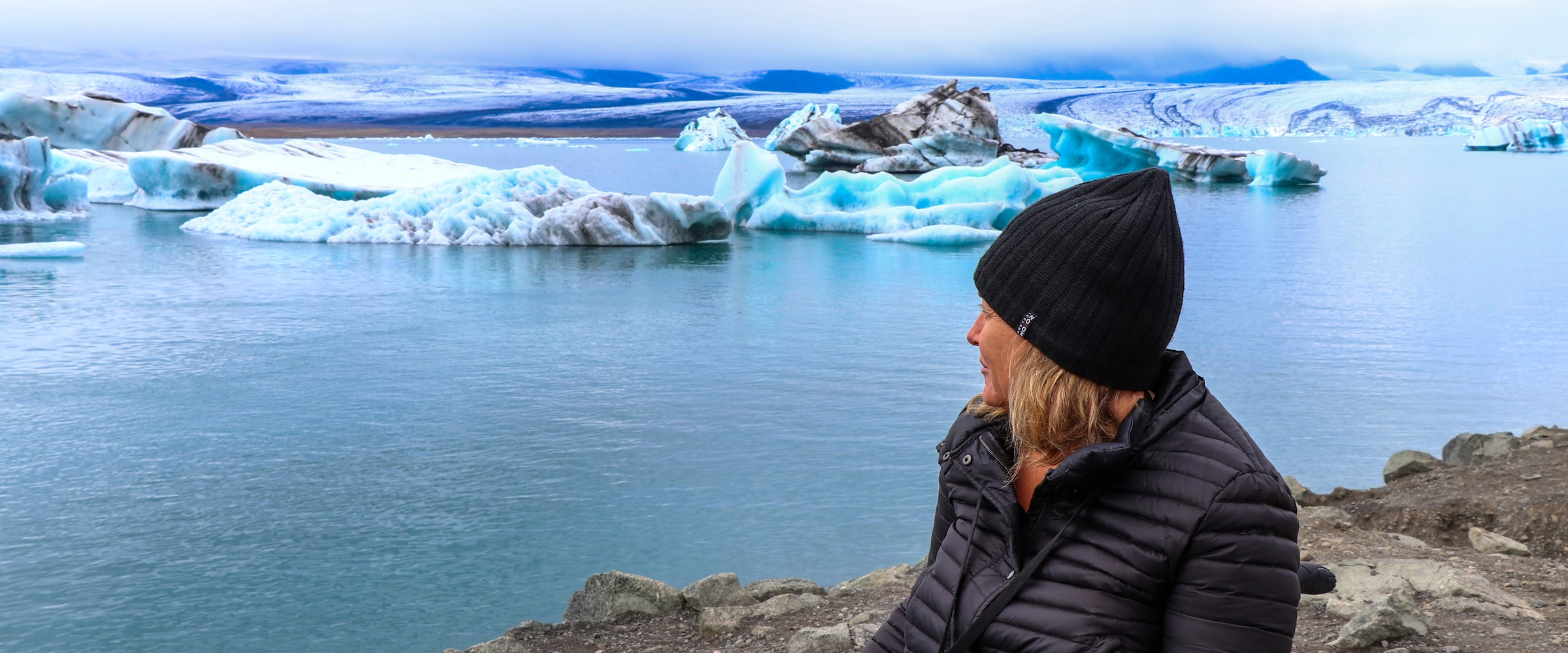
Sofia Martins: Accessible Tourism, Speaker, Author & Podcast Host
My passion for travel started very early, during road trips across Europe with my parents and my brother. Those experiences awakened my curiosity about the world, different cultures, and the sense of freedom that comes with travelling. Travel has always been part of my life and of the way I see the world.
◦ 14 min readBeginnings
Every journey starts somewhere.
What first sparked your passion for travel, and when did accessibility become such an important part of your work?
My passion for travel started very early, during road trips across Europe with my parents and my brother. Those experiences awakened my curiosity about the world, different cultures, and the sense of freedom that comes with travelling. Travel has always been part of my life and of the way I see the world.
Later, during a trip to Spain, I was involved in an accident that left me paraplegic. From that moment on, accessibility became part of my daily life. Naturally, it also became part of the way I travelled, because I started to experience firsthand the difficulties, barriers, and obstacles that exist when you have reduced mobility.
The first trips were not easy, but I didn’t want to stop travelling, so I began finding strategies and solutions to make it possible.
It was this desire to keep exploring the world, despite the barriers, that made accessibility become an essential part of my work and my mission: to help make travel increasingly accessible for everyone.
Changing Direction
Your background is in IT and Geographic Information Systems, which is quite different from tourism.
How did your professional path evolve from technology into accessible travel advocacy?
The transition from one field to the other happened naturally over time. My passion for travel kept growing throughout the years, and having my husband by my side, who shares the same love for travelling, also played an important role. Travel gradually became a bigger and bigger part of our lives.
Every time I left home and encountered an obstacle: an inaccessible sidewalk, a hotel that wasn’t prepared, or a tourist space without proper conditions, I felt the need to do something to help change that reality. I didn’t want to simply adapt to the difficulties; I wanted to contribute to making them disappear for others.
At the same time, the field of Information Technology has enormous potential to transform this reality. The internet is a powerful tool to share accessibility information, promote real experiences, and show that travelling is possible even when challenges exist. Technology helps give visibility, create networks, connect people, and raise awareness among destinations and companies.
By combining these two strengths, Information Technology and my travel experience as a person with reduced mobility, I found a path that made perfect sense in my professional journey. This combination became an added value and a way to actively contribute to the promotion of accessible tourism and a more inclusive society.
JustGo by Sofia
You founded JustGo by Sofia, one of Portugal’s leading accessible travel blogs.
What inspired you to create it, and what did you hope it would achieve when you first started?
In addition to the difficulties, I had already experienced while travelling, there was one situation that kept repeating itself and became decisive. When I arrived at some accommodations that were not fully adapted or accessible, they often asked me for suggestions on what they could improve and how they could do it. I realized that, in many cases, there was a genuine willingness to do better, but the right information was not reaching them in a clear and practical way.
That was when JustGo by Sofia was created. I started it with two main goals: on one hand, to share my travel experiences with other people with reduced mobility and help simplify the process of planning and going on a trip; on the other hand, to contribute to helping destinations, accommodations, and tourism spaces adapt and evolve, making the world more accessible for everyone.
I began by sharing places that were already applying good accessibility practices, highlighting positive and inspiring examples with the intention of encouraging others to follow the same path. I have always believed that change can also happen through positive influence and good examples.
Usually, when accessibility is discussed, the focus is on what is wrong and what is missing, and that is not the approach I identify with the most. My position is to educate through positivity, to highlight those who are doing things well, and to show that accessibility is not a problem but an opportunity to create better experiences for everyone.
Travel Without Barriers
You often say that travel should be for everyone.
What are the biggest barriers that still prevent many people from travelling freely today?
And what simple changes could make the biggest difference?
There are still many barriers, but I believe the main challenges in inclusive tourism are related to transport and accommodation.
The freedom to decide to travel at the last minute simply does not exist when you depend on booking assistance in advance to ensure that support will be available. Most transport systems are still not fully accessible, and many travellers with reduced mobility rely on assistance to board a plane, a train, a boat, or even a bus. This creates limitations and removes the spontaneity that travelling should have.
Finding accessible accommodation is also still a major challenge for two main reasons: sometimes it simply does not exist, and when it does, the information is often missing or unclear. The booking process would be much easier if hotels clearly presented accessibility details on their websites, including photos and precise descriptions of adapted rooms and facilities. It would also make a big difference if accessible rooms could be booked directly online, without the need to send emails or wait for confirmation.
Another barrier, which I consider discriminatory, is the fact that adapted rooms are often classified as higher-category rooms and therefore more expensive, with no alternative available.
Access to clean and adapted public restrooms while travelling is also still a major obstacle. Something as basic as finding an accessible and hygienic bathroom can determine whether a person feels confident enough to leave home and explore the world.
Travel should be for everyone, but unfortunately, it still isn’t. However, with better information, accessible infrastructure, and a stronger commitment from the tourism industry, simple changes could make a huge difference and allow more people to travel freely, independently, and with dignity.
Changing the Industry
You work with destinations, organisations and companies to improve accessibility.
Where do you see the most encouraging progress in tourism right now?
And where is more work still needed?
Although we still do not live in a world that is fully accessible to everyone, there has been significant progress in recent years. I increasingly see genuine interest and concern about accessibility, and this is reflected in what I encounter during my travels and professional collaborations.
For me, as someone who became paraplegic more than thirty years ago, the evolution has been remarkable. In the past, I used to travel with a wooden board to place over hotel bathtubs so that I could take a shower. Walking in the streets often meant depending on someone to help me because sidewalks were not accessible. Today, this reality is gradually changing, and many everyday barriers are being reduced, making travel and mobility much easier.
We are also seeing the emergence of travel agencies specialized in inclusive tourism, offering tours designed so that no one is left behind. Museums, monuments, and tourist attractions are becoming more accessible, and accessibility is slowly becoming part of the conversation in the tourism industry.
However, there is still a long way to go. Accessibility is not only about building ramps or creating physical access; it is about truly including people in the entire process. Solutions must be developed together with people with reduced mobility and other disabilities, so that real needs are understood and properly addressed.
It is also essential to create more job opportunities and include people with disabilities in tourism teams and decision-making processes. Inclusion should not only be about serving travellers with disabilities but also about giving them a voice and a role within the industry.
Finally, accessibility should be seen as an opportunity, not a limitation. It is a growing market with real potential, and destinations and companies that invest in inclusive and personalized solutions will be better prepared for the future of tourism.
Travelling the World
You have travelled to more than 40 countries and even completed a round-the-world trip in 40 days.
Which destination has surprised you most in terms of accessibility?
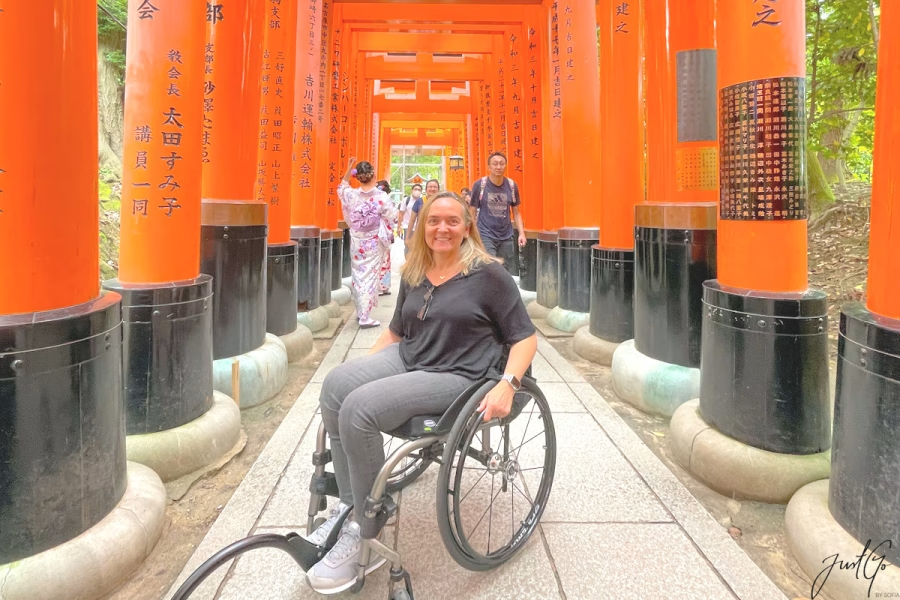
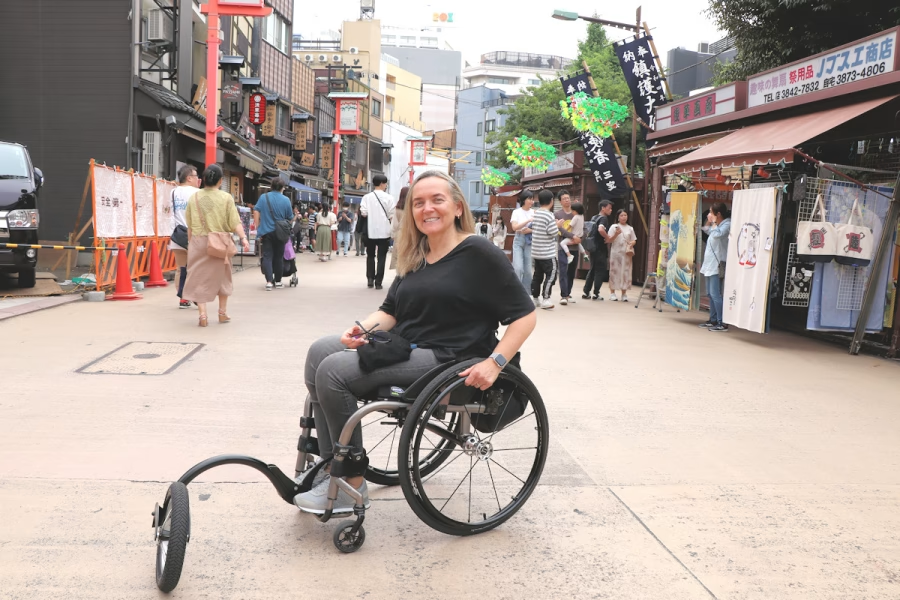
The destination that surprised me the most in terms of accessibility, in a positive way, was Tokyo. Moving around the city is relatively easy, the streets are accessible, and it is possible to find adapted restrooms almost everywhere, many of them designed to accommodate different needs. In general, public spaces are well prepared and inclusive, although, like any destination, it is not completely free of obstacles.
On the other hand, one of the most challenging destinations in terms of accessibility was Cappadocia, in Turkey, and even Istanbul presented several difficulties. The terrain, infrastructure, and limited accessibility in many areas made the experience more complex.
In my opinion, there is no place in the world that is completely free of barriers or fully prepared for someone who uses a wheelchair. Even within the same country, we often find very different realities, where major cities tend to be more accessible than smaller destinations or rural areas.
This shows that accessibility is a continuous journey. Every destination can improve, and every improvement makes a real difference in allowing more people to explore the world with confidence and independence.
Technology and Inclusion
Your technical background gives you a unique perspective.
How can technology and digital innovation help make travel more inclusive?
Technology and digital innovation can play a transformative role in making travel more inclusive. One of the most important contributions is the availability of accessible and reliable information, which allows people to plan their trips independently and with confidence, without having to rely constantly on others.
Today, digital tools make it possible to explore destinations in advance, understand accessibility conditions, and make informed decisions before even leaving home. Being able to visualize streets, entrances, public spaces, and transportation systems helps travellers anticipate barriers and choose safer and more accessible routes.
Applications and digital platforms are also creating new opportunities for inclusion. For example, accessibility mapping tools allow users to locate adapted restrooms, accessible routes, and inclusive spaces, often supported by reviews from people with similar needs. This shared knowledge creates a community-driven support system that makes travelling easier and more predictable.
Technology is also essential for people with sensory disabilities. Digital content with audio descriptions, subtitles, screen reader compatibility, and accessible interfaces allows blind, visually impaired, deaf, or hard-of-hearing travellers to access information and travel resources independently. This kind of innovation promotes autonomy and equal access to travel experiences.
In addition, artificial intelligence and smart tourism solutions can help destinations better understand accessibility needs, improve services, and personalize travel experiences. From accessible booking systems to real-time assistance and inclusive digital guides, innovation can reduce uncertainty and empower travellers to explore the world with greater freedom.
Ultimately, technology is not just a support tool; it is a bridge that connects people, information, and destinations. When used with an inclusive mindset, it becomes a powerful driver of independence, dignity, and equal opportunities in travel.
Community and Conversation
Through your podcast “Viajar é para Todos”, you highlight stories of travellers with different realities and experiences.
What have these conversations taught you about resilience, curiosity and the desire to explore?
These conversations have been incredibly enriching and helped reinforce my belief that travel truly is for everyone.
Since I became paraplegic, many people have shared their personal stories with me: their illnesses, disabilities, limitations, and life challenges. Over time, I realized that we all carry some kind of condition that can limit us in different ways. The main goal of the podcast Viajar é para Todos was to show that travel challenges are not faced only by wheelchair users. Many people need a more accessible and adaptable world in order to travel and explore with confidence.
During one of my talks, someone in the audience shared that she was planning to travel with her niece, who is celiac, and that they often struggle to find safe food options while travelling. In another moment, after a talk, a participant approached me to share that she lives with Type 1 diabetes and that it affects her daily life and travel routines. Today, she is a travel leader who organizes and guides groups around the world.
Stories like these show that many conditions are invisible, but they still require understanding, preparation, and accessible solutions. They also show how powerful curiosity and the desire to explore can be.
What these conversations have truly taught me is that when people really want to travel, they usually find a way to make it happen. With the right mindset, support, and information, travelling becomes possible, and the world becomes more open to everyone.
Destinations
Is there a place in the world that holds a special meaning for you?
And is there somewhere you still dream of visiting?
That is a very thoughtful question and one that always makes me reflect. I have visited many destinations that I truly enjoyed and where I felt happy and welcomed, each one leaving its own mark on my journey.
Of course, Portugal is my special place. It is where I feel safe, surrounded by my family and friends, and where I find my comfort zone. It is home, and that will always have a unique meaning for me.
Spain also holds a very special place in my heart. It brings back memories of my childhood travels and feels almost like a second home. It was also the country where my accident happened, but even that never changed my connection with it or my love for being there.
Standing on the Great Wall of China was one of the most memorable moments of my travels. For a long time, I believed it would be impossible for me to reach such a place, and when it finally happened, I felt deeply grateful and privileged. It reminded me that when we truly want something, we need to go after it and believe that it is possible.
There are still many destinations I dream of visiting. The world is full of places to explore, and that sense of curiosity and discovery continues to inspire me to keep travelling and sharing new experiences.
Looking Ahead
If you could change one thing about the travel industry to make it more inclusive, what would it be?
If I could change one thing, it would be how people with mobility challenges travel by airplane. For me, this remains the most challenging and uncomfortable part of any trip.
The process often involves repeatedly requesting assistance, waiting for help, transferring to narrower chairs that are not always in the best condition, and dealing with staff who are not always properly trained for this process. On top of that, it is practically impossible to access the airplane restroom independently, and there is always the worry that the wheelchair might be damaged — something that, unfortunately, happens too often.
This situation prevents many people from travelling at all, which is deeply sad. Air travel should be safe, comfortable, and dignified, allowing everyone to explore the world without unnecessary barriers. Making airplanes truly inclusive would, in my view, have the greatest positive impact on the lives of thousands of travellers with mobility limitations.
Quickfire
A destination that made you feel truly free: Spain
Window seat or aisle? Window
Mountains, city or ocean? City
A place you would happily return to again and again: French Polynesia
One small detail that tells you a destination truly cares about accessibility: When there is clear information about accessibility.
Your favourite travel memory: Great Wall of China
A country that surprised you: Japan
Coffee before exploring, or straight out the door? Straight out the door
A person who inspires your work: Not one single person, but everyone who travels despite challenges.
And finally
What does truly inclusive travel mean to you? It means everyone can travel freely, independently, and with dignity.